
- 11 Jan 2026
- Elara Crowthorne
- 0
The CPR CIPHER 2021 airdrop wasn’t just another free token giveaway. It was a last major push by a project that had already been around for three years, trying to stay alive in a market that had moved on. If you’re reading this now in 2026, you’re probably wondering: did anyone actually get anything from it? Was it real? And why does it still show up as "Cipher [Old]" on CoinMarketCap?
The answer isn’t simple. This wasn’t a flashy, viral airdrop like some of the big DeFi projects that exploded in 2021. It was quiet, technical, and buried under layers of blockchain migration and shifting market conditions. But for those who participated, it was a real chance to get exposure to a token that once promised to change how businesses used crypto.
What Was Cipher (CPR)?
Cipher, or CPR, wasn’t built as a speculative coin. It started in 2018 as a utility token meant to represent partial ownership in a company, kind of like owning a share in a small tech startup - but on the blockchain. The team behind it was spread across India, the UK, and New Zealand. They weren’t trying to get rich quick. Their goal was to build secure, scalable mobile apps for businesses that needed real-time data, encrypted storage, and easy maintenance - all powered by CPR tokens.
Unlike most crypto projects at the time, Cipher didn’t run an ICO. No big fundraising. No promises of 100x returns. Instead, they planned to distribute tokens through usage: if you used their apps or services, you earned CPR. That’s why the 2021 airdrop happened - it was their way of getting users onto the platform without selling tokens upfront.
The 2021 Airdrop: How It Worked
The airdrop was conducted through CoinMarketCap (CMC), which was still one of the most trusted platforms for crypto data back then. Projects used CMC’s airdrop system to reach thousands of users who had verified wallets and active trading histories. Cipher’s campaign was simple: if you had a wallet connected to CMC and met basic activity thresholds, you could claim CPR tokens.
There were no complicated sign-ups. No KYC forms. No waiting in line. You just needed to have a wallet that had interacted with other tokens or had a history on CMC. The team didn’t publish exact numbers, but based on similar campaigns from that year, it’s estimated that tens of thousands of wallets received tokens.
Each recipient got a small amount - likely between 50 and 500 CPR tokens. That might sound tiny. But at the time, CPR was trading around $0.0002. So 500 tokens meant roughly $0.10. Not life-changing. But still, free crypto.
Why the Migration to Polygon Mattered
Here’s where things got messy. Around the same time as the airdrop, Cipher migrated its entire token contract from Ethereum to Polygon PoS. Why? Gas fees on Ethereum had skyrocketed. Transactions that cost $1 before were now $20 or more. For a token meant to be used in everyday business apps, that was a dealbreaker.
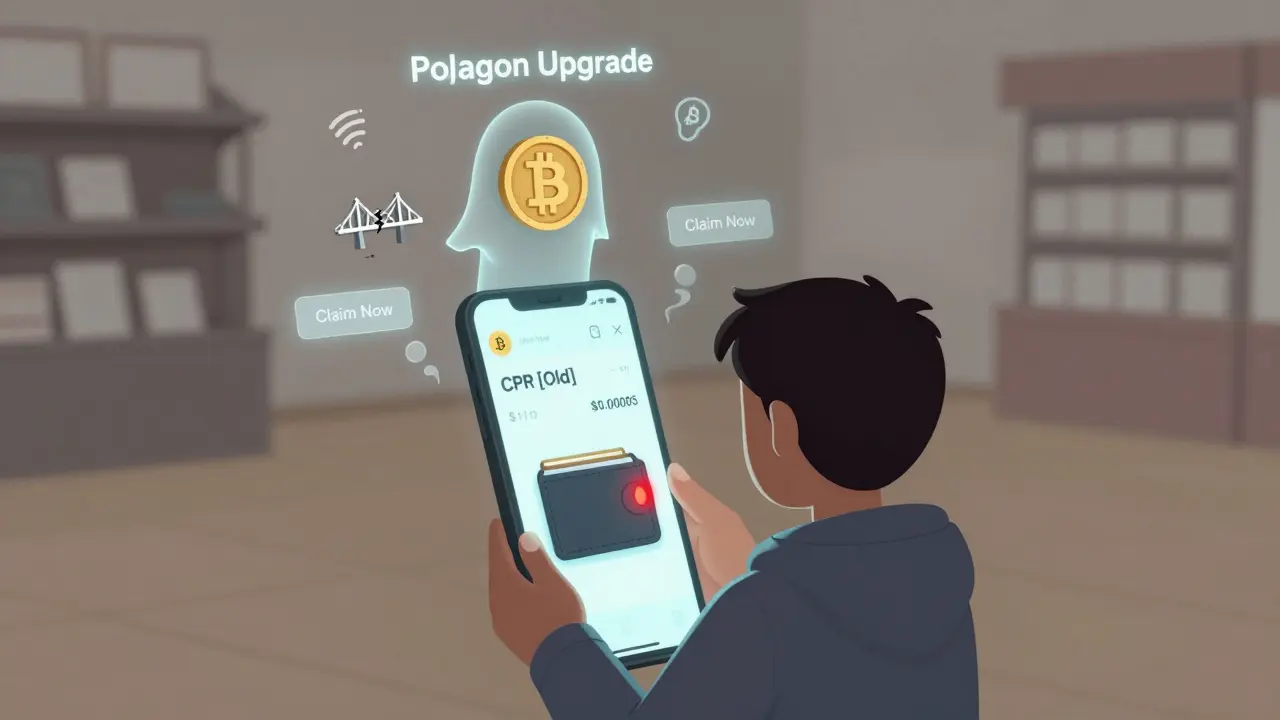
The new contract address became 0xaa404804ba583c025fa64c9a276a6127ceb355c6. But here’s the catch: the old Ethereum contract still existed. And so did the old tokens. That’s why CoinMarketCap now labels it as "Cipher [Old]" - to separate the original version from the upgraded one.
If you claimed CPR tokens during the 2021 airdrop, you likely got the old version. To use them properly, you’d have had to swap them manually using a bridge. Most people didn’t. They just held on, hoping the value would go up. It didn’t.
What Happened After the Airdrop?
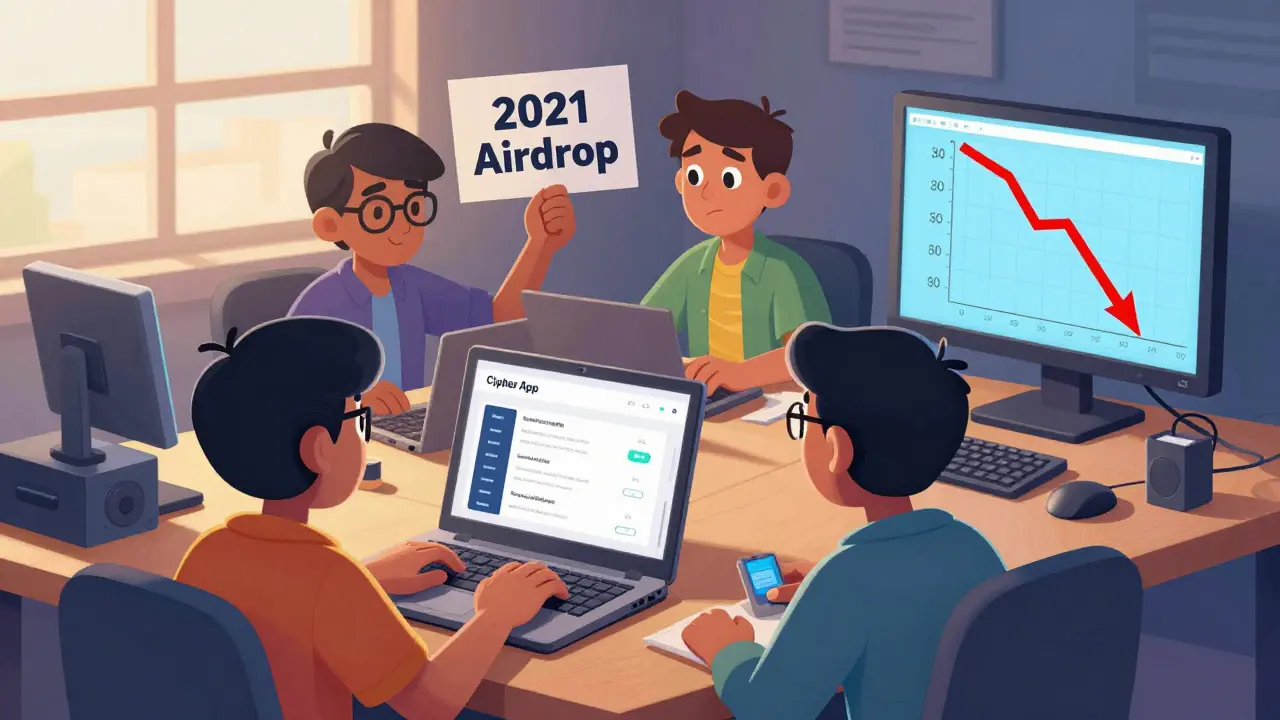
The airdrop gave Cipher a short-term boost. The circulating supply jumped from around 150 million to nearly 186 million CPR tokens. But adoption didn’t follow.
The apps Cipher promised? They never really launched. The website became outdated. The team went quiet. By 2022, the token price had crashed to near zero. It stayed there for over a year. Then, in early 2024, something strange happened. A small group of traders started buying up the old tokens, pushing the price up to $0.004065 - a 100x spike. It lasted less than two weeks.
Today, CPR trades between $0.000047 and $0.000068. That’s less than a penny. The total supply is still 1.08 billion, but only about 186 million are circulating. Most of the tokens from the 2021 airdrop are still sitting in wallets, untouched.
Why This Airdrop Still Matters
It’s not about the money. It’s about what it teaches.
Cipher’s story is a textbook case of how crypto projects fail - not because they’re scams, but because they overpromise and underdeliver. They built a token with a real use case, but never built the actual product. They used a legitimate airdrop platform (CMC), but didn’t follow up with community engagement. They migrated to a better blockchain, but didn’t guide users through the transition.
And that’s why this airdrop is still worth remembering. It’s a reminder that free tokens don’t equal value. If a project doesn’t have working software, active development, or a real team behind it, the tokens are just digital paper.
Today, if you find CPR in your wallet, it’s not a windfall. It’s a relic. A snapshot of a moment in crypto history when people believed in building tools, not just tokens.
Can You Still Claim CPR Tokens from the 2021 Airdrop?
No. The campaign ended in late 2021. CoinMarketCap no longer lists it as an active airdrop. The claiming portal is offline. The smart contracts are no longer accepting new claims.
If you think you qualified back then but didn’t claim, there’s no way to recover those tokens now. The window closed years ago.
What Should You Do With Old CPR Tokens?
If you still have CPR tokens in your wallet:
- Check the contract address. If it’s
0xaa404804ba583c025fa64c9a276a6127ceb355c6, you have the Polygon version. If it’s an Ethereum address, you have the old version. - Don’t panic-sell. The price is low, but it’s still trading. You can hold or sell on decentralized exchanges like QuickSwap or SushiSwap.
- Don’t expect a revival. There’s no evidence of active development. No new team. No roadmap updates since 2022.
- Consider it a learning experience. If you’re new to crypto, this is a good example of why due diligence matters.
Is Cipher [Old] a Scam?
No. There’s no evidence of fraud. The team never disappeared with funds. No fake whitepaper. No pump-and-dump scheme. They had a real vision. They just couldn’t execute it.
Many crypto projects from 2018 to 2021 followed this path: big ideas, good intentions, weak execution. Cipher is one of them. It’s not a scam. It’s a cautionary tale.
Where Is Cipher Now?
There is no active Cipher project. The website is static. The Twitter account hasn’t posted since 2023. The GitHub repository is empty. The team hasn’t responded to inquiries in over two years.
On CoinMarketCap and CoinGecko, "Cipher [Old]" is listed as a legacy asset. No one is building on it. No one is upgrading it. It’s frozen in time - a digital artifact from a different era of crypto.
That’s why the 2021 airdrop is its last meaningful moment. After that, the project stopped growing. The tokens kept moving, but not because anyone wanted them. They moved because people were trying to get rid of them.