- 7 May 2026
- Elara Crowthorne
- 19
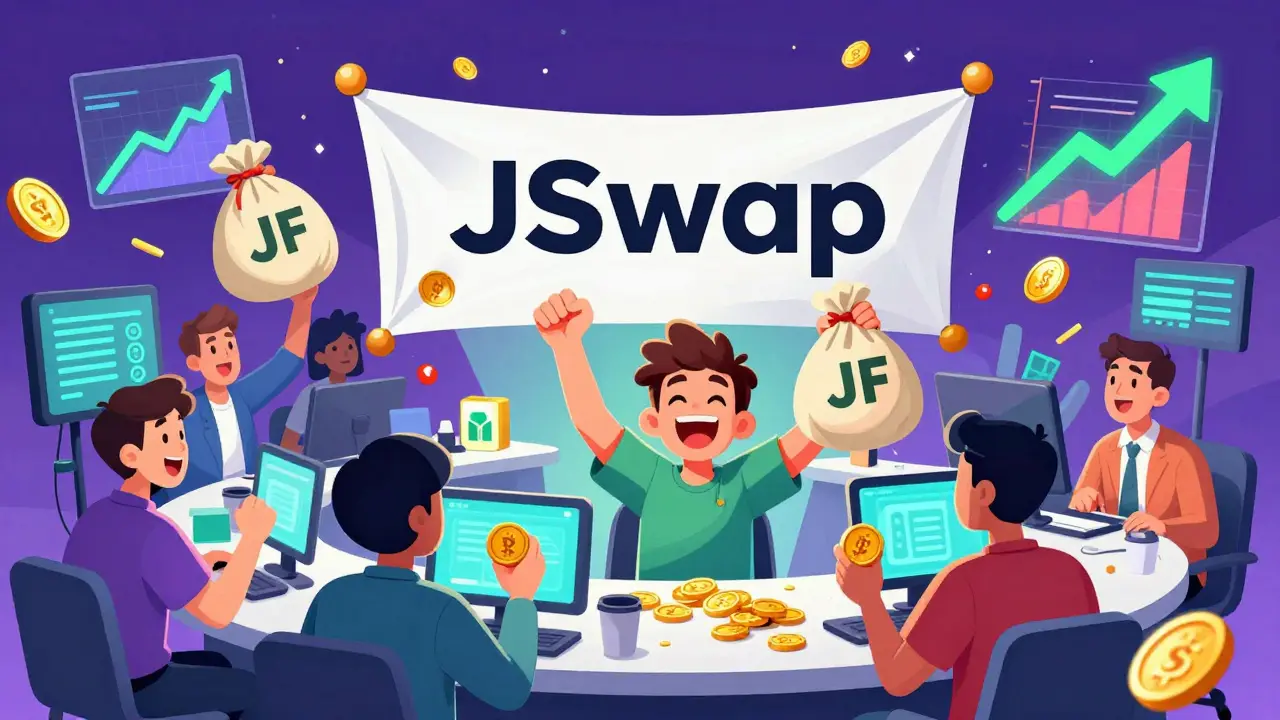
Have you heard the buzz about the JF token, the governance coin for JSwap.Finance, a decentralized exchange protocol originally launched on OKExchain? If you are looking to claim free tokens from an airdrop, you need to know one thing immediately: the landscape has changed drastically. What started as a high-hype event in 2021 is now a cautionary tale for many investors. Before you connect your wallet or spend time on tasks, let’s look at the hard data behind the JSwap airdrop.
The History of the JSwap Airdrop
To understand where things stand today, we have to look back at when the project was actually active. JSwap.Finance positioned itself as a comprehensive DeFi ecosystem. It promised swap mining, liquidity mining, and even cross-chain bridge functionality. The core promise was simple: high yields and low fees.
The most significant airdrop event occurred in November 2021. This wasn’t just a random giveaway; it was tied to a listing campaign on MEXC, a major cryptocurrency exchange. MEXC ran a "Kickstarter" program where users voted for new listings using their own MX tokens. Users contributed over 23 million MX tokens to vote for JF. In return, successful participants received a share of 35,200 JF tokens. At that time, the platform claimed to have nearly 100,000 users and over $60 million in Total Value Locked (TVL). The Annual Percentage Yields (APY) were astronomical, sometimes hitting over 1,400% for specific trading pairs.
However, those days are long gone. The initial hype drove participation, but sustainability is a different story.
Current Market Reality: Why You Should Pause
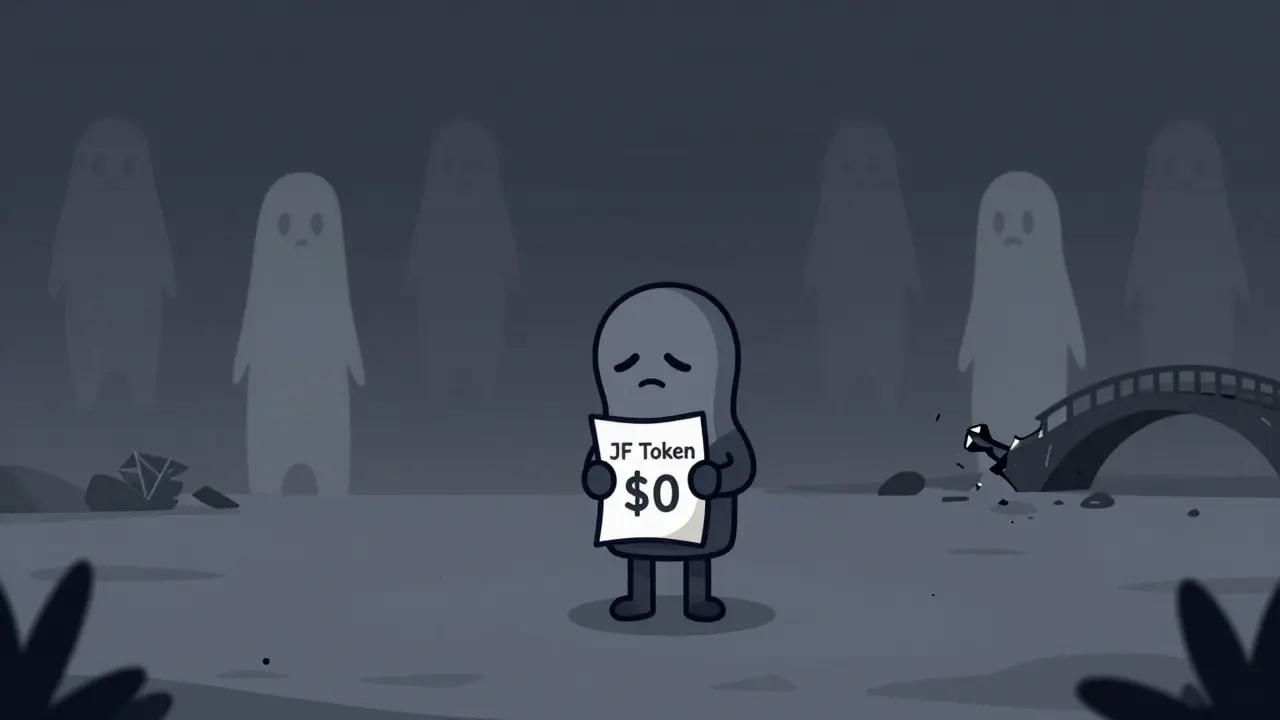
If you are reading this in 2026, here is the critical update: the JF token currently shows zero value across major tracking platforms. Data from Binance and CoinMarketCap indicates a live price of $0 USD. There is effectively no trading volume. The circulating supply appears negligible, despite a maximum supply cap of 100 million tokens.
This isn’t just a dip; it’s a collapse of liquidity. When a token trades at $0 with zero volume, it means there are no buyers. Even if you successfully claim an airdrop today, you likely cannot sell it. You would be holding digital paper. The market capitalization is listed as $0, which contradicts earlier reports of millions in TVL. This suggests that either the data feeds are broken, or more likely, the project has ceased meaningful operations.
| Metric | Peak Activity (2021) | Current Status (2026) |
|---|---|---|
| Price | High volatility, positive APY | $0 USD |
| Trading Volume (24h) | Significant activity | $0 - $40 (negligible) |
| Total Value Locked (TVL) | ~$60 Million | Unknown / Likely Zero |
| Airdrop Availability | Active via MEXC Kickstarter | Unverified / High Risk |
How Airdrops Worked vs. What They Claim Now
You might see websites or social media posts claiming you can still get JF tokens through "ongoing challenges" on platforms like Bitget. These claims often suggest that rewards are convertible to Jswap.Finance tokens. Here is how you should interpret that:
- Past Mechanism: The verified method was voting with MX tokens on MEXC during the listing phase. This required real capital commitment and offered a clear reward structure.
- Current Claims: Generic "join challenge" prompts are common in dead projects. Without a clear smart contract address or verified partnership announcement, these are often phishing attempts designed to drain your wallet rather than give you tokens.
- Tokenomics: JSwap originally planned a deflationary model where profits bought back and burned JF tokens. But with zero profit and zero volume, this mechanism is inactive. There is no buy pressure to support the price.
Safety First: Protecting Your Assets
In the world of DeFi, not all airdrops are created equal. Some are legitimate marketing tools; others are traps. Given the current status of JF, extreme caution is required. Here is how to stay safe:
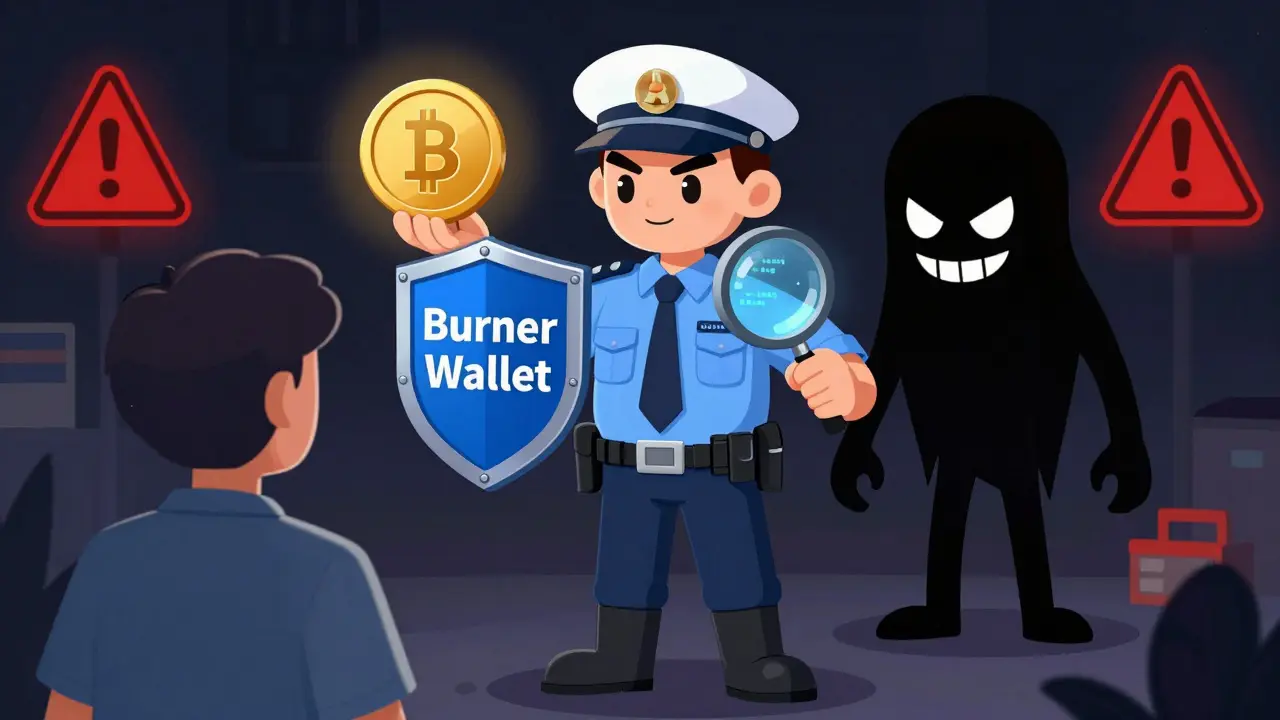
- Never Connect Your Main Wallet: If you decide to explore JSwap.Finance, use a burner wallet-a separate wallet with no funds. Never connect your primary Ethereum or OKExchain wallet to an unverified dApp.
- Check Contract Addresses: Legitimate tokens have verified contracts on block explorers like Etherscan or OKLink. The JSwap contract address was previously cited as
0x5fAc...C85b0A, but verification status is unclear. Do not approve transactions to unknown addresses. - Beware of "Gas Fee" Scams: Legitimate airdrops do not ask you to pay a fee to receive tokens. If a site asks for ETH or OKT to "unlock" your JF airdrop, it is a scam.
- Verify Official Channels: Look for announcements on official Twitter or Telegram accounts. However, note that many fake accounts impersonate dead projects. Cross-reference any link with multiple sources.
Is JSwap Still Operational?
The technical infrastructure of JSwap once included swap mining, single-token vaults, and DAO dividend pools. Today, the platform generates less than $50 in daily trading volume. For context, a healthy DeFi protocol generates thousands or millions in daily volume. This level of activity indicates that the platform is effectively dormant.
The "cross-chain bridge" and "IDO launchpad" features mentioned in early roadmaps have not seen significant updates. The lack of recent development commits, community engagement, or liquidity provision suggests that the team may have moved on to other projects. In the crypto space, abandoned projects are common, but they carry significant risk for anyone interacting with them.
What Should You Do Instead?
If your goal is to earn free crypto through airdrops, there are safer, more active ecosystems to consider. Projects like Layer 2 networks (e.g., Arbitrum, Optimism) or newer DeFi protocols on Solana or Base often run transparent, verifiable campaigns. These projects have active communities, audited code, and visible liquidity.
Before participating in any airdrop, ask yourself three questions: 1. Is there real trading volume? 2. Is the team anonymous or public? 3. Can I easily exit (sell) the token if I receive it? If the answer to any of these is "no," walk away. The potential gain of a few worthless JF tokens is not worth the risk of losing your entire portfolio to a smart contract exploit or phishing site.
Can I still claim the JSwap JF airdrop in 2026?
Technically, some third-party sites may claim you can, but there is no official, verified airdrop campaign running by JSwap.Finance. The major distribution happened in 2021 via MEXC. Any current offers are likely scams or refer to tokens with zero value.
What is the current price of the JF token?
As of May 2026, the JF token trades at $0 USD on major exchanges like Binance and CoinMarketCap. There is virtually no trading volume, meaning you cannot sell the token even if you hold it.
Is JSwap.Finance a scam?
JSwap launched as a legitimate DeFi project on OKExchain. However, it has since collapsed due to lack of liquidity and user interest. While not necessarily a "rug pull" in the traditional sense, interacting with it now carries high risk due to abandonment and potential security vulnerabilities in old smart contracts.
How did the original MEXC airdrop work?
Users voted for the JF listing on MEXC by locking their MX tokens. Successful voters received a portion of 35,200 JF tokens as a reward. This was a one-time event tied to the exchange's listing process in November 2021.
Should I invest in JF tokens now?
No. With a price of $0, zero volume, and no active development, investing in JF offers no upside and only downside risk. Avoid any sites asking you to buy or swap into JF.

19 Comments
oh my gosh this is so sad to read about :/ i remember when everyone was talking about jsap and how it was going to change the world of defi. now its just... nothing? zero value? that feels like a metaphor for life honestly. we chase these dreams and they turn into dust. but hey at least we learned something right? maybe not. anyway good luck to anyone still holding on to hope.
Let me educate you all on why this happened because clearly nobody here understands basic economics or smart contract architecture. JSwap failed because the tokenomics were fundamentally flawed from day one. The APYs were unsustainable, relying on new capital inflows rather than actual revenue generation. This is a classic Ponzi structure disguised as DeFi innovation. When the music stopped, the liquidity evaporated. It's not 'sad', it's inevitable for projects that ignore mathematical reality in favor of hype cycles. You should study the whitepaper before investing next time instead of reading reddit comments.
lol wow another dead project post. seriously guys are we really still talking about this trash? its 2026 and jsap is literally worth less than air. stop wasting your time checking old chains. go buy memecoins or something at least those have community support even if its stupid. this article is boring af.
Look i get it u lost money or missed out but crying about it wont bring back the tvl. the real lesson here is about trust in decentralized systems. who do we trust when the code stops updating? nobody. thats the harsh truth. we put our faith in anonymous devs and now theyre gone. its a philosophical crisis for the whole industry not just jsap. wake up people. the system is broken and we keep playing along. stop expecting saviors and start building your own tools.
This entire thread reeks of incompetence. People claiming they 'missed' an airdrop for a token that has been dead for years are either lying or utterly foolish. There is no moral high ground for chasing worthless dust. If you can't distinguish between a viable protocol and a corpse, you don't deserve any profits in this market. The fact that you're even asking questions about JF in 2026 shows a complete lack of due diligence. Go learn blockchain basics before you come here begging for sympathy.
Ah yes, the tragic tale of JSwap. How utterly dramatic. I suppose we must all bow down to the ghost of a protocol that couldn't sustain itself for two years. The audacity of expecting liquidity to remain infinite is truly laughable. But sure, let's pretend this is some deep mystery instead of what it actually is: a failed startup. Move along, peasants. There's nothing left to see here except your own poor decision-making skills reflected in the mirror of a $0 chart.
I think its important we acknowledge the effort that went into building JSwap initially! Even though it didn't work out, the team tried something innovative with cross-chain bridges early on. We should support each other in learning from these mistakes rather than mocking them. Maybe there's a lesson here about community engagement that future projects can use. Let's stay positive and look forward to better opportunities together!
Hey everyone! 👋 Just wanted to add that while JSwap is indeed dormant, the broader DeFi space is still evolving rapidly. Projects like Arbitrum and Optimism are showing how sustainable models can work without insane APYs. Don't let this one failure discourage you from exploring crypto! 🚀 Always DYOR (Do Your Own Research) and focus on fundamentals like active development and real user base. Stay safe out there! 💪✨
It is profoundly disheartening to witness such a lack of intellectual rigor in this discussion. The demise of JSwap was not merely a 'collapse' but a predictable outcome of subpar engineering and questionable governance structures. Those who participated in the MEXC Kickstarter without understanding the underlying mechanics were essentially gambling on vaporware. One would expect more discernment from individuals purporting to be investors. Truly, the bar for entry into this sphere appears alarmingly low.
ugh why does everyone care about this junk? its dead. move on. you guys are obsessed with dead coins like its a hobby. get a job or something. seriously. waste of time reading this.
i mean i guess its kind of interesting how things change so fast in crypto i remember when everything seemed so promising and now its just quiet and empty but thats life i suppose we gotta keep moving forward and maybe find something new to believe in eventually i hope someone finds value in this history lesson even if its painful
its okay to feel disappointed by this outcome. many people invested hope and capital into JSwap based on genuine excitement for decentralization. its understandable to want closure or answers. please be gentle with yourselves and others in this thread. we all learn differently and sometimes the hardest lessons come from losses. lets support each other in finding safer paths ahead.
This is exactly why foreign protocols fail. No oversight, no accountability, just anonymous devs running away with liquidity. American investors deserve better than this garbage. Stick to regulated exchanges and domestic assets if you want safety. This global crypto mess is a disaster for serious wealth preservation.
Interesting perspective on the tokenomics collapse. I've been tracking similar patterns in other Layer 1 forks. The key takeaway seems to be that high APYs attract mercenary capital which leaves as soon as yields drop. It's a cycle we keep repeating. Does anyone know if there are any current audits being done on similar dormant contracts to see if funds are recoverable?
The TVL metrics were always suspect. Real utility drives retention, not yield farming incentives. Once the incentive layer dried up, the protocol had no fundamental value proposition. It's a textbook case of extractive vs productive DeFi. Most users didn't understand they were providing liquidity for a marketing campaign, not a financial product.
Typical western failure mode. They build hype, take money, and vanish. Indian devs build actual infrastructure. Anyway, don't touch this shit. Save your gas fees for something useful like Polygon or Solana dApps. This is ancient history.
Actually the price isn't zero its just illiquid. there's still some volume on obscure DEXs. people who say its dead are just lazy. you have to dig deeper to find the alpha. most retail investors give up too easily. true believers will find ways to trade this.
oh dear i feel so bad for everyone who lost money on this. it must be really hard to watch your investment disappear like that. i hope you all find peace and maybe try again with something safer next time. sending love and light to all the victims of jsap tragedy xoxo
It is imperative that we recognize the educational value of this case study. While the outcome was unfortunate, it highlights critical vulnerabilities in unverified smart contracts. Investors must prioritize security audits and transparent governance frameworks above all else. May this serve as a cautionary tale for future endeavors in the digital asset space.