
- 18 Aug 2026
- Elara Crowthorne
- 0
Imagine trying to buy a cup of coffee in Casablanca using Bitcoin. On paper, it’s illegal. In reality, you might just find a guy in a corner café willing to swap his MAD for your digital coins over WhatsApp. This is the daily reality for millions of Moroccans navigating a market that officially doesn’t exist. Since Morocco is a North African country that banned cryptocurrency activities in 2017 citing monetary sovereignty concerns, the nation has become a hotbed for what experts call the "Crypto Paradox." The government declared all crypto activities illegal back in November 2017, yet the underground ecosystem has not only survived but thrived, growing by an estimated 140% since then.
This isn't just about tech enthusiasts tinkering with code. It’s a massive economic shift driven by necessity and opportunity. With the market projected to hit USD 292.4 million by 2026, understanding how this black market operates-and why the government is finally ready to regulate it-offers a fascinating look at how global financial trends outpace local laws.
The Genesis of the Ban and Why It Failed
To understand the current chaos, we have to look at why the door was shut in the first place. In 2017, the Bank Al-Maghrib is the central bank of Morocco responsible for monetary policy and financial stability joined forces with the Office de Changes to slap a nationwide ban on Cryptocurrency is digital assets like Bitcoin and Ethereum that operate on decentralized blockchain networks. Their reasoning was straightforward: they feared losing control over capital flight and wanted to protect the Dirham (MAD) from volatile foreign currencies. They also worried about money laundering and a lack of consumer protection.
But here’s the kicker: prohibition rarely kills demand; it just drives it into the shadows. By 2024, roughly 1.2 million Moroccans-about 3.2% of the population-were actively engaging with crypto. The ban didn’t stop people from wanting to hold or trade digital assets; it just forced them to go off the grid. The result? A fragmented, risky, but incredibly resilient underground economy.
How the Underground Ecosystem Actually Works
If you walk into a regulated exchange in London or New York, you see clean interfaces and instant settlements. In Morocco’s underground scene, it looks more like a high-stakes game of trust. There are no local exchanges. Instead, users rely on international platforms like Binance is a global cryptocurrency exchange platform offering trading services for various digital assets and OKX, accessed primarily through Virtual Private Networks (VPNs). About 82% of users use apps like these to bypass geo-blocking restrictions.
But getting money in and out is where it gets tricky. You can’t just wire funds directly from a Moroccan bank account to a crypto wallet without raising red flags. So, how do they do it? Enter Peer-to-Peer (P2P) trading. This is the backbone of the Moroccan crypto scene. Here’s how a typical transaction flows:
- Finding a Counterparty: Users join WhatsApp groups or Telegram channels dedicated to local crypto trades. These groups often have 50 to 200 members who vet each other over time.
- Negotiating the Rate: Unlike regulated markets with tight spreads, underground rates fluctuate wildly. Spreads average between 4.8% and 7.2%, meaning you pay a premium for the convenience and risk.
- The Handshake: One party sends fiat currency (usually via bank transfer or cash) to the other. The other party releases the crypto from their escrow or wallet.
- Settlement Delays: Because there’s no automated system guaranteeing the release, settlement times average 72 hours. Trust is the only security protocol.
This process is slow and expensive. Transaction fees in this informal network range from 3.8% to 5.2%, compared to less than 0.5% in regulated environments. But for many Moroccans, especially those receiving remittances from abroad, the speed and accessibility outweigh the cost.

Who Is Using Crypto and Why?
You might expect the underground crowd to be full of speculative traders looking for quick riches. While speculation accounts for 31% of transactions, the primary driver is actually something much more practical: international remittances. A survey by Morocco World News found that 44% of all underground transactions involve sending or receiving money across borders.
Think about it: traditional banking transfers can take days and charge hefty fees. Crypto, even in its chaotic underground form, offers a faster alternative for families split between Morocco and Europe or North America. The demographic profile of these users is distinct. They are predominantly urban (83% live in cities with over 500,000 residents), young (68% are aged 18-35), and relatively well-off (72% earn above MAD 10,000 monthly). These are not desperate individuals; they are tech-savvy professionals and students who see value in digital assets.
Asset preference also tells a story. Bitcoin is the first and most prominent decentralized cryptocurrency created in 2009 dominates with 57.3% of volume, followed by Ethereum is a blockchain platform known for smart contracts and decentralized applications at 22.1%. However, stablecoins like USDT are gaining traction because they offer price stability, which is crucial for people just trying to move money around without worrying about a 10% drop in value overnight.
| Feature | Regulated Market (Projected) | Underground Market (Current) |
|---|---|---|
| Legal Status | Compliant with Bank Al-Maghrib rules | Illegal but widely practiced |
| Average Transaction Fee | 0.1% - 0.5% | 3.8% - 5.2% |
| Settlement Time | Near-instant | ~72 hours |
| Primary Access Method | Local licensed exchanges | International apps + VPNs + P2P |
| Risk Profile | Low (Consumer protections apply) | High (Scams, fraud, legal threats) |
The Risks: Scams, Freezes, and Legal Grey Areas
Going underground comes with a price tag beyond just higher fees. The biggest fear among users is fraud. According to community reports from Reddit’s r/CryptoMorocco, 32% of users have encountered fraud attempts, mostly non-delivery scams where the seller vanishes after receiving payment. One user shared a painful lesson: "I've traded 147 times... made 22,000 MAD profit but lost 3,500 MAD in one scam when seller disappeared after payment."
Then there’s the issue of account freezes. If you’re using an international exchange and they detect a Moroccan IP address or suspicious activity, they might freeze your funds while you try to convert crypto to fiat. This happened to 12% of surveyed users. And while the government hasn’t been aggressively prosecuting individual traders, 9% of users reported facing legal threats or inquiries from authorities. It’s a constant low-level anxiety that hangs over every transaction.
The Turning Point: From Ban to Regulation
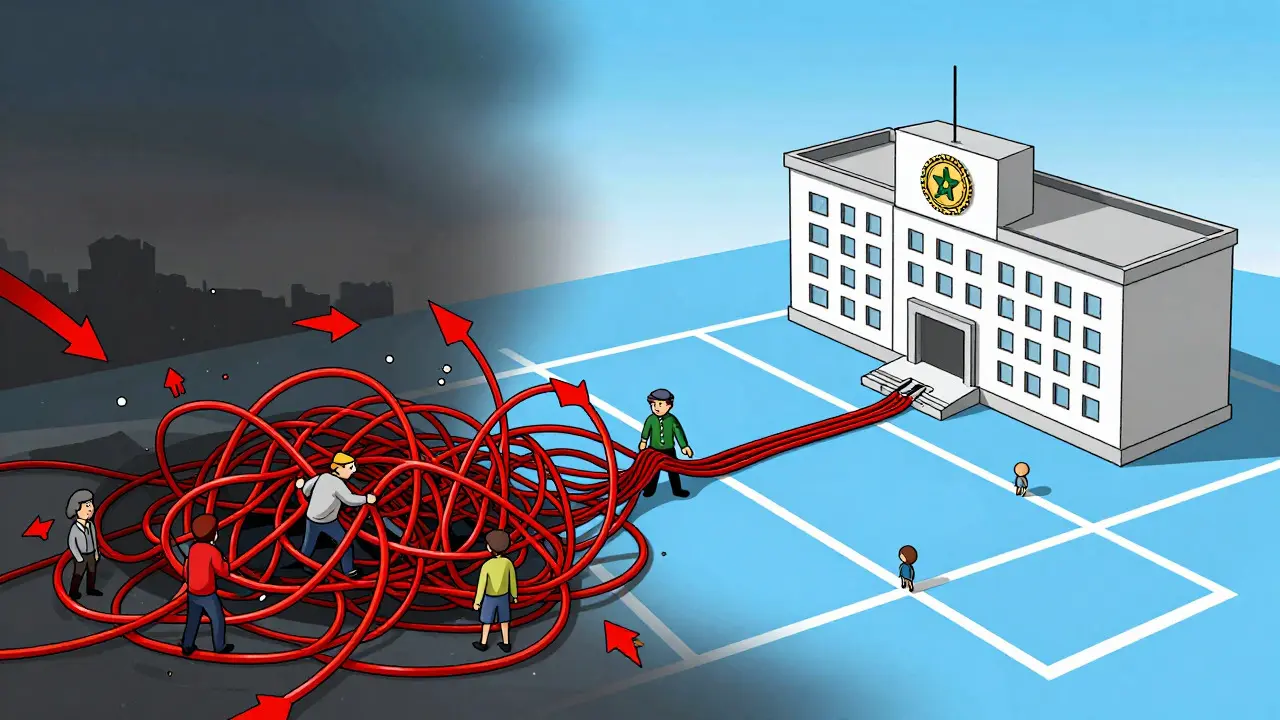
For years, the government’s stance was simple: keep the door closed. But by 2024, it became clear that the ban was failing. In November 2024, Governor Abdellatif Jouahri of Bank Al-Maghrib announced a strategic pivot. A draft law to regulate cryptocurrency was in the works. This wasn’t just a minor tweak; it was a complete overhaul of the approach.
The new framework, expected to be implemented in Q3 2025, aims to bring order to the chaos. Key components include mandatory Know Your Customer (KYC) protocols, Anti-Money Laundering (AML) compliance, and licensing requirements for exchanges. Companies will need to pay between MAD 150,000 and 200,000 to get a license from Bank Al-Maghrib. There’s also a proposed 15% capital gains tax on crypto profits.
Why the sudden change? Dr. Fatima Zahra El Moudni, a professor of Financial Regulation at Mohammed V University, noted that the government recognized prohibition had failed to suppress demand. In fact, illicit activities, which were a major concern in 2017, accounted for only 4.3% of actual crypto-related crimes in Morocco according to internal assessments. The real threat wasn’t crime; it was unregulated consumer risk. By regulating the market, the government hopes to capture tax revenue, protect citizens, and position Morocco as a fintech hub in North Africa.
What This Means for You
If you’re currently trading in the underground market, the coming regulatory changes will likely shake things up. The era of easy, anonymous P2P swaps may end as licensed exchanges enter the scene. For consumers, this could mean lower fees and safer transactions, but also stricter identity checks and taxes. For businesses, the ban on using crypto for commercial payments will remain, so don’t expect to pay your rent in Bitcoin anytime soon.
The transition won’t happen overnight. The underground network is deeply entrenched, and trust takes time to build. But the direction is clear. Morocco is moving from a state of denial to one of engagement. Whether this creates a thriving regional hub or just a more compliant black market remains to be seen. But one thing is certain: the days of total prohibition are numbered.
Is cryptocurrency still illegal in Morocco in 2026?
As of early 2026, the situation is in transition. The 2017 ban is technically still in effect until the new regulatory law is fully implemented and enforced. However, a draft law for regulation was announced in late 2024, signaling a shift from prohibition to oversight. Until the new licenses are issued and the law is strictly enforced, trading remains in a legal grey area, though widespread enforcement against individual retail investors has been minimal.
How do Moroccans buy Bitcoin if it's banned?
Most users rely on Peer-to-Peer (P2P) networks facilitated through WhatsApp or Telegram groups. They connect with trusted local intermediaries who accept fiat currency (MAD) via bank transfer or cash and release Bitcoin from their wallets. Additionally, many use Virtual Private Networks (VPNs) to access international exchanges like Binance or OKX, although direct fiat deposits from Moroccan banks are difficult due to banking restrictions.
What are the main risks of trading crypto underground in Morocco?
The primary risks include counterparty fraud (scams), where one party fails to deliver the asset or cash. Other significant risks include account freezes on international exchanges due to geo-blocking or compliance checks, high transaction fees (often 4-5%), and potential legal scrutiny, although active prosecution of small-scale traders is rare. Settlement delays averaging 72 hours also pose liquidity risks.
Will the new regulations allow using crypto for payments?
Likely not for general commercial use. The emerging regulatory framework, as outlined in recent analyses, maintains a restriction on using cryptocurrency for commercial payments and settlements. Businesses are expected to continue using traditional banking channels for international trade. The focus of the new laws is on allowing investment, holding, and exchange services under supervision, rather than making crypto a medium of exchange for everyday goods and services.
Which cryptocurrencies are most popular in Morocco?
Bitcoin (BTC) is the dominant asset, accounting for approximately 57.3% of trading volume. Ethereum (ETH) follows with 22.1%. Stablecoins, particularly Tether (USDT), are increasingly popular due to their stability, making them suitable for remittances and saving value without exposure to high volatility. Altcoins make up the remainder of the market share.
