
- 29 Apr 2026
- Elara Crowthorne
- 22
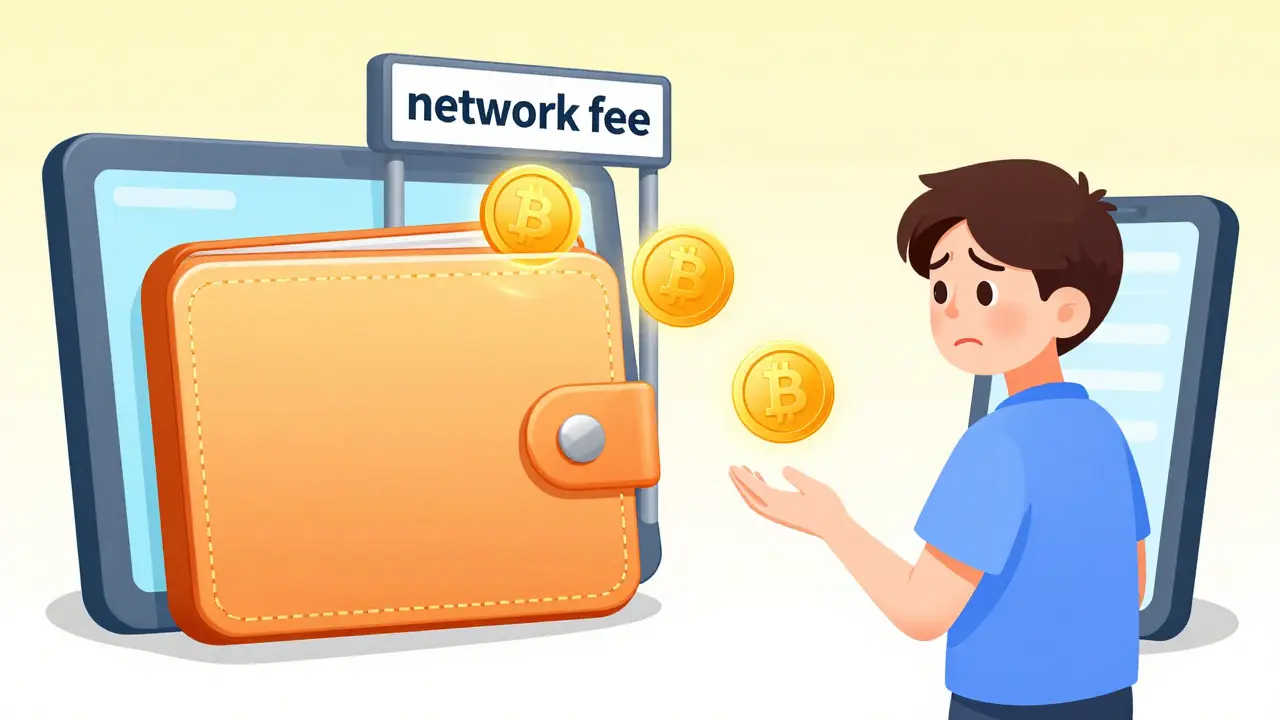
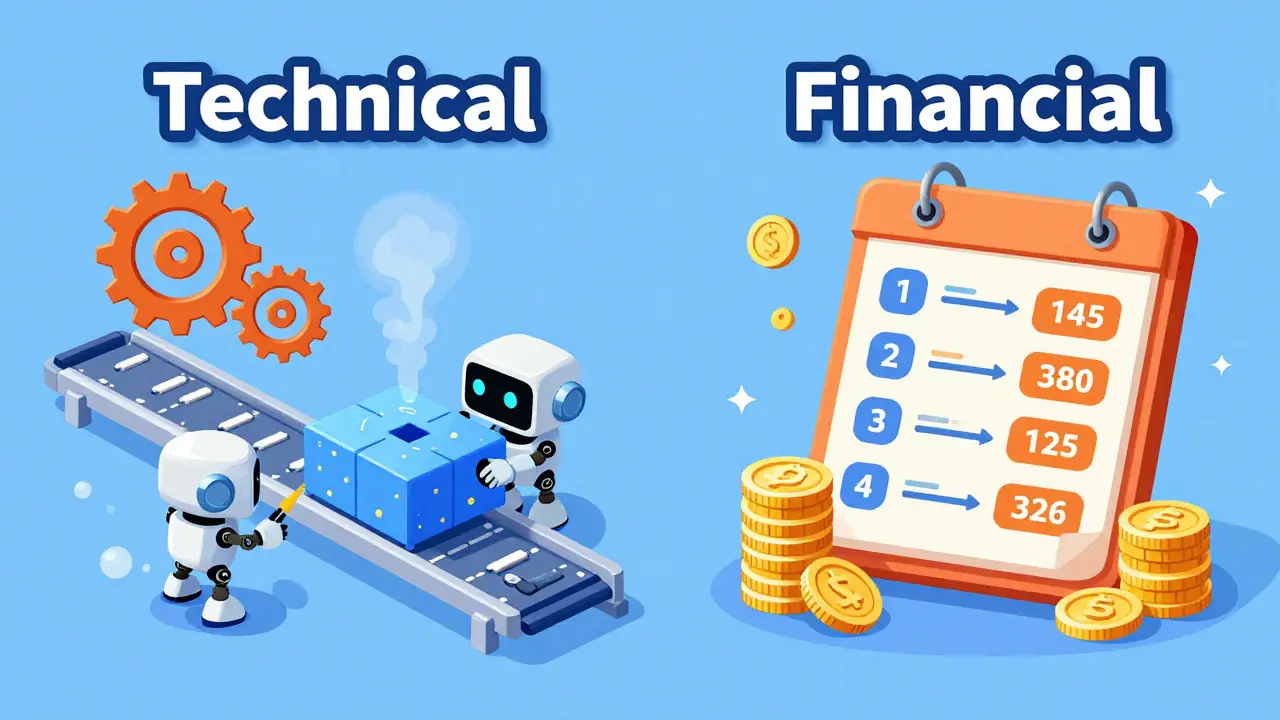
Ever sent some crypto and wondered why the final amount landing in the wallet was slightly less than what you sent? Or maybe you're staring at a spreadsheet trying to figure out how much you actually spent on an asset you bought in three different chunks over six months? Calculating crypto transaction costs isn't a one-size-fits-all process because you're actually dealing with two completely different types of costs: the technical fee paid to the network and the accounting cost used for taxes.
If you get these mixed up, you'll either overpay for your transfers or run into a headache during tax season. To get it right, you need to understand that one is about computational work (network fees), while the other is about financial tracking (cost basis). Let's break down exactly how to handle both so you don't leave money on the table.
The Quick Breakdown: Network Fees vs. Cost Basis
Before we get into the math, let's get the definitions straight. If you're moving funds, you care about network fees. If you're reporting profit, you care about cost basis.
- Network Fees: This is the "toll" you pay to the people who keep the blockchain running. Depending on the network, you're paying Miners (in Proof of Work) or Validators (in Proof of Stake).
- Cost Basis: This is the total amount of money you spent to acquire an asset, including the fees you paid to buy it. This is the number you'll need to figure out if you've made a capital gain or loss.
Calculating Network Fees by Blockchain
You can't use the same formula for Bitcoin and Ethereum because they "charge" for space and work differently. Here is how the math actually works for the biggest players.
The Bitcoin Model: Size Matters
Bitcoin doesn't care how complex your transaction is; it cares how many bytes of data it takes up. Fees are calculated in Satoshis (the smallest unit of Bitcoin, where 1 sat = 0.00000001 BTC). The formula is: Transaction Size (Bytes) × Fee Rate (Sats/Byte) = Total Fee.
For example, if you have a standard transaction of 250 bytes and the current network rate is 10 sat/B, you'll pay 2,500 satoshis. If the network gets crowded and the rate jumps to 50 sat/B, that same transaction now costs 12,500 satoshis. This is why your fees can spike during a bull market.
The Ethereum and Polygon Model: The Gas System
Ethereum uses a system called Gas, which measures the computational effort required. Unlike Bitcoin, sending a token is cheaper than interacting with a complex smart contract. The formula is: Gas Units × (Base Fee + Priority Fee) = Total Cost.
The "Priority Fee" is essentially a tip you give to validators to jump to the front of the line. On Polygon, a simple wallet-to-wallet transfer typically uses about 21,000 gas units. If the base fee is 100 gwei and you add a 10 gwei tip, the math looks like this: 21,000 × 110 = 2,310,000 gwei (or 0.00231 MATIC). Interestingly, on Polygon, the base fee is burned (destroyed), while the tip goes to the validator.
| Network | Calculation Basis | Primary Unit | Cost Driver |
|---|---|---|---|
| Bitcoin | Data Size (Bytes) | Satoshi (sat) | Block space demand |
| Ethereum | Computational Work | Gwei | Network congestion |
| Polygon | Computational Work | Gwei/MATIC | Network congestion |
| Solana | Fixed/Low Variable | SOL | High throughput capacity |
How to Calculate Your Cost Basis for Taxes
Now we move from the technical to the financial. Your cost basis is the starting point for calculating your taxes. The basic formula is: Total Purchase Price ÷ Number of Tokens = Cost Basis per Token.
Let's say you bought 10 AAVE tokens for $500. Your cost basis is $50 per token. If you later sell those tokens for $70 each, your taxable gain is $20 per token. But in the real world, people rarely buy just once. You might buy 2 tokens at $40, 3 tokens at $60, and 5 tokens at $50. This is where accounting methods come in.
Choosing Your Accounting Method
Since you have tokens bought at different prices, you have to decide which ones you are "selling" first. This decision can drastically change your tax bill.
- FIFO (First In, First Out): You sell the oldest tokens first. This is the most common method and often the default for many tax authorities.
- LIFO (Last In, First Out): You sell the most recent tokens first. This can be useful if the price has dropped and you want to realize a loss.
- HIFO (Highest In, First Out): You sell the tokens you paid the most for first. This is generally the best way to minimize your capital gains tax because it maximizes your cost basis.
For instance, if you bought BTC at $20k and later at $60k, and then sell some, using HIFO means you'd claim the $60k purchase as the cost, which reduces the "profit" you have to pay taxes on.
Common Pitfalls in Cost Calculations
Calculating these costs manually is a nightmare. Most people make the mistake of ignoring "hidden" costs. For example, when you trade ETH for LINK on a decentralized exchange, that is actually two transactions: selling ETH and buying LINK. You must calculate the cost basis for the LINK based on the value of the ETH you gave up at that exact moment.
Another common error is forgetting to include the network fee in the cost basis. If you spend $100 on a coin and pay $5 in gas to get it into your wallet, your total investment is $105. That $5 fee increases your cost basis, which slightly lowers your taxable profit when you sell.

Tools to Simplify the Process
If you have more than five transactions a year, stop using a manual spreadsheet. It's a recipe for errors. There are two main types of tools you should use:
- Blockchain Explorers: Use tools like Etherscan or Blockchain.com to check the exact gas price or sat/B rate before you send a transaction. This prevents you from overpaying during peak congestion.
- Crypto Tax Software: These tools connect to your exchange APIs and wallets. They automatically track every buy, sell, and transfer, and allow you to toggle between FIFO and HIFO to see which method saves you more money.
While software is great, be careful with DeFi. Liquidity mining, staking rewards, and yield farming don't always fit into a simple "buy/sell" box. In these cases, the reward is often treated as income at the time of receipt, which then becomes the cost basis for when you eventually sell that token.
Do I pay network fees every time I move crypto?
Yes. Every time you initiate a transaction on a blockchain, you must pay a fee to the miners or validators. However, if you are moving funds between two accounts on the same centralized exchange (like moving BTC from your spot wallet to your futures wallet), the exchange usually doesn't charge a network fee because the transaction isn't actually happening on the blockchain.
What happens if I set the fee too low?
If your fee is too low, validators will likely ignore your transaction in favor of others who paid more. Your transaction will stay "pending" in the mempool. Depending on the network, you can either wait for congestion to drop or use a tool to "speed up" (increase the fee) or cancel the transaction.
Is the cost basis the same as the market price?
No. The market price is what the asset is worth right now. The cost basis is what you specifically paid for it. If you bought BTC at $30k and it's now at $60k, the market price is $60k, but your cost basis remains $30k (plus any acquisition fees).
How does L2 like Polygon reduce costs?
Layer 2 (L2) solutions bundle many transactions together into a single batch before sending them to the main Ethereum network. Instead of 1,000 people paying separate Ethereum gas fees, they split the cost of one large transaction, which makes the individual cost 100x to 1,000x cheaper.
Can I change my accounting method (FIFO to HIFO) mid-year?
Generally, you must be consistent with your accounting method for the entire tax year. While you can change your method from one year to the next, you cannot cherry-pick a different method for every single trade within the same year to avoid taxes.
Next Steps for Different Users
For the casual holder: Focus on record-keeping. Even if you aren't trading daily, keep a CSV export of every exchange you use. Use a simple FIFO calculation for your year-end taxes.
For the DeFi enthusiast: Start using a dedicated crypto tax aggregator. Between staking, bridging to L2s, and liquidity pools, manual calculation is virtually impossible. Track your "cost of entry" for every new protocol you join.
For the active trader: Pay close attention to the mempool and current gas prices. Use a gas tracker to time your transactions during off-peak hours (usually weekends) to minimize the impact of network fees on your margins.


22 Comments
The distinction between network fees and cost basis is a point where a lot of beginners trip up, especially when they start moving assets between different chains using bridges.
This is such a helpful breakdown! 🌟 It makes the scary tax stuff feel way more manageable. Keep it up! ✨💖
It is honestly laughable that some people still think a manual spreadsheet is a viable option for tracking DeFi transactions in the current year, because anyone with a shred of analytical capability can see that the sheer volume of smart contract interactions makes a CSV file an absolute joke, and while the author mentions tax software, they fail to highlight that even some of these tools struggle with complex liquidity pools, leading to a complete disaster during an audit if you aren't meticulously double-checking every single API sync 🙄.
Oh, wonderful. Another guide explaining that paying more money for a transaction makes it go faster. Truly a revolutionary concept that definitely wasn't obvious from the start. 🙄
The explanation regarding HIFO is accurate, although it is important to note that some jurisdictions have very specific mandates on which accounting method is permissible, so users should verify local laws before applying a method that minimizes their tax liability.
Who actually cares about this stuff. Just buy and hold.
The author's example of the AAVE tokens is overly simplistic. In a real-world scenario, the slippage on a decentralized exchange would further complicate the cost basis, a detail that was inexplicably omitted here.
Hark! The tragedy of the gas fee is a tale as old as the Merge itself! 😱 It is absolutely devastating to see a profit wiped out by a sudden spike in Gwei just because some NFT mint went viral! 🎭
L2s are the way 🚀
Great tips! I always tell my friends to use a gas tracker before hitting send. It saves a ton of money in the long run!
The concept of the cost basis is fundamentally a reflection of our psychological attachment to the entry point of an asset. We track these numbers not just for the state, but to quantify our own risk tolerance over time.
I feel like the true moral failure here is the existence of fees at all. We are just paying for the hubris of the developers. 🧘♂️
I wonder if there are ways to find out the cheapest time of day to send stuff.
It can be really overwhelming for new people. Just take it slow and use the tools mentioned.
This is a super friendly guide for anyone starting out!
the math is just a wild ride honestly no cap
Basic concepts. I expected more depth.
Tell me how much you spent on gas. Now. 💸
I tried doing this in excel and totaly messed up the formula lol. Thnx for the help!
Looking at the way we calculate value in the digital realm really makes one contemplate the fleeting nature of currency. It is almost like we are mapping the ghost of our labor across a distributed ledger, trying to find a solid piece of ground to stand on while the tide of volatility washes over us. 🌊 I believe that by understanding these costs, we are not just saving pennies but are actually learning to respect the energy that sustains these networks, and it is so heartening to see people helping others find their way through this complex labyrinth with such kindness and clarity 🌿✨.
Let's all try to keep a clean record this year! We can do this together! 💪
Actually, for those using Solana, the cost is so negligible that cost basis becomes the only thing worth tracking, whereas on Ethereum, the network fee can literally be a significant part of the cost basis for small trades.