
- 1 Jul 2026
- Elara Crowthorne
- 0
You might have heard the name Opnx crypto exchange floating around in old forum threads or seen the Su Zhu logo on a chart. If you are looking to sign up today, stop right there. The platform is dead. Permanently.
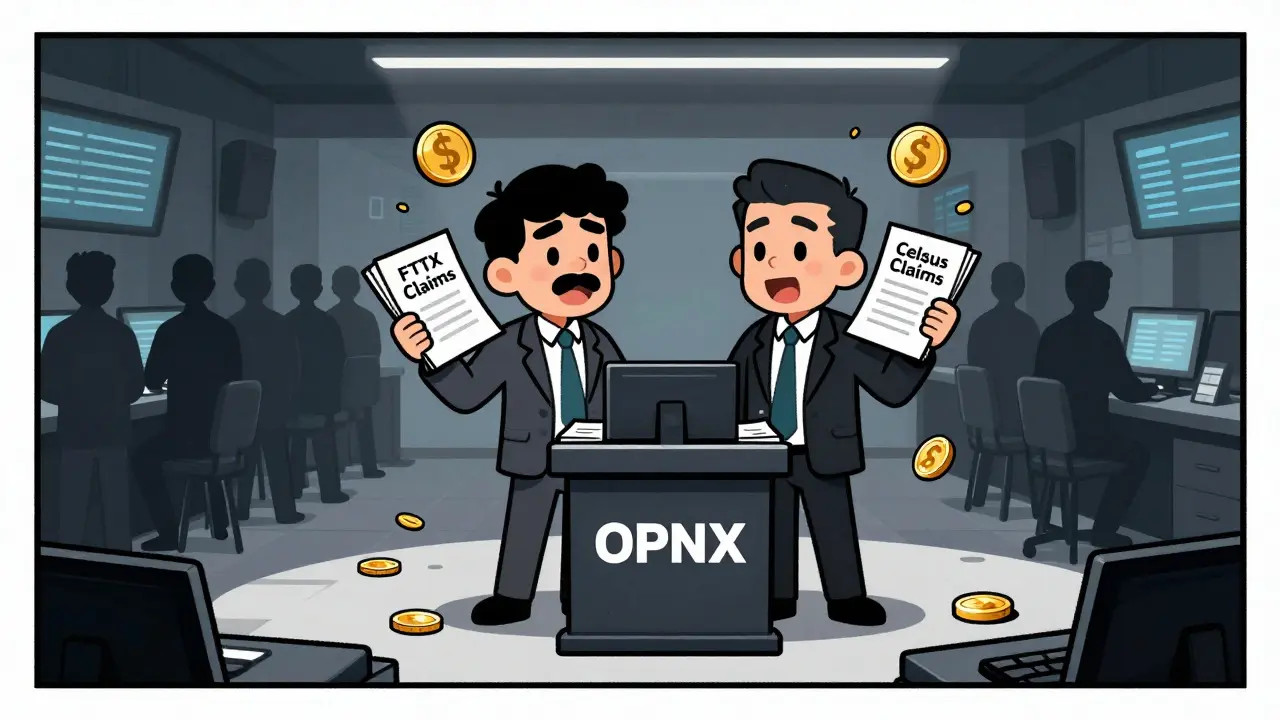
OPNX (Open Exchange) shut its doors for good on February 14, 2024. It was supposed to be a revolutionary marketplace where you could trade bankruptcy claims from failed crypto giants like FTX and Celsius. Instead, it became another cautionary tale from the controversial founders of Three Arrows Capital, a hedge fund that collapsed in 2022 after losing billions in client money.
This review isn't about how to use the platform-you can't. It’s about understanding why it failed, what happened to the OX token, and whether any of this matters for your portfolio now. If you held tokens or claims, you need to know the final outcome. If you are just curious about the history of crypto failures, stick around. This story explains exactly how a niche idea with big names turned into zero liquidity and total closure.
The Big Idea: Trading Bankruptcy Claims
Let’s look at what OPNX actually tried to do. In late 2023, the crypto world was still reeling from massive collapses. Companies like FTX, Celsius, and BlockFi had gone bankrupt. Creditors were stuck waiting years for court proceedings to finish before they might get pennies on the dollar back.
Su Zhu and Kyle Davies, the former bosses of Three Arrows Capital, saw an opportunity. They launched OPNX as the world’s first public marketplace for trading these bankruptcy claims. The logic was simple: if you don’t want to wait three years for a potential payout, sell your claim now to someone who thinks they can make a profit later. It was supposed to create instant liquidity for assets that were previously frozen.
On paper, it sounded clever. In practice, it was a disaster. The platform relied on the FLEX token (from their previous venture, CoinFLEX) and introduced a new Open Exchange Token (OX) for fees and functions. Users could tokenize their claims and even use them as collateral for futures trading. But here is the problem: nobody wanted to buy those claims.
Why Nobody Traded on OPNX
You can’t run an exchange without volume. And OPNX had virtually none. According to data from CoinGecko, the entire lifetime trading volume of the platform peaked at just $624,093. That is less than most retail traders move in a single day on Binance.
When OPNX launched, CoinDesk reported that less than two dollars worth of trades happened in the first 24 hours. Can you imagine opening a stock market and seeing no activity? That is exactly what happened here. The lack of liquidity created a vicious cycle. Because there were no buyers, sellers couldn’t exit. Because sellers couldn’t exit, new users stayed away. The platform died before it really started.
There were also serious trust issues. Who wants to buy a bankruptcy claim from a platform founded by the guys who lost $3 billion in client funds just a year earlier? Industry experts were skeptical from day one. Many creditors preferred to hold their claims, hoping for a better recovery rate in court, rather than selling them at a steep discount to strangers on a shaky platform.
The Closure and the Pivot to OX.Fun
So, what happened next? On February 7, 2024, OPNX halted all trading. They kept withdrawals open until February 14, 2024, when the platform officially closed. Su Zhu claimed that FTX’s announcement of full customer repayments made the claims trading model obsolete. Essentially, he argued that since creditors were getting paid in full, there was no need to sell claims cheaply anymore.
But the story didn’t end there. The founders immediately pivoted to promoting a new project called OX.Fun. This was described as a derivatives exchange focused on the OX token. At its peak in January 2024, OX.Fun showed nearly $39 million in derivatives volume, which looked impressive compared to OPNX’s failure. However, the relationship between the two platforms was murky. The founders listed themselves only as "advisers" to OX.Fun, distancing themselves legally while trying to keep the community engaged.
Most users were confused. The Telegram group, which still had over 3,000 members, filled with questions about whether OX tokens would retain value. The answer remains unclear. The OX token continues to trade on decentralized exchanges like Uniswap and centralized ones like Gate.io, BingX, and Bitget. But without a functioning primary platform, its utility is questionable.
Key Takeaways from the OPNX Failure
What can we learn from this mess? First, a novel idea does not guarantee success. Trading bankruptcy claims is a complex financial product that requires deep legal knowledge and high trust. OPNX offered neither. Second, reputation matters. You cannot rebuild trust overnight after a catastrophic failure like Three Arrows Capital. Third, liquidity is king. Without enough buyers and sellers, an exchange is just an empty website.
If you are holding OX tokens today, treat them as highly speculative assets. There is no underlying platform generating revenue or providing services. The token’s price moves based on speculation and community hype, not real usage. Always check the latest status of such tokens on reliable trackers like CoinMarketCap or CoinGecko before making any decisions.
Frequently Asked Questions
Is Opnx crypto exchange still active?
No, OPNX permanently shut down on February 14, 2024. All trading was halted weeks prior, and the platform no longer operates.
Who founded OPNX?
OPNX was founded by Su Zhu and Kyle Davies, the former leaders of the collapsed hedge fund Three Arrows Capital. Mark Lamb served as CEO during its operation.
What happened to my OPNX account and funds?
Withdrawals were allowed until the final closure date of February 14, 2024. If you did not withdraw your funds by then, they are likely inaccessible. The platform has ceased all operations.
What is the OX token used for now?
The OX token was originally designed for fees and governance on OPNX. Since OPNX closed, the token has limited utility. It trades on various exchanges but lacks a primary functional platform, making it a high-risk speculative asset.
Why did OPNX fail?
OPNX failed due to extremely low trading volume, lack of user trust in its founders, and poor market timing. The niche market for bankruptcy claims was too small and illiquid to sustain an exchange.
Is OX.Fun related to OPNX?
Yes, OX.Fun is a successor project promoted by the same founders. However, they serve only as advisers, and the legal and operational connection is distinct from the defunct OPNX platform.
Can I still trade bankruptcy claims online?
Currently, there are no major successful public exchanges dedicated solely to trading crypto bankruptcy claims. Most creditors continue to participate in traditional court-led bankruptcy proceedings.
