
- 21 Sep 2026
- Elara Crowthorne
- 0
Imagine paying for car insurance and getting some of that money back at the end of the year because you didn't crash. Sounds too good to be true? It’s actually how Peer-to-Peer (P2P) Insurance works. Unlike traditional insurers who keep your unclaimed premiums as profit, P2P models return leftover funds to members or donate them to charity. This shift isn't just a nice perk; it’s a fundamental change in how we handle risk, driven by trustless technology and community power.
You might have heard of Lemonade or Friendsurance. These aren't just marketing gimmicks. They represent a global market valued at USD 63 billion in 2023. While that's less than 1% of the total $7.2 trillion insurance industry, it’s growing fast-projected to expand over 30% annually through 2027. Why? Because people are tired of opaque pricing and slow claims. If you’re into blockchain or just want lower costs, understanding this model is crucial.
What Exactly Is Peer-to-Peer Insurance?
The National Association of Insurance Commissioners (NAIC) defines P2P insurance as a product where a group of insureds pools capital, self-organizes, and self-administers their coverage. Think of it like a mutual aid society but supercharged with digital tools. Instead of one giant company insuring everyone from teenagers to retirees under one blanket policy, small groups with similar risks pool their money together.
This structure bypasses the massive overhead of traditional insurers. In a standard model, the insurer takes on all the risk and keeps the surplus. In P2P, the community shares the risk. If the group stays safe, the pot doesn't empty out, and the excess goes back to you. It combines the sharing economy ethos seen in Uber or Airbnb with the financial security of insurance.
How the Two Main Models Work
Not all P2P setups are the same. There are two primary structures you need to know about if you're considering joining one.
The first is the Insurance Broker Model. Here, a platform acts as a middleman. You pay premiums into a shared pool. Small claims get paid directly from this pool. For big, catastrophic events, a traditional insurance company steps in via reinsurance. The broker makes money through commissions, not by hoarding your premiums. This is common for auto or home liability where risks are predictable.
The second is the Insurance Company Model. In this case, an actual licensed insurer manages the operations for a flat fee. If the group's pooled money runs dry due to high claims, the insurer covers the difference using reinsurance. This offers broader coverage similar to standard policies but might cost slightly more because the insurer needs to cover its operational risks.
| Feature | Broker Model | Insurance Company Model |
|---|---|---|
| Risk Handling | Pooled fund for small claims; Reinsurer for large claims | Insurer manages all risk; Reinsurer backs up insurer |
| Cost Structure | Commission-based; Lower overhead | Flat fee; Higher operational costs |
| Coverage Scope | Niche, specific risks (e.g., bike theft) | Broad, similar to traditional policies |
| Member Control | High transparency; Direct view of pool | Moderate; Insurer handles admin |
The Role of Technology: Blockchain and Smart Contracts
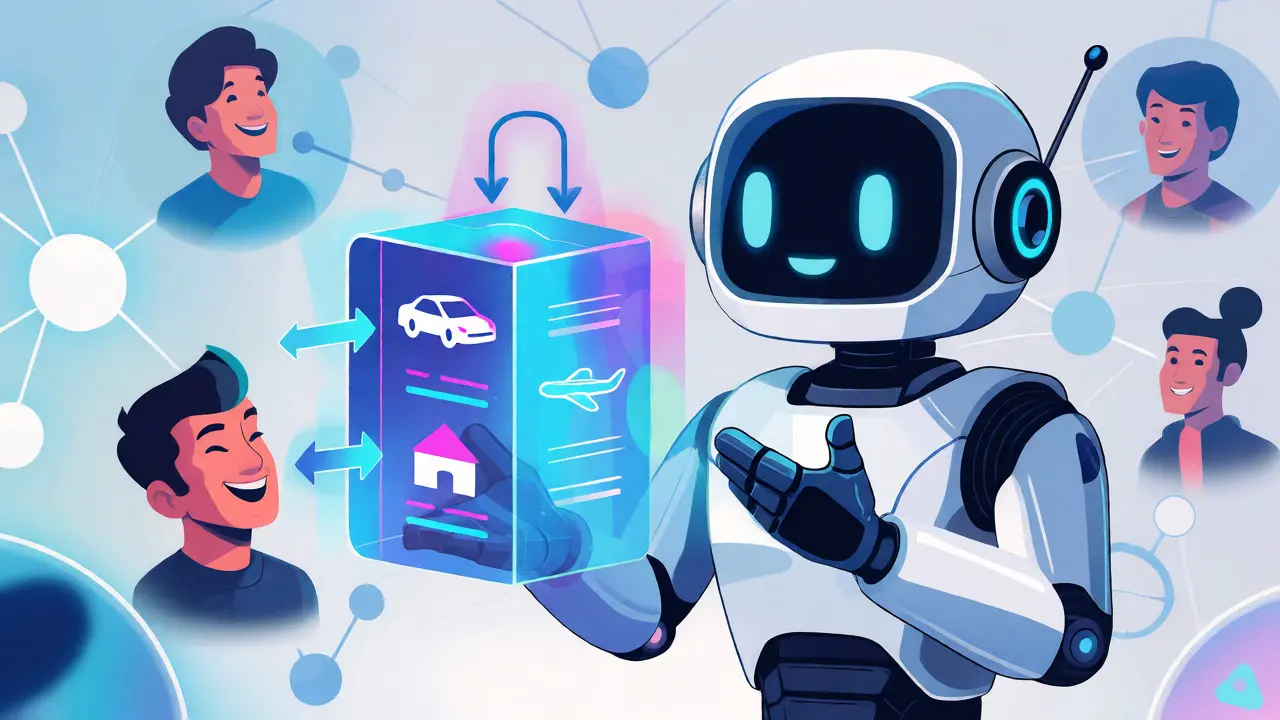
You might wonder why this hasn't happened before. Mutual societies existed centuries ago. So what changed? Technology. Specifically, blockchain, artificial intelligence, and smart contracts. These tools solve the biggest problem in any group arrangement: trust.
In a traditional setup, you trust the insurer to be fair. In P2P, you trust the code. Smart contracts automatically execute payouts when predefined conditions are met. No waiting weeks for an adjuster to visit your house. If your flight was delayed by three hours, the contract checks the data feed and pays you instantly. This reduces administrative costs significantly, which is exactly where traditional insurers make their margins.
Blockchain also ensures transparency. Every transaction is recorded on a public ledger. You can see exactly how much is in the pool, who claimed what, and how the reserves are managed. This accountability discourages fraud. If you try to game the system, your community sees it. Studies show P2P models experience lower fraud levels precisely because of this social pressure and transparent tracking.
Why Join a Pool? Benefits Beyond Just Saving Money
Sure, cheaper premiums are attractive. But the real value lies in fairness and control. Traditional insurance uses actuarial tables to price risk. A young driver pays more because statistics say they crash more. In P2P, you choose your tribe. If you are a cautious driver, you join a pool of other cautious drivers. You aren't subsidizing the reckless ones.
This creates a sense of ownership. Members often have a say in governance. Do we raise the premium next year? Do we donate the surplus to local animal shelters or split it back among ourselves? You decide. This member-centric approach leads to faster claims resolution because there is no adversarial relationship between the policyholder and the insurer. You are both on the same team.
For microbusinesses-companies with fewer than 10 employees-this is a game-changer. Kyle Hoffman, a program lead at Chubb, notes that these small entities are often underserved by traditional brokers. They are too small for big corporate rates but too complex for simple personal policies. P2P allows these freelancers and startups to form niche pools, getting tailored coverage without the markup.

Challenges and Risks to Consider
It’s not all smooth sailing. P2P insurance is still maturing. One major challenge is regulatory compliance. Insurance is heavily regulated to protect consumers from insolvent companies. If your P2P pool runs out of money and the reinsurer fails, who pays? Most established platforms mitigate this by partnering with large, reputable reinsurers, but the legal framework varies by country.
Another issue is adverse selection. If only high-risk individuals join a pool, the fund depletes quickly, driving premiums up. Conversely, if low-risk people leave because they feel they are subsidizing others, the pool becomes unstable. Successful platforms use algorithms and AI to balance these groups carefully. They also require clear participation rules to prevent abuse.
Finally, liquidity can be an issue. Unlike a bank account, you can’t withdraw your premium mid-term easily. That money is locked in the risk pool until the term ends. If you need cash flow flexibility, this might not be the best fit compared to a traditional savings account plus basic insurance.
Who Should Try P2P Insurance?
If you value transparency and want to reduce waste in your spending, this model appeals to you. It’s particularly strong for:
- Frequent Travelers: Flight delay insurance via smart contracts pays out automatically based on airport data.
- Freelancers: Health or equipment insurance pools allow gig workers to share risk without employer benefits.
- Community Groups: Neighborhoods pooling for home contents insurance can negotiate better terms collectively.
However, if you prefer set-and-forget simplicity and don’t care about seeing where your money goes, traditional insurance might still be easier. But as blockchain tech integrates deeper into finance, the friction of P2P models is disappearing. We are moving toward a world where insurance is not a service you buy from a corporation, but a utility you manage with your peers.
Is peer-to-peer insurance regulated?
Yes, but regulations vary by region. In many jurisdictions, P2P platforms must partner with licensed insurers or reinsurers to ensure solvency. The NAIC provides guidelines in the US, while other countries have specific fintech sandboxes. Always check if the platform holds necessary licenses in your location.
What happens if the P2P pool runs out of money?
Most P2P models use reinsurance. When claims exceed the pooled funds, a traditional insurance company (the reinsurer) covers the excess. This protects members from catastrophic losses. Some models may require additional contributions from members, but this is rare in well-structured plans.
Can I choose who is in my insurance pool?
Often, yes. Many platforms allow you to invite friends, family, or colleagues to join your specific pool. Others match you algorithmically based on risk profiles. Choosing your own group can increase trust and potentially lower premiums if your circle is low-risk.
Do I get money back if I don't make a claim?
Typically, yes. At the end of the policy term, any surplus in the pool is returned to members, used to offset future premiums, or donated to a charity chosen by the group. This contrasts with traditional insurers who retain unused premiums as profit.
How does blockchain improve P2P insurance?
Blockchain provides an immutable record of transactions, enhancing transparency and trust. Smart contracts automate claims processing, reducing administrative costs and speeding up payouts. This technology minimizes human error and potential bias in decision-making.
