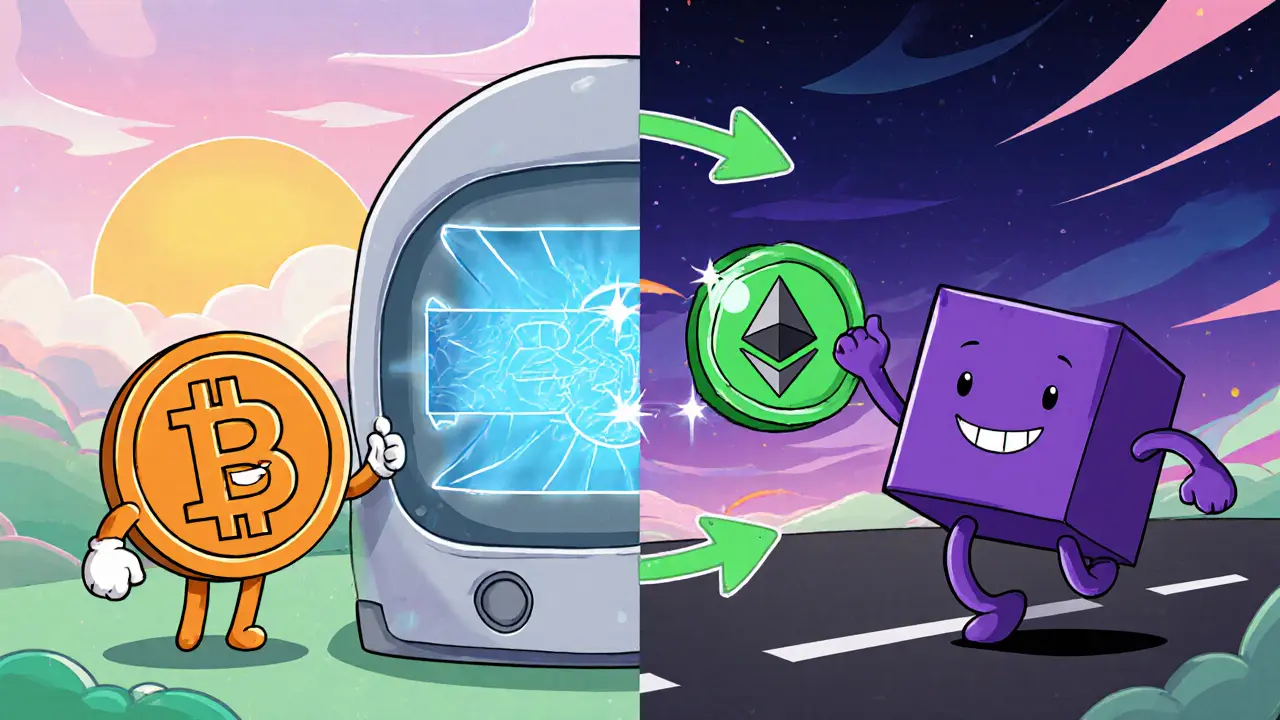
Discover why wrapped assets are essential for DeFi, how they boost liquidity, lower fees, and enable cross‑chain trading, plus practical steps to start using them.
When working with liquidity, the capacity of a market or token to absorb trades without large price moves. Also called market depth, it is the lifeblood of any trading ecosystem because it lets buyers and sellers exchange value smoothly. Single-sided liquidity, capital supplied in only one asset, usually a stablecoin and dual-sided liquidity, pairs of assets deposited together in a pool are the two main ways DeFi platforms attract that capital. The rise of automated market makers (AMMs), smart contracts that price assets algorithmically turned liquidity from a niche concern into a public good, letting anyone become a market maker with a few clicks.
Liquidity requires capital efficiency, meaning the amount you lock should generate enough fees to offset impermanent loss. In a single-sided setup, providers earn fees only when traders use the stable asset as the quote currency, which reduces exposure to price volatility but also caps upside. Dual-sided pools, by contrast, let you earn fees on both sides of the trade, but you risk larger swings if one asset’s price diverges sharply. AMMs like Uniswap or PancakeSwap use a constant product formula (x·y=k) to keep prices balanced; this formula itself is a semantic triple: AMM encompasses constant‑product pricing. DeFi projects continuously tweak the formula—some add dynamic fees, others introduce concentrated liquidity—to improve capital use. Those tweaks illustrate another triple: Liquidity influences fee structure, and Fee structure impacts provider returns. Understanding which model fits your risk appetite is key before you jump into a new token’s pool.
Beyond the mechanics, liquidity matters for security and market health. Low‑liquidity tokens can be bought up with tiny amounts, leading to price manipulation and higher slippage for genuine traders. High‑liquidity assets tend to attract institutional interest because they signal stability. That’s why many of our guides compare token liquidity across centralized exchanges, decentralized pools, and hybrid platforms. Below you’ll find a curated collection of articles that break down token‑specific liquidity, walk you through risk‑adjusted strategies, and show how to evaluate the depth of any market before you commit your capital.
Discover why wrapped assets are essential for DeFi, how they boost liquidity, lower fees, and enable cross‑chain trading, plus practical steps to start using them.