SOHO19 Crypto District

Monero Ban: Why Privacy Coins Are Targeted and What It Means for You

When you hear about a Monero ban, a government action targeting the privacy-focused cryptocurrency XMR to limit anonymous transactions. Also known as XMR censorship, it's not just about one coin—it's about whether you can control your own financial data. Unlike Bitcoin, which leaves a public trail, Monero hides sender, receiver, and amount by default. That’s why regulators see it as a threat, not a tool.

Regulators don’t ban Monero because it’s illegal—they ban it because it’s untraceable. Countries like Japan, South Korea, and the U.S. have pushed exchanges to delist it. The FATF even labeled privacy coins as high-risk in 2019, forcing platforms to choose between compliance or losing access to global banking. This isn’t theoretical. In 2024, a major European exchange shut down its Monero trading pair after receiving a regulatory warning. Meanwhile, China’s crypto crackdown, which you’ll find covered in posts about seized assets and digital yuan enforcement, follows the same playbook: eliminate anonymity to enforce control.

But here’s the twist: banning Monero doesn’t stop people from using it. Just like in Russia, where over 20 million use crypto despite the ban, or Vietnam, where $91 billion flows in yearly despite restrictions, users find ways. Peer-to-peer markets, decentralized exchanges, and wallet-to-wallet transfers keep Monero alive. The real question isn’t whether Monero can be banned—it’s whether governments can afford to alienate millions of ordinary people who value privacy over surveillance.

What you’ll find in the posts below are real cases of crypto crackdowns—from China’s asset seizures to Egypt’s 3 million holders defying the ban. These aren’t isolated events. They’re part of a global pattern: when a technology protects individual freedom, authorities respond with control. The Monero ban is just the latest chapter.

Privacy Coins Banned on Australian Crypto Exchanges: What You Need to Know
  • 17 Sep 2025
  • Elara Crowthorne
  • 17

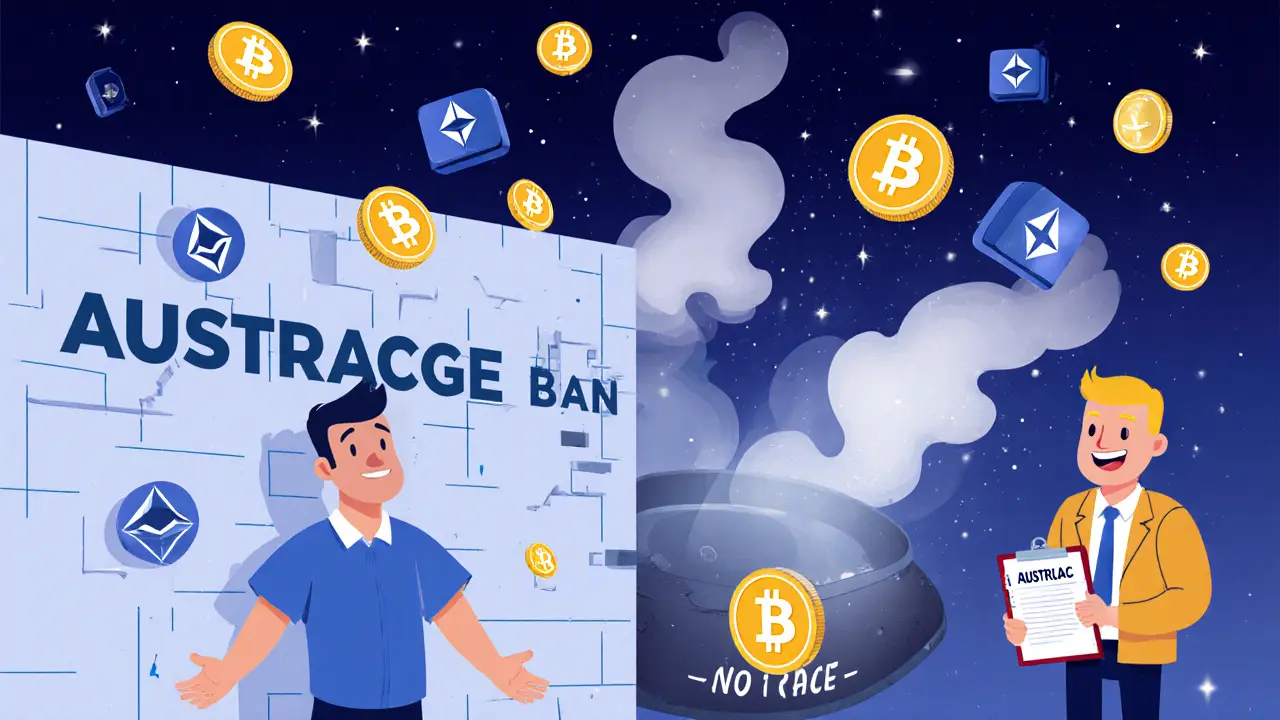
Privacy Coins Banned on Australian Crypto Exchanges: What You Need to Know

Australia has banned privacy coins like Monero and Zcash on all licensed crypto exchanges due to anti-money laundering rules. You can still own them, but trading is now restricted to risky peer-to-peer markets. Here's what you need to know.

View More

Popular Categories

  • Cryptocurrency Guides (51)
  • Cryptocurrency (37)
  • Cryptocurrency Trading (20)
  • DeFi (11)
  • Blockchain (8)

Latest News

Risks of Liquid Staking Protocols: What You Might Be Overlooking

Risks of Liquid Staking Protocols: What You Might Be Overlooking

14/Nov/2025
ReflexTrader Crypto Exchange Review: Fees, Security, and Trading Experience

ReflexTrader Crypto Exchange Review: Fees, Security, and Trading Experience

1/May/2025
BSW Airdrop: What’s Real, What’s a Scam, and How to Earn BSW Legitimately

BSW Airdrop: What’s Real, What’s a Scam, and How to Earn BSW Legitimately

5/Dec/2025
What is Brawl AI Layer (BRAWL) crypto coin? Real risks and red flags explained

What is Brawl AI Layer (BRAWL) crypto coin? Real risks and red flags explained

4/Nov/2025
ZKSwap V3 Testnet Airdrop Explained - What ZKB Holders Need to Know

ZKSwap V3 Testnet Airdrop Explained - What ZKB Holders Need to Know

14/Oct/2025

Popular Tags

cryptocurrency blockchain crypto exchange Bitcoin crypto exchange review ERC-20 DeFi CoinMarketCap airdrop Binance Smart Chain AI blockchain trading fees crypto airdrop guide how to claim airdrop DYOR token cryptocurrency research tokenized Bitcoin meme coin crypto airdrop 2025 Proof of Stake Proof of Work
SOHO19 Crypto District

About

Cryptocurrency

Menu

  • About Us
  • Terms of Service
  • Privacy Policy
  • CCPA
  • Contact Us
© 2025. All rights reserved.