
Learn how to spot trade cryptocurrency on major exchanges like Coinbase and Kraken. This guide covers technical analysis, risk management, and platform selection for beginners in 2026.
When working with risk management, the process of identifying, measuring, and mitigating potential losses in cryptocurrency activities. Also known as crypto risk control, it helps traders, investors, and developers keep their portfolios and projects safe. It directly connects to cryptocurrency security, protecting assets from hacks, phishing, and protocol bugs, and to decentralized exchange risk, the potential loss from low liquidity, smart‑contract bugs, or price manipulation. Understanding double‑spending attacks, attempts to spend the same coin twice by exploiting consensus lag is also a core part of any solid strategy. In short, risk management encompasses assessing liquidity risk, requires a grasp of consensus mechanics, and influences how you choose wallets, exchanges, and staking platforms.
One of the first attributes to evaluate is liquidity depth. When a token has thin order books, a modest trade can trigger large price swings—an obvious liquidity risk. Tools like on‑chain volume trackers and depth charts let you quantify this risk before you commit capital. Another key attribute is protocol robustness. A project that has undergone multiple audits, offers bug bounties, and displays transparent governance scores lower the chance of a security breach. Finally, operational transparency—such as clear fee structures, real‑time verification of reserves, and documented emergency procedures—helps you judge the overall health of a decentralized exchange. By mapping these attributes to concrete values—e.g., a 0.2% slippage on a $10 k trade, a $5 M audit bounty pool, or a 95% on‑chain liquidity ratio—you turn vague fear into actionable data.
Effective risk management requires three intertwined steps. First, identify the threat surface: are you exposing yourself to smart‑contract bugs, regulatory changes, or market volatility? Second, measure each threat with metrics you can track daily—like the number of pending withdrawals on a DEX, the average confirmation time for Bitcoin transactions (a proxy for double‑spending resistance), or the proportion of assets held in cold storage. Third, mitigate by diversifying, using hardware wallets, setting stop‑loss limits, or allocating a portion of your holdings to low‑risk stablecoins. This three‑step loop creates a feedback cycle where each new piece of data refines your next move. For example, if a new audit reveals a smart‑contract vulnerability, you can instantly shift funds to a more secure platform, reducing exposure before an exploit occurs.
The collection below pulls together practical guides, deep dives, and real‑world case studies that illustrate these concepts. You’ll find a technical walk‑through of blockchain immutability, step‑by‑step airdrop safety checks, reviews of centralized and decentralized exchanges, and strategies for navigating cross‑border remittances. Each article ties back to the core ideas of risk identification, measurement, and mitigation, giving you a ready‑to‑use toolbox for safeguarding your crypto journey. Dive in and start building a resilient portfolio today.
Learn how to spot trade cryptocurrency on major exchanges like Coinbase and Kraken. This guide covers technical analysis, risk management, and platform selection for beginners in 2026.
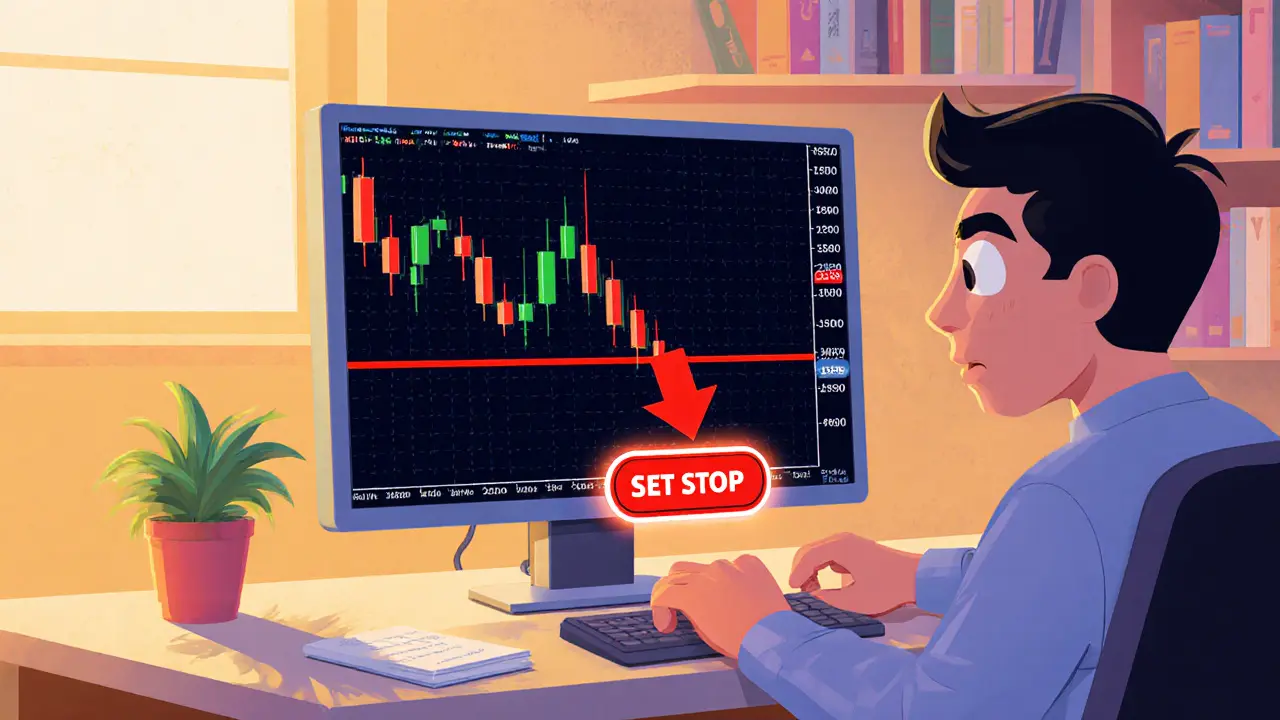
Learn the differences between stop‑loss and trailing‑stop orders, when each works best, and how to combine them for safer trading.