- 13 Sep 2026
- Elara Crowthorne
- 0
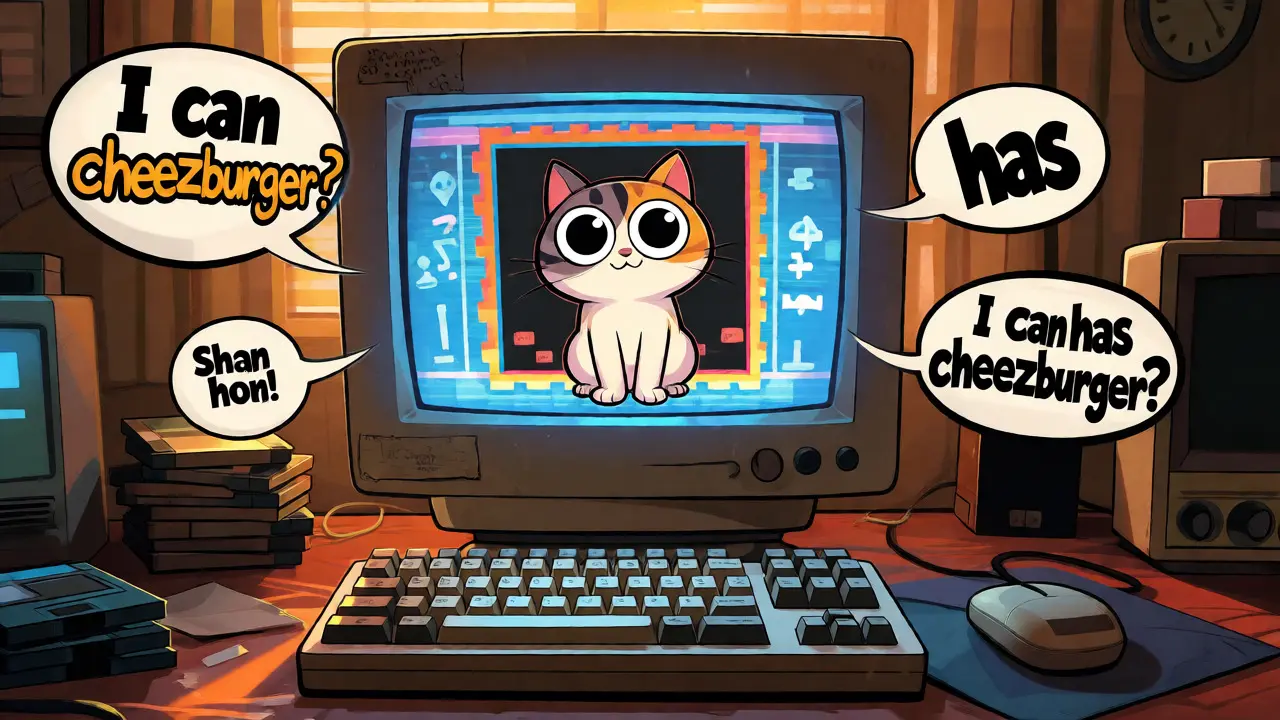
Remember the internet before TikTok and Instagram Reels took over? Before we had infinite scrolls of dancing teenagers, there was Lolcat. It was a wholesome era of cats with broken English captions like "I can has cheezburger?" that defined early web culture. Now, imagine taking that specific slice of nostalgia, slapping a blockchain on it, and asking people to pay real money for it. That is essentially what Lolcat (LOLCAT) is trying to do.
If you are seeing this ticker pop up in your wallet or hearing whispers about it in Discord servers, you might be wondering: Is this the next Dogecoin? Or is it just another fleeting trend that will vanish as quickly as it appeared? The truth is messy, volatile, and deeply tied to internet history rather than complex technology. Let’s break down exactly what Lolcat is, why its data looks so confusing across different platforms, and whether it holds any real value beyond the joke.
The Origin Story: From Bitcointalk to Blockchain
To understand Lolcat, you have to go back to December 26, 2010. This wasn’t just any random day; it was when user ShadowOfHarbringer posted the first cat meme on the Bitcointalk forum. The caption read, "how could anybody refuse this soft fluffy little lolcat?" This post is significant because it marks the intersection of two worlds: the emerging cryptocurrency community and the established internet meme culture.
Lolcat positions itself not just as a random animal coin, but as a tribute to that specific historical moment. While Dogecoin started as a joke among developers in 2013, Lolcat claims heritage from the very early days of Bitcoin forums. The project markets itself as a bridge between the "old school" crypto pioneers who loved memes and the modern wave of speculative traders looking for the next big pump. However, unlike Ethereum or Bitcoin, which were built to solve technical problems like double-spending or smart contract execution, Lolcat’s primary utility is social engagement and nostalgia.
Why Does Lolcat Data Look So Confusing?
If you try to look up Lolcat right now, you will likely hit a wall of conflicting information. One site says it is on Solana. Another says Ethereum. A third claims it is on Base. How can one coin exist on three different blockchains simultaneously? The answer lies in the nature of meme coins and how they are often deployed.
It appears there are multiple token deployments sharing the same name and branding. Here is a breakdown of the discrepancies you will find:
| Platform | Claimed Supply | Market Cap Snapshot | Key Feature |
|---|---|---|---|
| Solana | ~1 Billion | $40 - $500k | Fast transactions, low fees, SPL standard |
| Ethereum | ~995 Million | $10k - $300k | ERC-20 standard, higher gas fees, wider DeFi compatibility |
| Base | 1 Billion | $350k+ | L2 scaling solution, backed by Coinbase ecosystem |
This fragmentation creates a high risk for investors. If you buy the Solana version thinking you are buying the "official" Ethereum version, you might end up holding an asset with zero liquidity on the network you intended to use. Always check the contract address. For example, some sources list an Ethereum contract starting with `0xc28`, while others reference Solana Program Library (SPL) tokens. Without verifying the specific contract address on a block explorer like Etherscan or Solscan, you are gambling on which version of the meme you own.
Tokenomics: The Numbers Behind the Meme
Most aggregators agree on one thing regarding Lolcat’s supply: it is massive. The maximum supply is fixed at 1,000,000,000 (1 billion) tokens. In the world of cryptocurrencies, a large supply usually means a lower price per unit, which appeals to retail investors who want to feel like they are buying "a lot" of something. You aren't paying $50,000 for one Bitcoin; you are paying fractions of a cent for thousands of Lolcats.
However, the circulating supply varies slightly depending on who you ask. Some reports cite 999,942,135 tokens in circulation, while others say 1,000,000,000. These minor differences often result from burn mechanisms. Some versions of Lolcat reportedly implemented a 20% burn shortly after launch, reducing the effective supply and theoretically increasing scarcity. But remember, burning tokens doesn't automatically increase demand. If nobody wants to buy them, a smaller supply still equals a tiny market cap.
The market capitalization tells the real story. At various points in 2025 and 2026, Lolcat’s market cap has fluctuated wildly:
- Low End: Around $40 to $58,000 (indicating near-zero liquidity).
- Mid Range: Approximately $268,000 to $350,000.
- Peak Hype: Briefly touching $1.6 million shortly after certain launches.
These swings are characteristic of micro-cap meme coins. They are driven entirely by sentiment, not fundamentals. There is no revenue model, no staking yield generated from external assets, and no proprietary technology being licensed out. The value exists only if someone else believes the meme is funny enough to buy it from you.
Community Size: Small but Vocal
A meme coin lives or dies by its community. For Lolcat, the numbers are modest compared to giants like Shiba Inu or Dogecoin. Data from mid-2025 indicated that the official Twitter account had roughly 278 followers, and the Telegram channel hosted about 144 users. Reddit subscribers were reported at zero.
While these numbers seem tiny, they represent a dedicated core group. In the crypto space, a small, active community can sometimes drive more volatility than a large, passive one. These holders are likely motivated by two things: nostalgia for the 2010 Bitcointalk era and speculation on short-term price pumps. Because the community is small, social media campaigns can move the price significantly with relatively little capital. Conversely, if those few key influencers stop talking about it, the volume dries up instantly.
How to Buy and Hold Lolcat
Getting into Lolcat depends entirely on which chain you choose to trade on. Since the token exists in multiple forms, your wallet choice matters.
- For Solana Users: Use a wallet like Phantom. Search for the LOLCAT token using the correct contract address. Be aware that liquidity pools may be thin, meaning large buys or sells could suffer from high slippage (you get fewer tokens than expected due to lack of buyers/sellers).
- For Ethereum/Base Users: Use MetaMask or Coinbase Wallet. You will need ETH or USDC to swap for LOLCAT. Check decentralized exchanges (DEXs) like Uniswap or PancakeSwap (for Base). Note that Ethereum mainnet gas fees might eat up a significant portion of a small investment.
- Centralized Exchanges: Some smaller CEXs list lolcat, but major players like Binance primarily reference it in educational contexts rather than offering deep spot liquidity. Always verify if the exchange supports the specific chain variant you intend to hold.
Pro Tip: Never send funds to an unknown contract address without testing a small amount first. With multiple "Lolcat" tokens floating around, sending SOL to an ERC-20 contract address (or vice versa) will result in permanent loss.
Risks and Realities
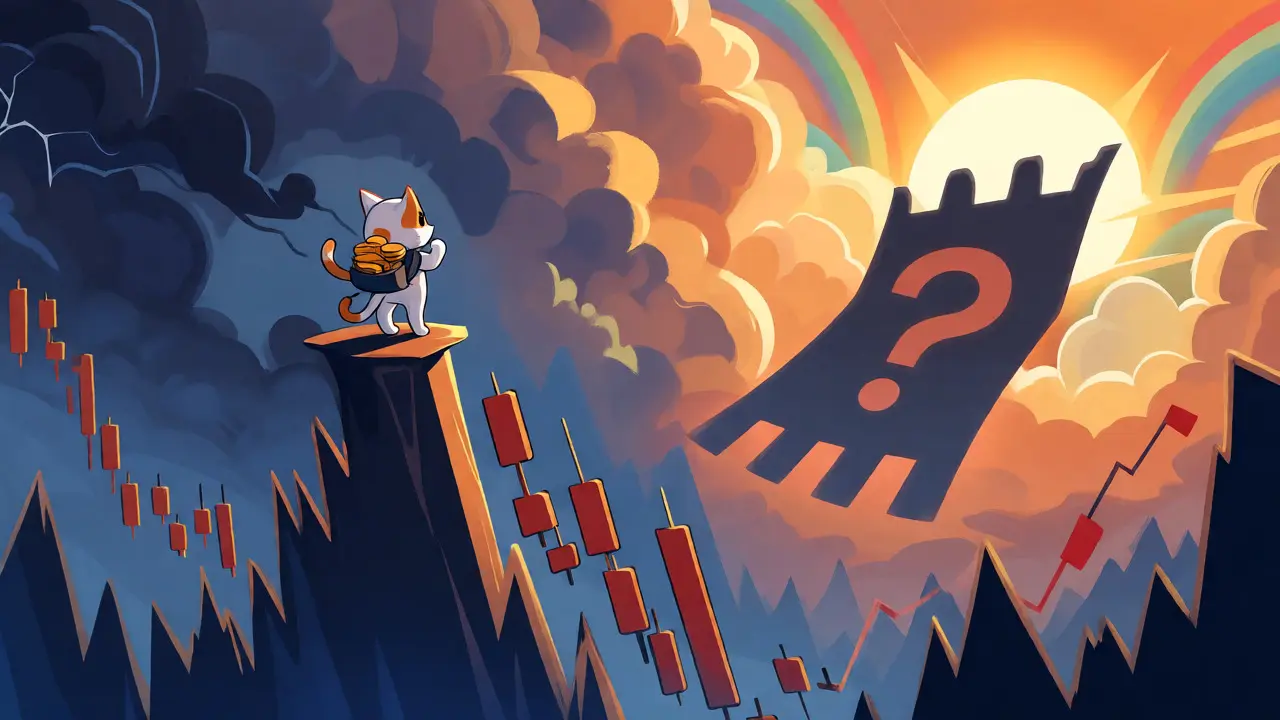
Is Lolcat a good investment? That depends on your definition of "good." If you are looking for long-term store of value, probably not. There is no academic research backing its economic model, and no institutional adoption. It ranks far outside the top 1,000 cryptocurrencies by market cap, hovering around #3,600 to #5,900 on trackers like CoinGecko.
The risks are clear:
- Volatility: Price changes of +88% or -14% in a single day are common.
- Liquidity Risk: Daily trading volumes can drop to under $100. Selling a large position might crash the price.
- Identity Crisis: Confusion over which blockchain hosts the "real" Lolcat leads to fragmented liquidity.
On the flip side, the upside potential exists because the barrier to entry is low. If a viral tweet brings attention back to the original Bitcointalk meme, the small market cap means even a modest influx of capital can multiply the price several times over. It is a lottery ticket wrapped in a cat picture.
Which blockchain is Lolcat actually on?
Lolcat exists on multiple blockchains, including Solana, Ethereum, and Base. This is common for meme coins where communities fork or create new tokens on different networks. Always check the contract address to ensure you are buying the specific version you intend to hold, as they are not interchangeable.
Is Lolcat the same as Dogecoin?
No. While both are meme coins featuring animals, Dogecoin launched in 2013 and has a much larger market cap and community. Lolcat is based on a 2010 Bitcointalk post and is considered a micro-cap asset with significantly lower liquidity and recognition compared to Dogecoin.
What is the total supply of Lolcat?
The maximum supply of Lolcat is fixed at 1 billion (1,000,000,000) tokens. Some versions may have burned a percentage of these tokens, but the hard cap remains at 1 billion across most documented instances.
Can I stake Lolcat to earn rewards?
There is no widely documented native staking mechanism for Lolcat that generates consistent yield. Like most meme coins, its value proposition relies on price appreciation through community hype rather than passive income generation through staking.
Where can I buy Lolcat?
You can buy Lolcat on decentralized exchanges (DEXs) like Raydium (for Solana), Uniswap (for Ethereum), or Aerodrome (for Base). Availability on centralized exchanges varies, so checking current listings on CoinGecko or CoinMarketCap is recommended before funding an account.