
- 25 Mar 2026
- Elara Crowthorne
- 16
Quick Summary
- Retik Finance is a decentralized finance ecosystem token built on the Ethereum blockchain.
- The RETIK token has a fixed total supply of 1 billion tokens with a circulating supply of around 155 million.
- Market data shows significant volatility, with the token trading significantly below its all-time high.
- Core features include a DeFi debit card, payment gateway, and non-custodial wallet.
- Investors should note high risks due to low trading volume and competition in the DeFi sector.
Have you come across the name Retik Finance and wondered if it's worth your time? You aren't alone. With thousands of coins flooding the market, separating the promising projects from the noise is tough. Retik Finance claims to bridge traditional finance and crypto, but the reality on the ground tells a more complex story. By March 2026, the crypto landscape has shifted, and understanding where RETIK fits requires looking past the marketing hype. This guide breaks down exactly what the project is, how it works, and the real risks involved if you are considering adding it to your portfolio.
We will look at the tokenomics, the actual utility of the ecosystem, and the hard numbers from market data. You need to know that this isn't just about price speculation; it's about understanding the infrastructure behind the coin. Whether you are a seasoned trader or just curious about DeFi, the details matter. Let's get straight into the facts.
Understanding the Retik Finance Ecosystem
At its core, Retik Finance is a decentralized finance (DeFi) ecosystem designed to make crypto usable in everyday life. Launched in 2024, the project set out to solve a major pain point: how do you spend your digital assets at a regular coffee shop or buy groceries? The answer they proposed was a suite of financial tools built on smart contracts. Instead of relying on banks, the ecosystem uses code to facilitate transactions.
The technical foundation is the Ethereum blockchain, specifically using the ERC-20 standard. This is crucial because it means RETIK is compatible with almost all major crypto wallets like MetaMask or Trust Wallet. You don't need a specialized hardware device just to hold the token. However, being on Ethereum comes with a catch. The network is known for congestion, and during busy times, transaction fees, known as gas fees, can spike. The project's own documentation has acknowledged this, noting that high gas charges have been a hindrance to user adoption. This is a common issue for many ERC-20 tokens, but it directly impacts the user experience for Retik Finance.
The vision includes four main pillars. First, there is the Futuristic DeFi Debit Card, which aims to convert crypto to fiat instantly for spending. Second, a Smart Crypto Payment Gateway allows merchants to accept crypto. Third, they offer AI-Powered Peer-to-Peer (P2P) Lending, connecting borrowers and lenders without intermediaries. Finally, the Multi-Chain Non-Custodial DeFi Wallet lets users manage assets securely. While these features sound robust on paper, the implementation details are where the rubber meets the road. Many projects promise these tools, but few deliver them seamlessly.
Tokenomics and Supply Details
When analyzing any cryptocurrency, the supply mechanics are your first checkpoint. The RETIK token operates with a fixed total supply of 1 billion tokens. There is no maximum supply beyond this cap, meaning no new tokens can be minted to dilute the existing holders. As of the latest available data, the circulating supply sits at approximately 155 million tokens. This means a significant portion of the total supply is not yet in active circulation, which can impact liquidity.
The contract address for the token is 0x26EbB8213fb8D66156F1Af8908d43f7e3e367C1d on the Ethereum network. If you are moving funds, always double-check this address. Scammers often create fake tokens with similar names to trick users. Verifying the contract on a block explorer like Etherscan is a non-negotiable safety step. The fixed supply suggests a deflationary model in theory, but without consistent demand, the price can still drop if holders sell.
Here is a breakdown of the key token metrics:
| Metric | Value |
|---|---|
| Total Supply | 1 Billion RETIK |
| Circulating Supply | ~155 Million RETIK |
| Blockchain | Ethereum (ERC-20) |
| Contract Address | 0x26EbB8213fb8D66156F1Af8908d43f7e3e367C1d |
| Launch Year | 2024 |
Understanding these numbers helps you gauge the project's maturity. A low circulating supply relative to the total supply can lead to volatility if large amounts are unlocked later. Investors need to check the vesting schedule to see when the remaining tokens become available.
Market Performance and Trading Data
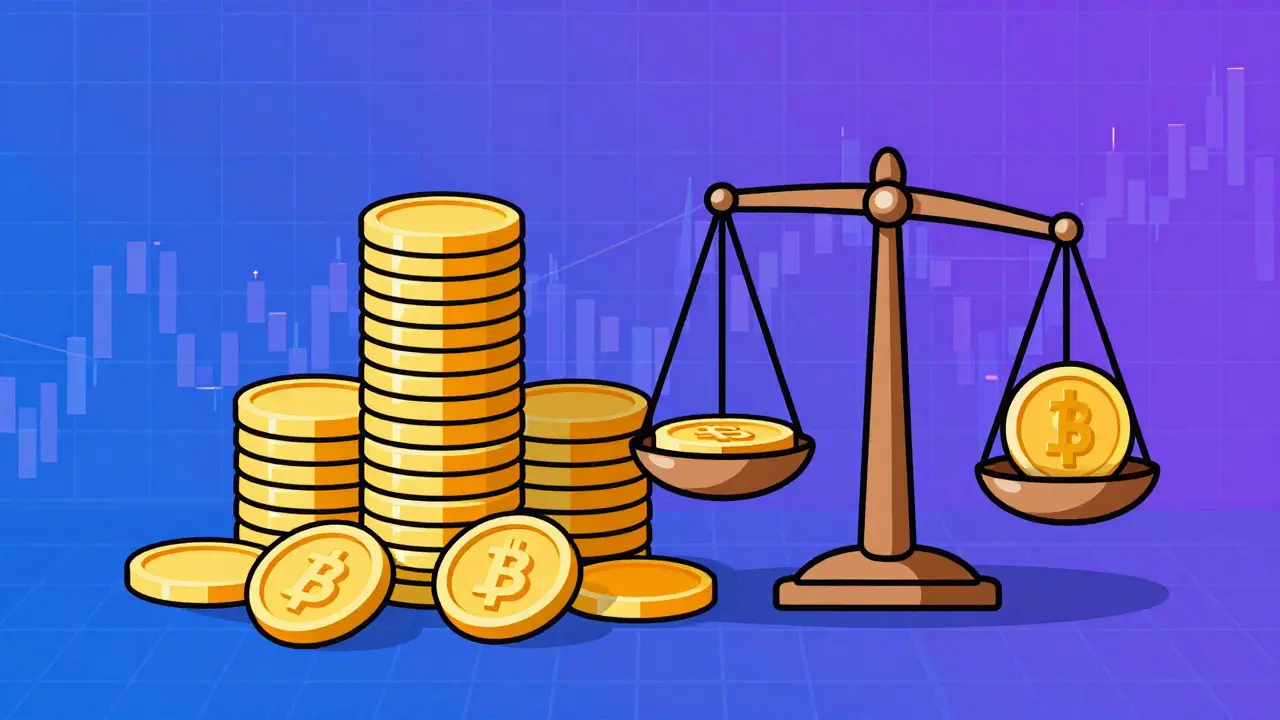
Let's talk numbers. The market performance of RETIK tells a story of high volatility. As of the latest reporting, the token trades at approximately $0.000771. This price point places it firmly in the micro-cap category. The market capitalization hovers around $770,610, though some aggregators report slightly higher figures near $969,000. These discrepancies are common in the crypto space due to different data sources and liquidity pools.
The trading volume is a critical metric to watch. Coinbase reports a 24-hour trading volume of around $49,410, while Liquidity Finder suggests higher activity across 14 active markets. However, compared to established DeFi giants, this volume is extremely low. Low volume means liquidity is thin. If you try to sell a large amount of RETIK, you might face significant slippage, meaning you get a worse price than expected because there aren't enough buyers.
Historically, the token has seen a steep decline. Data indicates the price is currently trading 94.56% below its all-time high of $2.02. This is a massive drop and signals that early investors are likely sitting on heavy losses. The price action shows significant instability, with daily fluctuations ranging from a 4.32% increase to a 70.60% decrease depending on the day. This level of volatility makes it unsuitable for risk-averse investors looking for stability.
In terms of rankings, RETIK sits at #4765 on CoinMarketCap and around #4,310 on CoinGecko. These rankings place it in the lower tier of the cryptocurrency market. Being ranked this low often means less visibility, fewer exchange listings, and less institutional interest. The most active trading pair is RETIK/USDT, primarily found on exchanges like BingX, BitMart, and Uniswap V3. If you are looking to trade, these are the primary venues, but always check the liquidity depth before executing an order.
Risks and Challenges to Consider
Investing in a micro-cap DeFi token comes with specific risks that you cannot ignore. The first major challenge is the Ethereum network itself. As mentioned, gas fees can be unreasonable. If you are using the Retik Finance ecosystem for small transactions, the cost of the transaction might outweigh the value of the trade. This friction discourages everyday usage, which is exactly what the project aims to solve.
Secondly, there is the issue of competition and copycats. The official website acknowledges that there are copycat projects, such as "Retik Finance DEX," which can confuse users. In the crypto world, brand confusion can lead to users accidentally interacting with malicious contracts. You must always verify you are on the official platform.
Third, the lack of community engagement is a red flag. Major platforms like Reddit or Twitter show minimal active discussion for RETIK. A healthy crypto project usually has a vocal community discussing updates, bugs, and features. The silence suggests that user retention is low. Without a strong community, the project struggles to gain the momentum needed to recover from price drops.
Finally, the long-term viability is questionable based on current trajectories. Price prediction models suggest a continued deterioration over the next decade if adoption does not increase. While no prediction is perfect, the consensus among analysts is that tokens with this market position often fail to generate meaningful attention after the initial launch hype fades. You need to ask yourself if the utility provided is strong enough to sustain the price long-term.
How to Buy and Store RETIK
If you decide to proceed despite the risks, the process is straightforward due to the ERC-20 standard. You will need a crypto wallet that supports Ethereum tokens. MetaMask is a popular choice. Once your wallet is set up, you can purchase RETIK on supported exchanges.
- Sign up on an exchange like BingX or BitMart.
- Complete the KYC (Know Your Customer) verification process.
- Deposit funds, usually USDT or Ethereum.
- Navigate to the RETIK trading pair.
- Execute a buy order and withdraw the tokens to your personal wallet.
Alternatively, you can use a decentralized exchange like Uniswap V3. This requires you to have ETH for gas fees. Connect your wallet to Uniswap, search for the RETIK contract address, and swap ETH for RETIK. Always double-check the slippage settings before confirming the transaction to avoid losing funds to bad rates.
Storing your tokens in a non-custodial wallet is safer than leaving them on an exchange. This gives you full control over your private keys. However, you become responsible for your own security. If you lose your seed phrase, your funds are gone forever. There is no customer support to call to recover a lost wallet.
Future Outlook and Viability
Looking ahead to the rest of 2026 and beyond, the outlook for RETIK remains cautious. The project needs to demonstrate real-world usage to justify its valuation. This means people actually using the debit card or the payment gateway, not just trading the token on exchanges. Without this utility, the token remains a speculative asset.
Development updates are sparse in the public domain. A project that does not communicate its roadmap or progress often loses investor confidence. If the team plans to migrate to a cheaper blockchain to reduce gas fees, they need to announce it clearly. Until then, the Ethereum bottleneck remains a significant hurdle.
For now, RETIK serves as an example of the risks in the DeFi space. It shows that having a good idea isn't enough; execution and adoption are key. If you are interested in the project, stay updated on their official channels for any announcements regarding partnerships or technical upgrades. But proceed with extreme caution and only invest what you can afford to lose.
What is Retik Finance (RETIK)?
Retik Finance is a decentralized finance ecosystem token built on the Ethereum blockchain. It aims to bridge traditional finance and crypto through features like debit cards, payment gateways, and P2P lending.
Is RETIK a good investment?
RETIK is considered a high-risk investment due to its low market cap, low trading volume, and significant price decline from its all-time high. It is not suitable for risk-averse investors.
Where can I buy RETIK token?
You can trade RETIK on exchanges such as BingX, BitMart, LBank, and decentralized platforms like Uniswap V3.
What blockchain does RETIK use?
RETIK is an ERC-20 token built on the Ethereum blockchain, which means it is compatible with standard Ethereum wallets.
What is the total supply of RETIK?
The total supply of RETIK is fixed at 1 billion tokens, with a circulating supply of approximately 155 million tokens as of recent data.

16 Comments
omg the gas fees on eth are killing me rn 😭 honestly i tried to use the debit card feature but the wait times were insane like why pay more to save less 🤷♀️ just thinking about the volatility makes my head spin but maybe the team will fix it soonnnn 🤞✨
Keep your heads up everyone! 💪 The market is tough but projects like this try to build real utility! 🚀 Gas fees are a pain but layer 2s might help! Stay positive and keep learning! 🔥
I have been looking into this ecosystem for quite some time now and honestly the details are rather complex for the average person to digest without getting overwhelmed. It is important to understand that the tokenomics suggest a fixed supply which theoretically limits inflation but does not guarantee demand. When you consider the circulating supply is only a fraction of the total you have to wonder about the vesting schedules for the remaining tokens. The article mentions the Ethereum blockchain which is a double-edged sword because of the compatibility but also the high costs associated with transactions. I find myself thinking about how many other projects have promised similar things like the debit card and payment gateway without delivering on the actual user experience. The volatility mentioned is quite staggering and really highlights the speculative nature of holding such a micro-cap asset. It makes me wonder if the team has enough liquidity to support the ecosystem during a downturn without causing panic selling among the holders. The risk factors listed are very valid and should not be ignored by anyone looking to put real money into this venture. I personally believe that understanding the contract address is crucial because scams are rampant in this specific sector of the market. You really need to verify everything on a block explorer before you even think about connecting your wallet to their platform. The lack of community engagement is also a significant red flag that suggests the project might be losing momentum over time. Without a vocal group of supporters the project struggles to gain the necessary traction to recover from price drops. I hope that the developers are working behind the scenes to address these issues but until then caution is the best policy. It is always better to be safe than sorry when dealing with decentralized finance tokens that have such high risk profiles. Ultimately the decision rests on your own risk tolerance and ability to lose what you invest without it affecting your daily life. Just take your time before deciding.
They are all lying about the utility. The whole thing is a setup to drain your funds into a centralized trap disguised as DeFi. Trust no one.
This is absolutely ridiculous! How can anyone take this seriously with that price drop? It's a complete disaster waiting to happen!
I hear your concerns about the volatility but remember that every investment carries some level of risk. It's important to do your own research and not let fear drive your decisions.
The technical foundation on Ethereum is sound but the gas fee issue remains a significant barrier to adoption for micro-transactions.
gas fees are negligible if you understand layer 2 scaling solutions most people dont bother reading the whitepaper just chasing pumps
I recommend checking the contract address on Etherscan before any interaction. Security is paramount.
Thanks for the tip on the contract check! It's always good to have a reminder like that.
ERC20 standard means compatibility with MetaMask and Trust Wallet. Low volume means high slippage risk.
Slippage is scary but you gotta take the risk to get the reward! Don't let fear stop you!
Low liquidity is a major issue.
Obviously only the smart money knows the real value here while the rest of you panic over a chart.
This project is a moral hazard for investors. It promotes gambling over saving.
yaa but sometimes you gotta roll the dice right 😅 just make sure its money you can lose tho 💸