
- 5 Jan 2026
- Elara Crowthorne
- 23
Snail Trail (SLIME) was never a big name in crypto - but if you’re wondering what it was, you’re not alone. It was a racing game built on the Avalanche blockchain where players collected digital snails, bred them, and raced them to earn SLIME tokens. Sounds fun? Maybe. But by late 2023, the project was effectively dead. No updates. No community. No liquidity. Just a token floating in the void with a market cap of under $100,000.
What SLIME was supposed to do
Snail Trail’s core idea was simple: each snail was an NFT with unique genetic traits - speed, acceleration, endurance, and resilience - that changed how it performed on different race tracks. There were five snail families, each with strengths and weaknesses. To win races, you had to pick the right snail for the right track. That part? Actually clever. It wasn’t just another play-to-earn game where you clicked buttons and earned tokens. Strategy mattered.
SLIME, the token, was the lifeblood of the system. You used it to buy new snails, enter races, breed your snails, and vote on future updates. The team claimed it was a governance token, meaning holders could shape the game’s future. But here’s the catch: no one ever got to vote. The development team vanished after launching Phase 2 in August 2022, and the voting feature was never activated.
The numbers don’t lie
When Snail Trail launched in May 2022, it raised $3.96 million across private and public sales. Private investors bought SLIME at $0.055. The public paid $0.066. At its peak, the token hit $0.003 - a 460% gain for early buyers. That’s the kind of story that makes crypto headlines.
But by September 2023, SLIME was trading at $0.000675. The market cap had crashed from $629,640 to just $80,430. The total supply was 300 million tokens, but only 116 million were circulating. That’s not unusual. What was unusual was the trading volume: $224.71 in 24 hours. That’s less than the cost of a coffee in New York. If you owned 1 million SLIME ($675 worth), you’d need to sell over 4,400% of the daily volume just to cash out - and even then, you’d crash the price.
No exchanges. No liquidity. No way out
Snail Trail was listed on exactly one decentralized exchange: PancakeSwap. Not Binance. Not KuCoin. Not even a small altcoin exchange. That’s a red flag. Major exchanges don’t list tokens with no volume, no community, and no active team. Binance explicitly didn’t list it in September 2023 - and for good reason.
Without exchange support, SLIME couldn’t be easily converted to USDT, ETH, or even AVAX. To cash out, you had to swap on PancakeSwap, wait for a buyer, and hope the price didn’t drop while you waited. Most users couldn’t sell at all. Reddit threads from August 2023 are full of people saying: “I have 50,000 SLIME. I can’t sell. I can’t even find a buyer.”
The game didn’t work
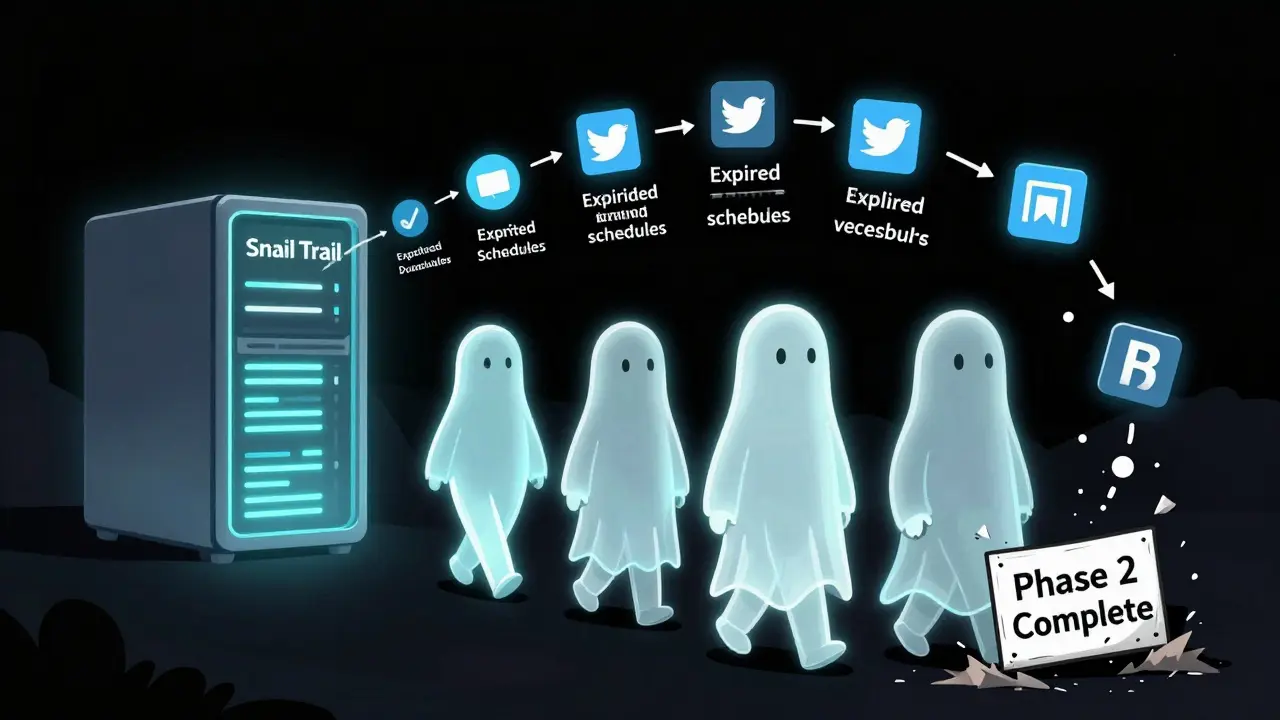
Even if you wanted to play, the game was broken. Players reported races taking 20+ minutes to process. The servers were slow or down. The dApp crashed constantly. According to 83% of negative Reddit reviews, finding enough players to race against was nearly impossible. The game’s entire economy relied on active competition - but there was no competition left.
And breeding? The feature that was supposed to keep people hooked - creating new snails with better traits - barely worked. The interface was clunky. The results were unpredictable. And without updates, the breeding system became a dead end. No new traits. No improvements. Just a static pool of snails nobody wanted.
Who’s behind it? No one knows
The Snail Trail team was anonymous. No names. No social media presence after 2022. Their Twitter account posted once in January 2023 - and never replied to a single comment. Their GitHub repo was last updated in November 2022. Their Medium blog stopped at September 2022. No roadmap. No team updates. No treasury disclosures. Nothing.
Experts called it a “rug pull in slow motion.” Unlike outright scams where devs vanish with cash, Snail Trail’s team didn’t steal funds - they just stopped caring. The money raised went into development, gas fees, and marketing. But once the initial hype faded, there was no plan to keep it alive. No buybacks. No token burns. No revenue model. Just a token with no utility left.
Why did it fail when others succeeded?
Compare Snail Trail to Axie Infinity or The Sandbox. Both had massive communities. Both had regular updates. Both had real revenue streams - like land sales, item shops, and licensing deals. Snail Trail had none. It was purely a game with no economy beyond racing. No NFT marketplaces. No partnerships. No way to earn outside the game.
GameFi projects need more than a fun mechanic. They need sustainability. Snail Trail had one: the genetic snail system. But without ongoing development, community management, or liquidity, that mechanic became meaningless. It’s like building a Ferrari with no gas station nearby.
What happened to the users?
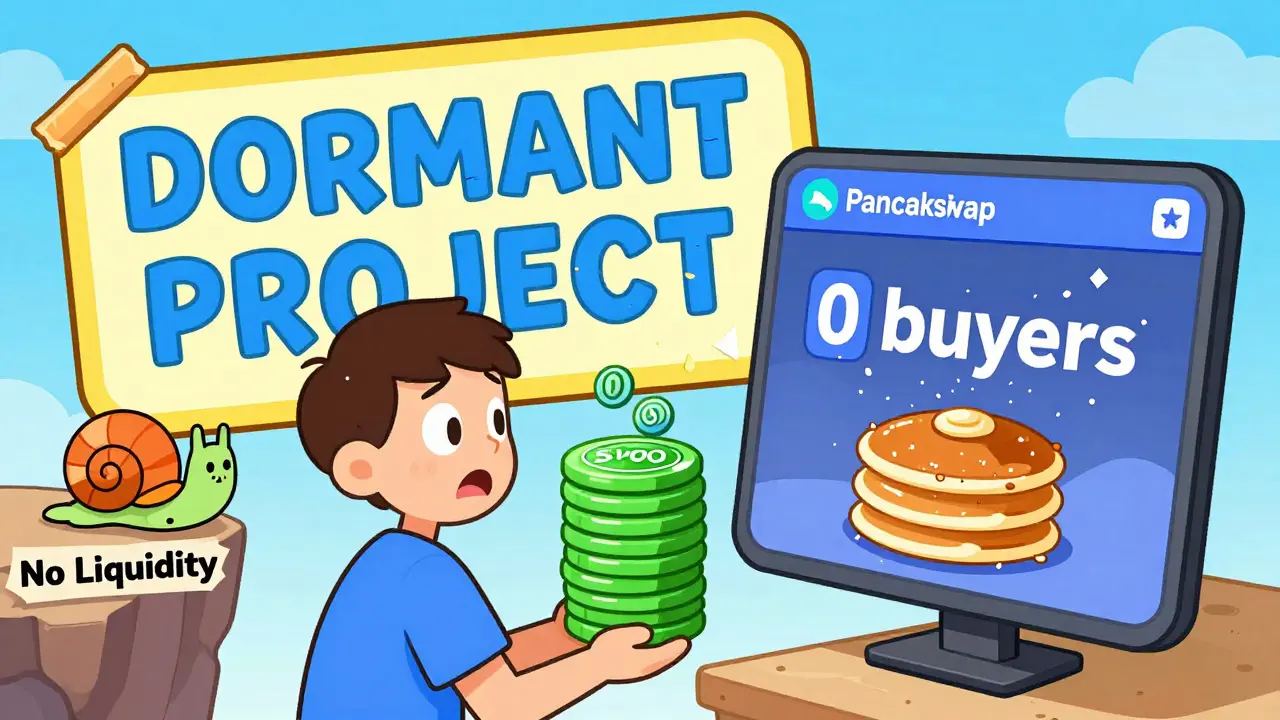
Token holders dropped from 15,200 in June 2022 to 10,620 by September 2023. That’s a 30% loss in just over a year. Trustpilot has 12 reviews - average rating: 1.8/5. Common complaints: “The game doesn’t load,” “I can’t sell my tokens,” “No one answers questions.” CoinGecko’s community section had zero comments in 90 days. That’s not a dead project - it’s a ghost town.
One user summed it up on Reddit: “I spent $200 on snails. I thought I was investing. Turns out I just bought a digital toy that doesn’t work anymore.”
Can you still buy SLIME?
Technically, yes. You can still buy SLIME on PancakeSwap. But you’d need an Avalanche-compatible wallet (like MetaMask), some AVAX for gas, and the patience to deal with a broken interface. Even if you buy it, you can’t sell it. The price is stuck. The volume is dead. The project is abandoned.
There’s no “future roadmap.” No revival plan. No new team. Messari, a top blockchain analytics firm, labeled Snail Trail a “dormant project” with “extremely low probability of revival.” CryptoPredict gave it a 12% chance of recovery - and that’s only if a miracle happens.
Final verdict
Snail Trail (SLIME) was a well-designed idea that died from neglect. It wasn’t a scam. It was a failure. The team built something interesting, but they never built a future around it. No updates. No support. No liquidity. No community. Just a token with no purpose left.
If you’re looking to invest in GameFi, look elsewhere. Axie Infinity, Illuvium, and Gods Unchained still have active teams, real revenue, and real players. Snail Trail? It’s a cautionary tale - a reminder that even clever mechanics can’t save a project without people behind it.
SLIME is not a crypto coin you buy. It’s a crypto coin you avoid.
Is Snail Trail (SLIME) still active?
No. Snail Trail has been inactive since mid-2022. The development team stopped updating the game, the website, and all social media channels. The last GitHub commit was in November 2022, and the project has been labeled as dormant by major blockchain analysts.
Can I still trade SLIME tokens?
Yes, but only on PancakeSwap, a decentralized exchange on the Binance Smart Chain. Trading volume is extremely low - around $224 per day - making it nearly impossible to sell large amounts without crashing the price. There are no listings on centralized exchanges like Binance or KuCoin.
Was Snail Trail a scam?
It wasn’t a classic rug pull where the team stole funds. The team raised money and used it to build the game. But they abandoned it after launch, with no roadmap, no updates, and no communication. This is often called a “lazy rug” or “neglect rug” - still damaging to investors, but not fraudulent by design.
How many SLIME tokens are there?
There is a total supply of 300 million SLIME tokens. As of September 2023, 116.24 million were in circulation. The rest are locked in team, advisor, and liquidity pools, with vesting schedules that have long expired but remain unused.
Is Snail Trail worth investing in today?
No. With zero development activity, no liquidity, and no community, SLIME has no future value. Even if the price rises slightly, there’s no exit strategy. Investors who bought early lost money. New buyers are buying into a dead project.
Why did the Snail Trail game fail?
It failed because it relied on player activity to sustain its economy, but never built a community strong enough to keep it alive. Low player counts meant no races, no breeding, and no demand for tokens. Without updates or marketing, the project collapsed under its own weight.
What blockchain is SLIME on?
SLIME runs on the Avalanche blockchain, specifically the C-Chain, which allows for fast and low-cost transactions. Its contract address is 0x5a15...F2d9C8, verified on Binance’s token page and other blockchain explorers.
Are there any alternatives to Snail Trail?
Yes. For racing-based GameFi, try Illuvium or Gods Unchained. Both have active development, real economies, and strong communities. For general play-to-earn, Axie Infinity and The Sandbox are still the leaders, despite market downturns.

23 Comments