- 28 Jun 2026
- Elara Crowthorne
- 0
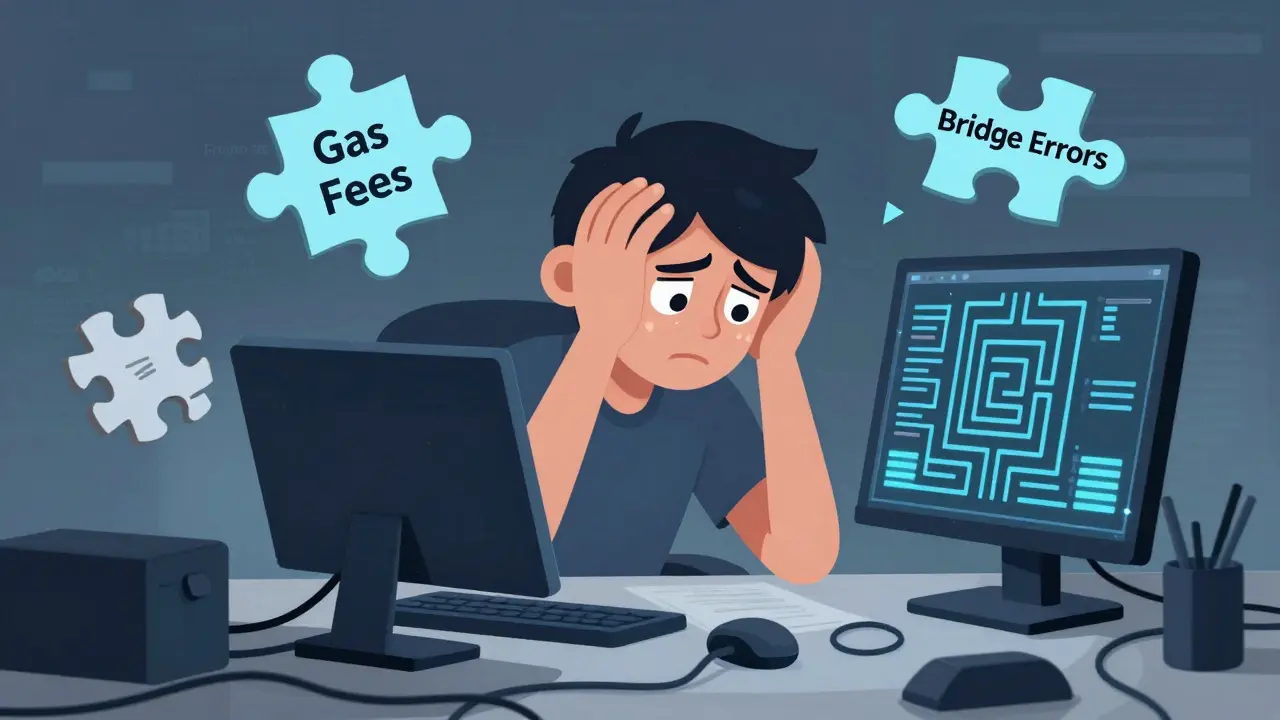
Have you ever tried to swap tokens between two different blockchains only to get hit with massive gas fees and confusing bridge interfaces? If you have, you know that decentralized finance (DeFi) can feel more like a puzzle than a financial tool. This is where WOOFi, developed by WOO Network, steps in as a potential solution. Launched initially in October 2021 and significantly expanded in June 2022, WOOFi is a cross-chain decentralized exchange (DEX) designed to make swapping assets across multiple networks as easy as it is on a centralized platform.
In this review, we are going to look under the hood of WOOFi to see if it lives up to the hype. We will break down its unique technology, compare its fees to industry giants like Uniswap, and analyze whether it is the right choice for your trading strategy in 2026.
What Exactly Is WOOFi?
WOOFi is not just another automated market maker (AMM). It is a hybrid platform built by WOO Network, a company founded by former executives from major centralized exchanges like Binance and OKEx. The goal was simple but ambitious: bridge the gap between the ease of use found in centralized finance (CeFi) and the security of self-custody in DeFi.
The platform operates primarily through a web-based interface called WebTrader. Unlike many DEXs that require complex setup or dedicated mobile apps, WOOFi works directly in your browser. You connect your standard Web3 wallet-such as MetaMask or Trust Wallet-and you are ready to go. As of early 2024, WOOFi supports 11 major blockchain networks, including Ethereum, BNB Chain, Polygon, Avalanche, Fantom, and newer additions like zkSync Era and Scroll.
The core innovation here is the Synthetic Proactive Market Making (sPMM) algorithm. Traditional DEXs rely on liquidity pools where users provide pairs of tokens. WOOFi uses sPMM to simulate the order book mechanics of a centralized exchange. This means tighter spreads, lower slippage, and better prices for traders, especially when moving larger amounts of capital.
Key Features and User Experience
When you log into WOOFi, the interface is clean and straightforward. It avoids the clutter often seen in DeFi dashboards. The basic version focuses on three main functions:
- Swap: This is the primary function. You can exchange tokens within the same chain or across different chains seamlessly. The minimum fee starts at just 0.025%, which is competitive even against low-fee centralized exchanges.
- Stake: Users can stake WOO tokens to earn rewards. This is part of the broader WOO ecosystem incentives.
- Earn: Through the Supercharger Vault, users can optimize yields. A standout feature here is one-sided staking. Instead of providing liquidity pairs (which exposes you to impermanent loss), you deposit a single token type. While this simplifies things, it does mean fewer token options compared to traditional liquidity pools.
For more advanced traders, there is WOOFi Pro. This section handles derivatives trading, offering perpetual futures contracts with leverage up to 1:50. Commission rates for these trades range from 0.03% to 0.06%. This makes it attractive for active day traders who need deep liquidity and fast execution without leaving their non-custodial wallets.
Performance and Costs: How Does It Compare?
Let’s talk numbers, because that is what matters most when you are trading. According to data from The Block Research in late 2024, the average cost for a swap transaction on WOOFi is approximately $0.87. In contrast, the industry average for similar DEX transactions sits around $2.35. That is a 63% reduction in costs for users.
Slippage is another critical metric. Slippage occurs when the price you expect differs from the price you actually get due to market volatility or lack of liquidity. WOOFi’s sPMM algorithm keeps slippage below 0.1% for major assets like Bitcoin (BTC), Ethereum (ETH), and Tether (USDT). For context, many AMMs see slippage rates closer to 0.30% or higher during volatile periods.
| Feature | WOOFi | Uniswap | PancakeSwap |
|---|---|---|---|
| Supported Chains | 11+ (Ethereum, Polygon, BNB, etc.) | Primarily Ethereum + L2s | Primarily BNB Chain |
| Average Swap Cost | $0.87 | $2.35 (Industry Avg) | Varies by chain |
| Slippage (Major Pairs) | < 0.1% | ~0.30%+ | ~0.30%+ |
| Liquidity Model | sPMM (Hybrid) | AMM (Concentrated Liquidity) | AMM |
| Cross-Chain Native | Yes | No (Requires Bridges) | Limited |
This table highlights why WOOFi is gaining traction. While Uniswap remains the king of Ethereum liquidity, it lacks native cross-chain functionality, forcing users to use separate bridges that add time and risk. PancakeSwap is efficient but largely confined to the BNB ecosystem. WOOFi offers a unified experience across eleven networks.

Pros and Cons: The Real Deal
No platform is perfect. Based on user feedback from Reddit, Trustpilot, and expert analysis from firms like Messari and CoinDesk, here is the balanced view of WOOFi in 2026.
The Good:
- Low Fees and Slippage: The sPMM model genuinely saves money. One professional trading firm reported saving $22,000 monthly after switching from Uniswap to WOOFi for their high-volume operations.
- True Cross-Chain Swaps: Moving assets from Ethereum to Polygon happens instantly within the interface. No manual bridging required.
- User-Friendly Interface: The WebTrader design abstracts away much of the technical complexity. New users complete their first swap within 15 minutes in 78% of cases.
- Strong Backing: WOO Network has institutional-grade infrastructure and experienced leadership.
The Bad:
- Limited Mobile App: There is no dedicated native mobile application. You must use a mobile browser. This is cited as a frustration in 43% of negative reviews.
- Token Selection: Because it relies on specific liquidity mechanisms, the number of available tokens is smaller than on Uniswap. You won’t find every obscure meme coin here.
- Centralization Concerns: Some purists argue that relying on WOO Network’s infrastructure for certain functions introduces a single point of failure, contradicting pure DeFi ideals.
- Learning Curve for Pro Features: Distinguishing between the basic Swap tab and WOOFi Pro for derivatives can confuse beginners, accounting for 32% of support tickets.
Security and Regulation
Security is paramount in crypto. WOOFi maintains self-custody, meaning you always control your private keys. However, the platform does interact with smart contracts and external liquidity providers. WOO Network has undergone rigorous audits, and the sPMM algorithm is open-source for verification.
Regarding regulation, WOOFi is available in 45 U.S. states as of March 2025. However, it is restricted in New York, Texas, and Hawaii due to local cryptocurrency regulations. Always check your local laws before using any DeFi platform. The platform also implements Know Your Customer (KYC) procedures for certain high-tier features or institutional accounts, though basic swapping remains permissionless.

Who Should Use WOOFi?
WOOFi is not for everyone. If you are looking to trade highly speculative, low-cap tokens that just launched yesterday, you might be better off on Uniswap or PancakeSwap where liquidity is deeper for those specific assets.
However, WOOFi is ideal for:
- Active Traders: Those who move significant volume across multiple chains and want to minimize slippage and fees.
- Cross-Chain Investors: Users who hold assets on Ethereum, Polygon, and Arbitrum and want to rebalance portfolios without dealing with multiple bridges.
- Yield Farmers: Individuals interested in the Supercharger Vault for simplified, one-sided yield generation.
Future Outlook
The roadmap for WOOFi through 2026 looks promising. The most anticipated update is the AI-powered interface scheduled for Q3 2025. This feature aims to allow users to interact with the ecosystem using natural language commands, further reducing the barrier to entry. Additionally, WOO Network plans to expand leverage options up to 1:100 for verified professional traders and integrate more Layer-2 solutions.
With the cross-chain DeFi segment growing by 484% between 2022 and 2024, platforms like WOOFi that solve fragmentation issues are well-positioned for continued adoption. Analysts predict that hybrid CeFi/DeFi models could capture up to 40% of the retail crypto market by 2027.
Is WOOFi safe to use?
WOOFi is considered safe for users comfortable with DeFi risks. It uses audited smart contracts and allows self-custody of funds via Web3 wallets. However, as with all DeFi platforms, there are inherent risks related to smart contract vulnerabilities and network congestion. Always start with small amounts to test the waters.
Does WOOFi have a mobile app?
Currently, there is no dedicated native mobile application for iOS or Android. WOOFi is accessed through a responsive web interface (WebTrader) that works on mobile browsers. This is a common complaint among users, but the web version is fully functional.
What are the fees on WOOFi?
The minimum swap fee on WOOFi is 0.025%. For derivatives trading on WOOFi Pro, commissions range from 0.03% to 0.06%. These fees are generally lower than many competitors due to the efficient sPMM liquidity model.
Which blockchains does WOOFi support?
As of 2024, WOOFi supports 11 blockchain networks including Ethereum, BNB Chain, Polygon, Avalanche, Fantom, Arbitrum, Optimism, zkSync Era, and Scroll. This wide support enables seamless cross-chain swaps.
How does WOOFi compare to Uniswap?
WOOFi offers native cross-chain swapping and lower slippage for major assets due to its sPMM algorithm. Uniswap has a wider selection of niche tokens and deeper liquidity on Ethereum specifically. Choose WOOFi for efficiency across chains and Uniswap for maximum token variety on Ethereum.
