
- 15 Jun 2026
- Elara Crowthorne
- 0
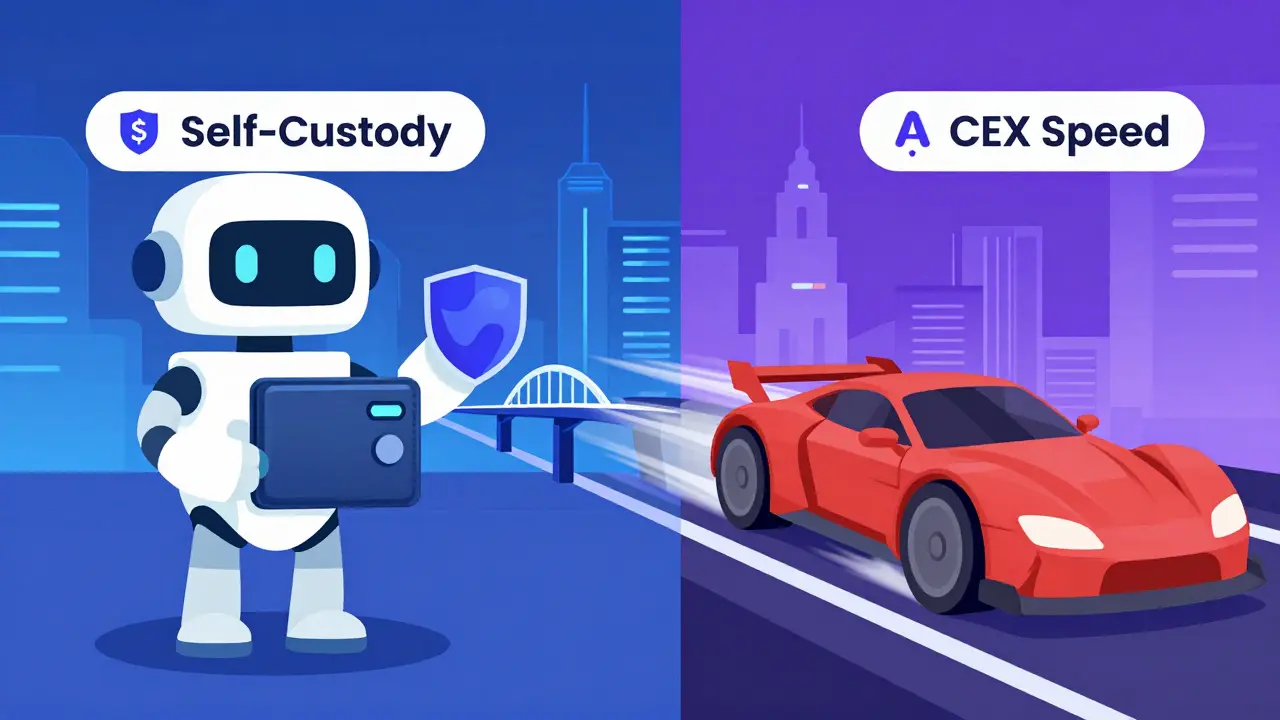
Imagine a trading platform that gives you the speed and leverage of a centralized exchange but keeps your keys in your own wallet. That is the promise of Aster, a multi-chain decentralized perpetual exchange launched in 2025. It bridges the gap between traditional finance and self-custody DeFi by offering professional-grade tools like hidden orders and MEV-aware routing across networks like Ethereum, Solana, and BNB Chain. But does it deliver on its hype, or is it just another complex protocol waiting to break?
We’ve dug into the architecture, the tokenomics, and the real-world performance of the ASTER token to help you decide if this platform fits your strategy. Here is what you need to know before you deposit.
The Core Problem Aster Solves
For years, traders faced a painful trade-off. You could use a centralized exchange (CEX) like Binance for deep liquidity and fast execution, but you had to trust them with your funds. Or, you could use a decentralized exchange (DEX) to keep custody of your assets, but you’d deal with slow speeds, high slippage, and limited features. Aster aims to kill this compromise.
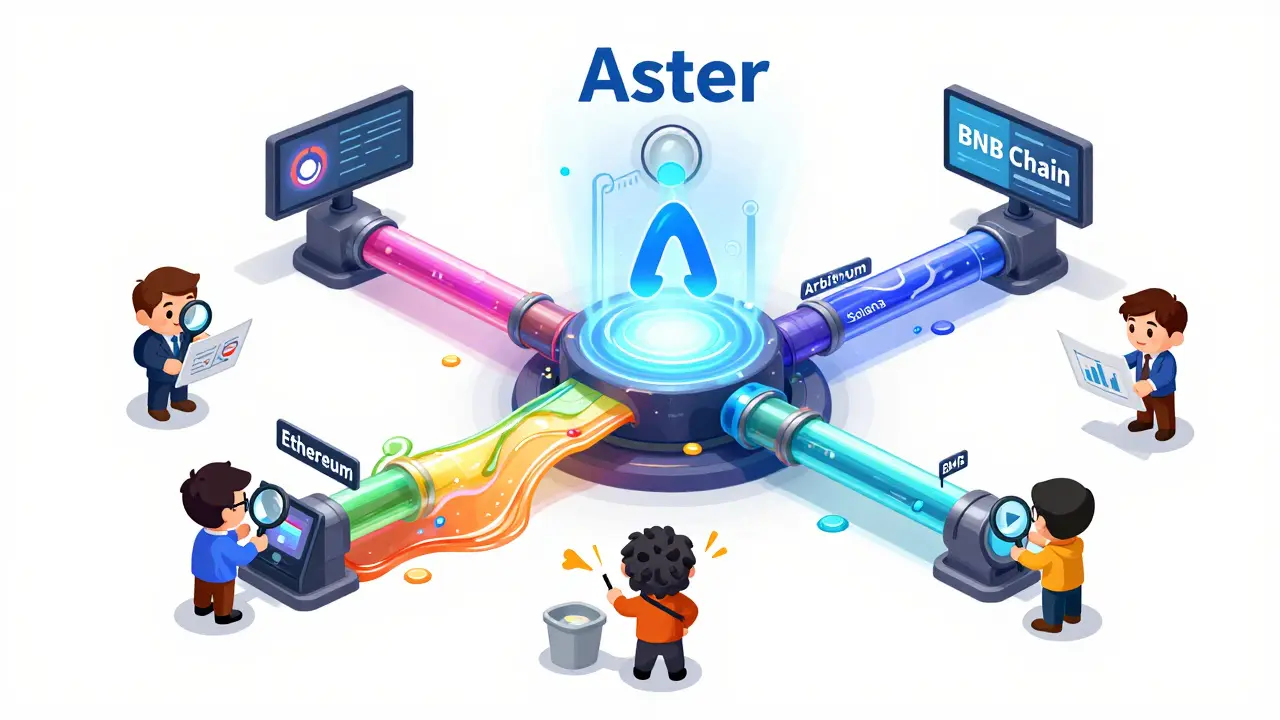
Unlike competitors that build their own isolated blockchains, Aster uses a horizontal integration strategy. Instead of forcing everyone onto one new chain, it aggregates liquidity from established networks like Ethereum, Solana, Arbitrum, and BNB Chain. This means you get access to diverse liquidity pools without migrating your entire portfolio to a single ecosystem. It’s flexible, but as we’ll see, it comes with its own set of risks.
Trading Features: Simple Mode vs. Pro Mode
Aster doesn’t assume you are an institutional trader. The interface splits into two distinct modes to cater to different experience levels.
| Feature | Simple Mode (formerly 1001x) | Pro Mode (Perpetuals) |
|---|---|---|
| Target User | Beginners | Advanced Traders |
| Complexity | One-click trades | Customizable parameters |
| Key Tools | Basic spot/perps | Hidden orders, Grid trading, Stock perps |
| Leverage | Standard limits | High leverage options |
Simple Mode is designed for quick entries. If you just want to go long on Bitcoin without worrying about order books or funding rates, this is where you start. It strips away the noise and lets you execute trades in seconds.
Pro Mode is where the power users live. Here, you can utilize hidden orders to hide your intent from the market, preventing front-running bots from eating your profits. You also get access to grid trading bots and 24/7 stock perpetuals. For those who missed the day trade because they were sleeping, Aster offers perpetual contracts on major stocks, allowing you to trade equity markets around the clock without leaving the crypto ecosystem.
The ASTER Token: Economics and Volatility
The native asset of the ecosystem is the ASTER token, a BEP-20 token on Binance Smart Chain with a maximum supply of 8 billion. Understanding its distribution is critical because it dictates future inflation and value accrual.
The tokenomics are heavily skewed toward community growth and early adopters:
- 53.5% Airdrops: Rewarding active traders and community contributors.
- 30% Ecosystem & Community: Including migration pools for APX holders.
- 7% Treasury: Strategic growth initiatives.
- 5% Team: Subject to cliff and vesting periods.
- 4.5% Liquidity: Bootstrapping and exchange listings.
The launch in September 2025 was explosive. The token saw a massive 20x pump, hitting an all-time high above $2.42. However, volatility is the norm here. Following the peak, the price swung wildly, dropping over 30% at times before attempting to find support around $1.50-$1.69. Technical analysts noted a breakdown of the ascending triangle pattern, leading to significant sell-offs. If you are holding ASTER, you are betting on long-term adoption rather than short-term stability.
Aster vs. Hyperliquid: The Architectural Divide
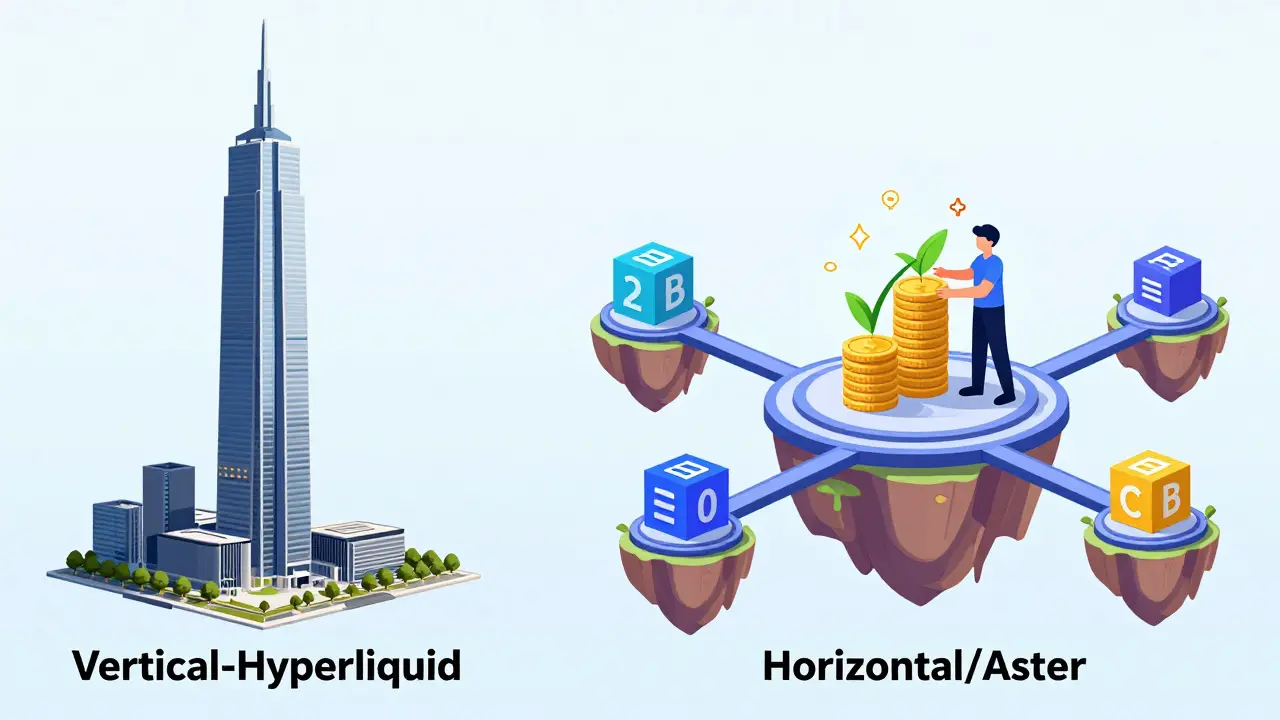
You cannot talk about Aster without mentioning Hyperliquid, its biggest competitor in the decentralized perpetual space. They take opposite approaches to solving the same problem.
| Attribute | Aster | Hyperliquid |
|---|---|---|
| Architecture | Horizontal (Multi-chain aggregator) | Vertical (Own dedicated blockchain) |
| Liquidity Source | Aggregated from ETH, SOL, BSC, etc. | Internal L1 liquidity pool |
| Risk Profile | Higher complexity, potential cross-chain failure points | Single point of failure risk, but optimized speed |
| Collateral Flexibility | Accepts yield-generating assets (asBNB, USDF) | Standard crypto collateral |
| Best For | Traders wanting capital efficiency across chains | Traders prioritizing raw speed and depth |
Hyperliquid built its own Layer 1 blockchain to optimize purely for trading speed and depth. It works incredibly well for high-frequency traders who need zero latency. Aster, however, argues that fragmentation is the enemy. By using horizontal integration, Aster allows you to use assets from different chains as collateral. For example, you can use yield-bearing assets like asBNB or USDF as margin. This drastically improves capital efficiency because your collateral earns interest while you trade. Hyperliquid doesn’t offer this level of cross-chain flexibility yet.
Security and Risks: What Could Go Wrong?
Decentralized exchanges are not immune to risk. In fact, the complexity of Aster’s multi-chain setup introduces unique vulnerabilities.
- Cross-Chain Complexity: Because Aster aggregates liquidity from multiple networks, a bug in a bridge or a smart contract on one of those chains (like Arbitrum or Solana) could impact the entire Aster ecosystem. There are more moving parts compared to a vertical solution like Hyperliquid.
- Smart Contract Risk: Like any DeFi protocol, Aster relies on code. While audits are standard, no audit is perfect. The “MEV-aware routing” is a great feature, but it adds layers of complexity that hackers might exploit.
- Token Volatility: As seen in late 2025, the ASTER token is highly volatile. If you are staking ASTER for governance or rewards, a sharp drop in price can wipe out gains quickly.
The platform operates on a privacy-focused Layer 1 called Aster Chain, which promises ultra-low fees. However, newer chains often face security scrutiny during their first few years of operation. Always check the latest audit reports before committing large sums.
Who Should Use Aster?
Aster isn’t for everyone. If you are a casual investor who buys Bitcoin and holds it for years, a simple non-custodial wallet is enough. You don’t need perpetuals or hidden orders.
Aster is ideal for:
- Capital-Efficient Traders: Those who want to earn yield on their idle collateral (via asBNB/USDF) while trading.
- Multi-Chain Users: People who hold assets across Ethereum, Solana, and BNB Chain and don’t want to consolidate everything into one siloed exchange.
- Professional Retail Traders: Users who need advanced tools like grid bots and hidden orders but refuse to give up self-custody.
If you prioritize absolute simplicity and lowest possible technical risk, stick to established CEXs or simpler DEX aggregators. If you want the power of a pro-trading desk with the security of self-custody, Aster is currently one of the most innovative options available.
Final Verdict
Aster represents a bold step forward in decentralized finance. By combining horizontal multi-chain aggregation with professional trading tools, it solves the liquidity and usability problems that have plagued DEXes for years. The ability to use yield-bearing collateral is a game-changer for capital efficiency. However, the architectural complexity introduces higher risk compared to vertical solutions like Hyperliquid. The ASTER token remains volatile, so treat it as a speculative asset rather than a stable store of value. For now, Aster is a top-tier choice for advanced DeFi traders who understand the risks and want maximum flexibility.
Is Aster Exchange safe to use?
Aster is a decentralized exchange, meaning you retain custody of your funds via your own wallet, which eliminates counterparty risk associated with centralized exchanges. However, it carries smart contract risk and cross-chain integration risks. Always verify recent security audits and never invest more than you can afford to lose.
What is the difference between Aster and Hyperliquid?
Hyperliquid uses a vertical approach with its own dedicated blockchain for maximum speed and depth. Aster uses a horizontal approach, aggregating liquidity from multiple existing chains (ETH, SOL, BSC). Aster offers greater flexibility in collateral types (including yield-bearing assets) but has higher architectural complexity.
Can I use yield-bearing assets as collateral on Aster?
Yes. One of Aster's key differentiators is its ability to accept yield-generating assets like asBNB and USDF as collateral. This allows your margin to continue earning interest while you trade, improving overall capital efficiency.
What is the ASTER token used for?
The ASTER token is used for decentralized governance, funding ecosystem growth, rewarding community participation, and potentially paying for reduced fees or staking incentives within the Aster protocol. It also serves as the primary vehicle for value accrual for investors in the ecosystem.
Which blockchains does Aster support?
Aster operates across multiple networks including BNB Chain, Ethereum, Solana, and Arbitrum. It aggregates liquidity from these chains to provide a unified trading experience, rather than being limited to a single blockchain.
