
- 25 Jul 2026
- Elara Crowthorne
- 0
Remember the rush of early 2021? That was the golden era of Initial DEX Offerings (IDOs), where new tokens launched on platforms like BSCPad and promised life-changing returns. BitOrbit (BITORB) is one such project that emerged from that specific wave. If you are searching for details on the BitOrbit airdrop, its launch mechanics, or whether it still holds value in 2026, you have come to the right place. This guide breaks down exactly what happened with the BitOrbit token generation event (TGE), how the distribution worked, and why understanding these past mechanisms matters for your current crypto strategy.
The short answer? BitOrbit completed its fundraising and token launch years ago. The initial hype has long since faded, replaced by hard market realities. But digging into the specifics of its launch offers valuable lessons on tokenomics, vesting schedules, and the evolution of crypto launchpads. Let's look at the facts.
The BitOrbit Token Generation Event (TGE)
To understand the BitOrbit airdrop, we first need to look at when the token actually went live. The official Token Generation Event (TGE) took place on November 4, 2021, at 21:25 UTC+3. This date marks the moment the smart contract was deployed, and the tokens became tradable assets on the blockchain.
This wasn't just a random drop. It was the culmination of a multi-phase fundraising campaign. BitOrbit managed to raise a total of $290,000 across six distinct rounds. These rounds typically include private sales for early investors, public sales for the community, and the airdrop component designed to distribute tokens widely. The use of six rounds indicates a structured approach to capital raising, aiming to build a diverse holder base before hitting the open market.
| Metric | Value |
|---|---|
| Total Raised | $290,000 |
| Fundraising Rounds | 6 Completed |
| TGE Date | November 4, 2021 |
| Launch Platform | BSCPad |
How the BitOrbit Airdrop and Distribution Worked
Air drops are often misunderstood as "free money," but they are strategic tools for decentralization. In BitOrbit's case, the distribution model was carefully calculated to prevent immediate sell-offs. Here is how the supply was handled:
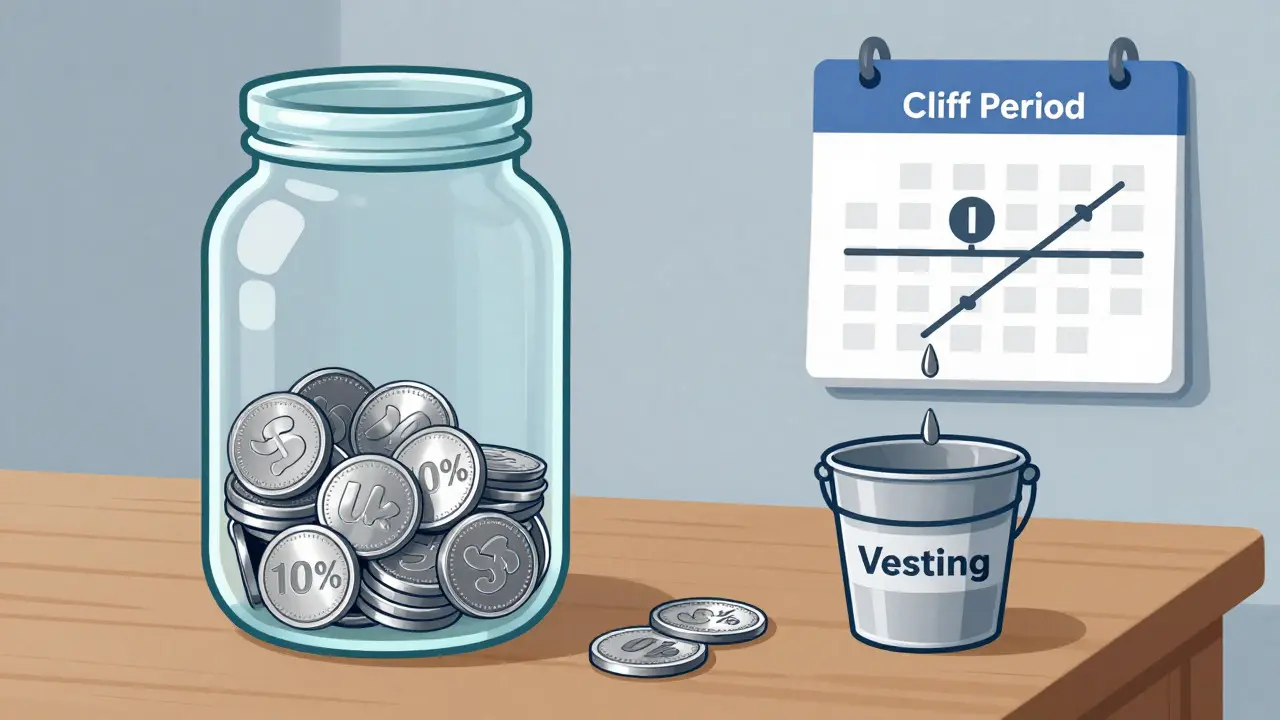
- Initial Release: Only 10% of the total token supply was released at the TGE. This small percentage meant that even if every single holder decided to sell instantly, the market impact would be limited.
- The Cliff Period: Following the TGE, there was a one-month cliff period. During this time, no additional tokens were unlocked. This creates a buffer zone for the project team to establish initial liquidity and trading pairs without facing massive inflationary pressure.
- Linear Vesting: The remaining 90% of the tokens were subject to linear vesting over four months. This means tokens were released in small, equal increments each day or week, rather than all at once. This mechanism aligns the interests of early investors with the long-term health of the project.
This conservative distribution strategy was common among projects launching on reputable platforms like BSCPad. The goal was stability. However, as we will see, stable tokenomics alone do not guarantee price appreciation.
The Role of BSCPad in the Launch
BitOrbit didn't launch in a vacuum. It utilized BSCPad, a prominent IDO launchpad operating on the Binance Smart Chain ecosystem. Choosing the right launchpad is critical for any crypto project. BSCPad has consistently ranked among the top 10 IDO launchpads, offering credibility and access to a large pool of active traders.
For participants back in 2021, joining a BSCPad launch usually required holding a minimum amount of the platform's native token. This staking requirement ensured that only serious investors participated, reducing bot activity and ensuring fairer allocation. The process involved several steps:
- Project Announcement: BitOrbit was listed on the BSCPad upcoming launches page.
- Whitelist Registration: Users had to apply and meet criteria to get whitelisted.
- KYC Verification: Know Your Customer checks were mandatory to comply with regulations.
- Wallet Connection: Participants connected their Web3 wallets (like MetaMask).
- Funding Participation: Users swapped BNB for BITORB tokens during the sale window.
- Token Claiming: After the TGE, tokens were sent to user wallets or claimed via the dashboard.
This standardized process provided a layer of security and professionalism that earlier, more chaotic ICOs lacked. It set a precedent for how modern IDOs should operate.
Current Market Status and Performance Analysis
Here is where the story takes a turn. While the launch structure was sound, the market performance tells a different tale. As of recent data, BitOrbit maintains a market capitalization of approximately $2.83K. Compare this to the $290,000 raised during fundraising. This represents a significant depreciation in value.
Why did this happen? Several factors contribute to the decline:
- Market Conditions: The crypto market shifted dramatically after 2021. The bull run that fueled many IDOs cooled off, leading to broader price corrections.
- Adoption Challenges: Raising funds is easier than building a sustainable product. Many projects struggled to maintain user engagement post-launch.
- Competition: The IDO space became saturated. Newer projects with better technology or stronger communities drew attention away from earlier launches.
This contrast highlights a crucial lesson: successful fundraising does not equate to sustained market success. Investors must look beyond the launch hype and evaluate the project's fundamentals, development progress, and community strength.

Evolution of the IDO Landscape Since 2021
Since BitOrbit's launch, the crypto launchpad sector has matured significantly. Platforms like DAO Maker, Polkastarter, and GameFi now lead the space with more sophisticated vetting processes. The bar for entry has risen.
Modern launchpads focus heavily on thorough project analysis. They verify legitimacy, audit smart contracts, and assess team credentials before exposing projects to the investing community. This shift aims to protect investors from scams and low-quality projects. For example, platforms now often implement lottery systems for retail participants to ensure fairer access, whereas earlier models sometimes favored large whales.
Additionally, the regulatory environment has tightened. Comprehensive KYC requirements are now standard, reflecting increased scrutiny from global regulators. While this creates higher barriers to entry, it also provides greater investor protection. The average entry fee for participation in top-tier launchpads has also increased, averaging around $72.29, reflecting the premium placed on quality and security.
Lessons for Today's Crypto Investors
What can you learn from the BitOrbit case study? First, always examine the tokenomics. Look for vesting schedules and cliff periods. Projects that release too much supply too quickly often face downward price pressure. Second, research the launchpad. Reputable platforms add a layer of due diligence, but they don't guarantee success. Third, consider the broader market context. Launching during a bull market can inflate valuations artificially, leading to sharp corrections when sentiment shifts.
Finally, remember that post-launch execution is everything. A great launch is just the beginning. Continuous development, active community management, and clear utility are what drive long-term value. BitOrbit's journey serves as a reminder that in crypto, survival of the fittest applies strictly to both projects and investors.
When was the BitOrbit (BITORB) token launched?
The BitOrbit Token Generation Event (TGE) occurred on November 4, 2021, at 21:25 UTC+3. This marked the completion of its fundraising campaign and the start of token trading.
How much money did BitOrbit raise during its IDO?
BitOrbit raised a total of $290,000 across six completed fundraising rounds, including private sales, public sales, and an airdrop component.
Which launchpad hosted the BitOrbit IDO?
The BitOrbit IDO was facilitated through BSCPad, a leading launchpad on the Binance Smart Chain ecosystem known for its rigorous project vetting process.
What was the token distribution model for BitOrbit?
BitOrbit used a conservative model: 10% of tokens were released at TGE, followed by a one-month cliff period. The remaining 90% were distributed via linear vesting over four months to prevent immediate market dumps.
What is the current market capitalization of BitOrbit?
As of recent data, BitOrbit has a market capitalization of approximately $2.83K, indicating significant price depreciation from its initial fundraising valuation.
Is the BitOrbit airdrop still available?
No, the BitOrbit airdrop and IDO launch concluded in late 2021. Any claims regarding new airdrops should be verified carefully to avoid scams, as the original distribution phases are complete.
How has the IDO landscape changed since BitOrbit's launch?
The IDO sector has matured with stricter KYC requirements, better project vetting, and more sophisticated allocation mechanisms like lotteries. Platforms now offer advanced features such as immediate futures trading for risk management.
