- 3 Oct 2026
- Elara Crowthorne
- 0
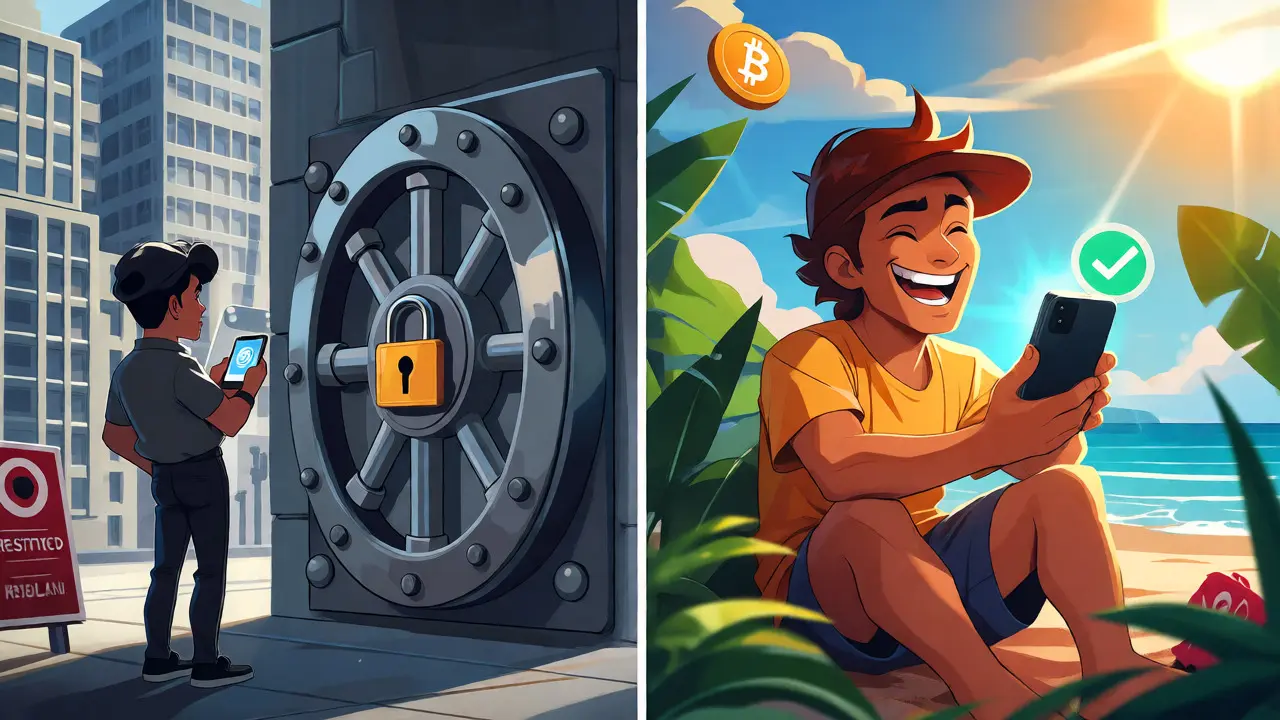
Imagine trying to buy Bitcoin in New York and finding the doors locked, while your friend in Wellington taps a button on their phone and completes the trade in seconds. It’s not just about internet speed; it’s about where you live. As of October 2026, Crypto exchange availability is a patchwork quilt of legal permissions, bans, and gray areas that shifts faster than market prices. If you’re planning to trade, hold, or just understand why your favorite app suddenly disappeared from your region, this guide breaks down exactly who can trade what, and where.
The Global Landscape of Crypto Trading Platforms
The global cryptocurrency exchanges market isn't just growing; it's exploding. Valued at USD 48.41 billion in 2025, projections suggest it will hit USD 122.63 billion by 2032. That’s a compound annual growth rate (CAGR) of 14.2%. But here’s the catch: this money isn’t flowing evenly. The availability of these platforms depends heavily on local laws. While some countries welcome digital assets with open arms, others slam the door shut due to concerns over money laundering, tax evasion, or financial stability.
Binance remains the giant in the room, holding roughly 38% to 40% of the global market share. It processes nearly $24 billion in daily volume. Yet, even giants stumble. In late 2023, Binance agreed to a massive $4 billion settlement with U.S. agencies. This wasn't just a fine; it was a signal. The company committed to a complete exit from the United States under strict monitoring. This single event reshaped how millions of Americans access crypto, forcing them onto separate, regulated platforms like Binance.US.
North America: A Tale of Two Neighbors
If you look at North America, you see two very different realities. Canada has generally taken a regulatory-forward approach. Major exchanges operate there, provided they register with provincial securities commissions and comply with anti-money laundering (AML) rules. It’s bureaucratic, but it’s clear. You know the rules, so you play by them.
The United States? It’s a minefield. The Securities and Exchange Commission (SEC) treats many tokens as securities, which means exchanges need specific licenses to offer them. This complexity has led to a fragmented market. You might find Coinbase or Kraken available, but features like staking or certain altcoins might be restricted depending on your state. The departure of Binance’s global platform left a vacuum, filled by compliant domestic players who charge higher fees to cover their compliance costs. If you’re in the U.S., expect fewer options and higher friction compared to other regions.
Europe: MiCA Changes the Game
Across the Atlantic, Europe has moved toward standardization. The Markets in Crypto-Assets (MiCA) regulation came into full effect recently, providing a unified framework for all EU member states. Before MiCA, an exchange licensed in Malta might have struggled to operate seamlessly in Germany. Now, one license allows access across the bloc.
This clarity has attracted major players. Exchanges like Bitget and Gate.io have expanded aggressively in Europe, knowing that compliance once grants broad access. However, restrictions still exist. Some countries within the EU are stricter on advertising or require higher capital reserves. But generally, if you’re in Paris, Berlin, or Madrid, you’ll find a robust selection of centralized exchanges (CEXs) offering spot trading, derivatives, and staking services without the constant fear of sudden shutdowns seen in other jurisdictions.

Asia: Innovation Meets Regulation
Asia is a mixed bag of high adoption and strict control. China banned crypto trading and mining years ago, effectively pushing activity offshore. You won’t find local fiat-to-crypto on-ramps easily there anymore. Instead, Chinese users often rely on peer-to-peer (P2P) markets or use exchanges based in neighboring jurisdictions.
In contrast, Singapore and Hong Kong have positioned themselves as crypto hubs. Singapore’s Monetary Authority of India (MAS) provides clear guidelines, making it a haven for institutional investors. Hong Kong recently reopened its doors to retail crypto trading after tightening rules, allowing licensed exchanges to serve local users again. Meanwhile, Vietnam ranks sixth globally in crypto adoption, driven by a young, tech-savvy population. Here, exchanges operate with relative freedom, though the government monitors flows closely. South Korea, ranked eighteenth in adoption, enforces strict real-name banking requirements. You can’t just sign up; you must link a bank account in your exact name, reducing anonymity but increasing security.
Middle East, Africa, and Latin America: Adoption Driven by Necessity
In regions with unstable currencies or limited banking infrastructure, crypto isn’t a speculative hobby-it’s a lifeline. Ukraine currently leads the Global Crypto Adoption Index. With traditional banking disrupted by conflict, Ukrainians turned to digital assets for savings and payments. Exchanges here are critical infrastructure, operating with a mix of local and international platforms.
The Middle East shows varied approaches. Jordan ranks fourth in adoption, utilizing crypto for remittances and hedging against inflation. The UAE, particularly Dubai, has created dedicated free zones for crypto businesses, attracting exchanges like Bybit and OKX. These platforms thrive because the local government wants fintech innovation.
Venezuela, ranking ninth, sees high usage due to hyperinflation. Citizens use stablecoins to preserve wealth. However, access to top-tier global exchanges can be tricky due to sanctions or payment processing issues. Users often rely on P2P networks or smaller, regional exchanges that accept local payment methods more flexibly than the big names.
Why Your Favorite Coin Might Be Missing
You might wonder why you can’t buy a specific token in your country. It usually comes down to classification. If a regulator decides a token is a "security" rather than a "commodity," the exchange must file complex paperwork to list it. Many exchanges simply delist these tokens to avoid legal headaches. For example, XRP faced significant listing issues in the U.S. during SEC lawsuits, disappearing from apps overnight before returning later.
Another factor is liquidity. Exchanges prioritize pairs with high trading volume. If your local currency doesn’t have deep liquidity against Bitcoin, the exchange might not support direct fiat deposits. You might need to convert your local cash to USDT (Tether) first, adding another layer of fees and time.
Choosing the Right Platform for Your Region
So, how do you pick an exchange when availability varies so wildly? Don’t just look at the logo. Look at the license. Check if the platform holds a valid license in your jurisdiction. If you’re in Australia, check for AUSTRAC registration. In the UK, look for FCA approval. This protects your funds if the exchange collapses.
Consider the fee structure. Regional compliance often drives up costs. A global exchange might offer 0.1% trading fees, but its locally regulated version might charge 0.5% plus withdrawal fees. Also, check deposit methods. Can you use your local bank transfer? Or do you need to use a credit card, which often incurs higher fees? Mobile app quality matters too, especially in regions like Southeast Asia where mobile-first trading dominates.
| Region | Regulatory Stance | Major Available Exchanges | Key Restrictions |
|---|---|---|---|
| United States | Strict / Fragmented | Coinbase, Kraken, Binance.US | Limited altcoin selection, high compliance costs, state-specific rules |
| European Union | Standardized (MiCA) | Binance EU, Bitget, Gate.io, Coinbase | KYC mandatory, advertising limits in some countries |
| Singapore | Clear / Institutional Focus | Bybit, OKX, Coinbase SG | Strict marketing rules, no retail derivatives on some platforms |
| China | Banned | P2P Markets, Offshore CEXs | No direct fiat on-ramps, mining prohibited |
| Australia | Regulated / Friendly | Swyftx, CoinSpot, Binance AU | AUSTRAC registration required, GST implications |
| India | Taxed / Monitored | WazirX, CoinDCX, Global CEXs* | High tax rates (30%), TDS on transactions, FIU registration |
Decentralized Alternatives When Centralized Doors Close
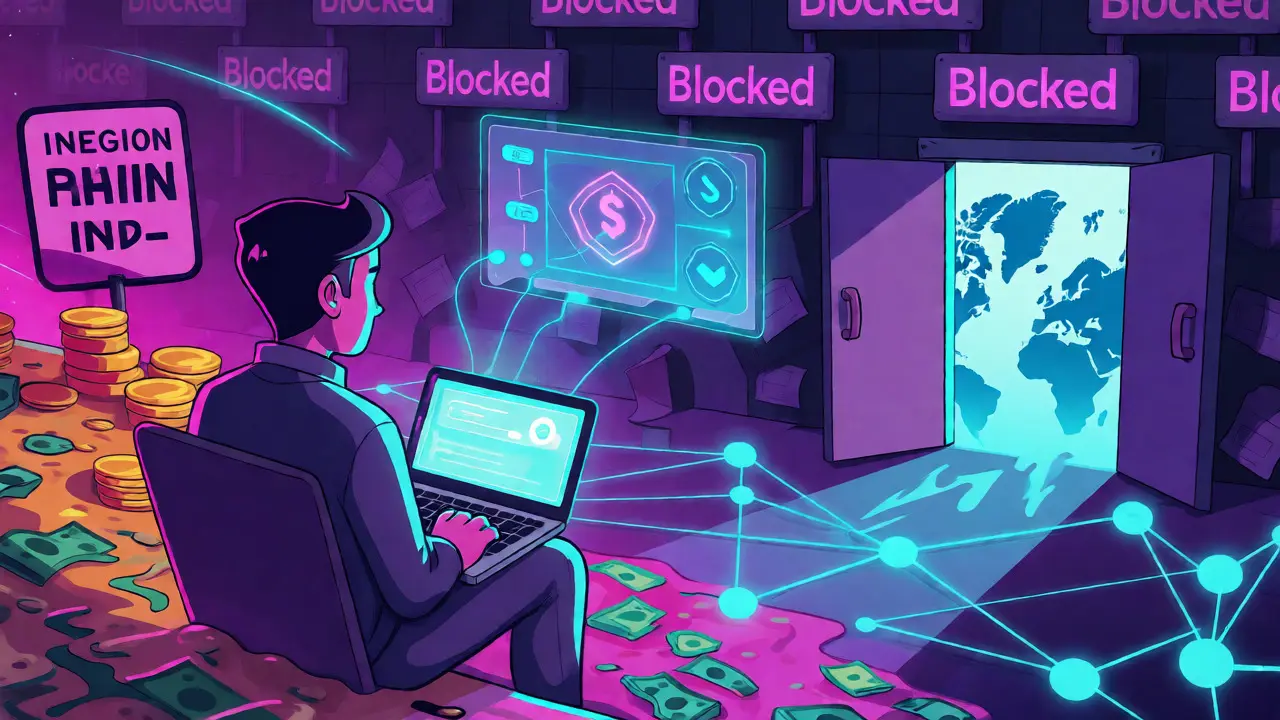
If your local centralized exchange (CEX) is blocked or limited, don’t panic. Decentralized Finance (DeFi) offers a workaround. Platforms like Uniswap or PancakeSwap run on blockchains. They don’t have a central office to shut down. You connect a wallet like MetaMask, swap tokens, and go. No KYC, no regional bans.
However, DeFi comes with risks. You manage your own private keys. If you lose them, your money is gone. Gas fees can be high on Ethereum, though Layer 2 solutions like Arbitrum or Polygon make it cheaper. For beginners, this learning curve is steep. But for those in restrictive regions, DeFi is often the only way to access the full spectrum of crypto assets.
Staying Ahead of Regulatory Shifts
Crypto regulations change fast. What’s legal today might be restricted tomorrow. Keep an eye on local news sources, not just global crypto blogs. Follow updates from your country’s financial authority. If a new law passes, give exchanges a few weeks to adjust. Sometimes, a temporary suspension turns into a permanent feature update.
Also, diversify your holdings. Don’t keep all your assets on one exchange. Use hardware wallets for long-term storage. This reduces your exposure to exchange-specific regional risks. If an exchange exits your market, you can still withdraw your coins to your cold wallet and move them to a compliant platform elsewhere.
Why did Binance leave the US?
Binance agreed to a $4 billion settlement with US agencies for failing to prevent money laundering and inadequate measures against crypto theft. As part of the deal, the global Binance platform exited the US market, leaving Binance.US as the separate, regulated entity for American customers.
Which country has the highest crypto adoption?
As of the 2025 Global Crypto Adoption Index, Ukraine ranks first overall. This is largely driven by the war economy, where citizens rely on crypto for savings, payments, and aid distribution amidst disrupted traditional banking systems.
Can I use a VPN to access restricted exchanges?
Technically, yes, but it’s risky. Most exchanges’ Terms of Service prohibit using a VPN to bypass regional restrictions. If detected, they may freeze your account and withhold funds until you provide proof of residence. It’s better to use a platform legally available in your region.
Are decentralized exchanges affected by regional bans?
Not directly. Since DEXs like Uniswap operate on blockchain smart contracts without a central intermediary, they cannot be easily "banned" in the same way a website can be blocked. However, governments can restrict fiat on-ramps (off-ramps), making it harder to convert local currency to crypto for use on DEXs.
How does MiCA affect European traders?
The Markets in Crypto-Assets (MiCA) regulation provides a unified legal framework across the EU. It requires exchanges to obtain a single license to operate in all member states, improving consumer protection and reducing fragmentation. Traders benefit from clearer rules and standardized disclosures.