- 20 Feb 2026
- Elara Crowthorne
- 15
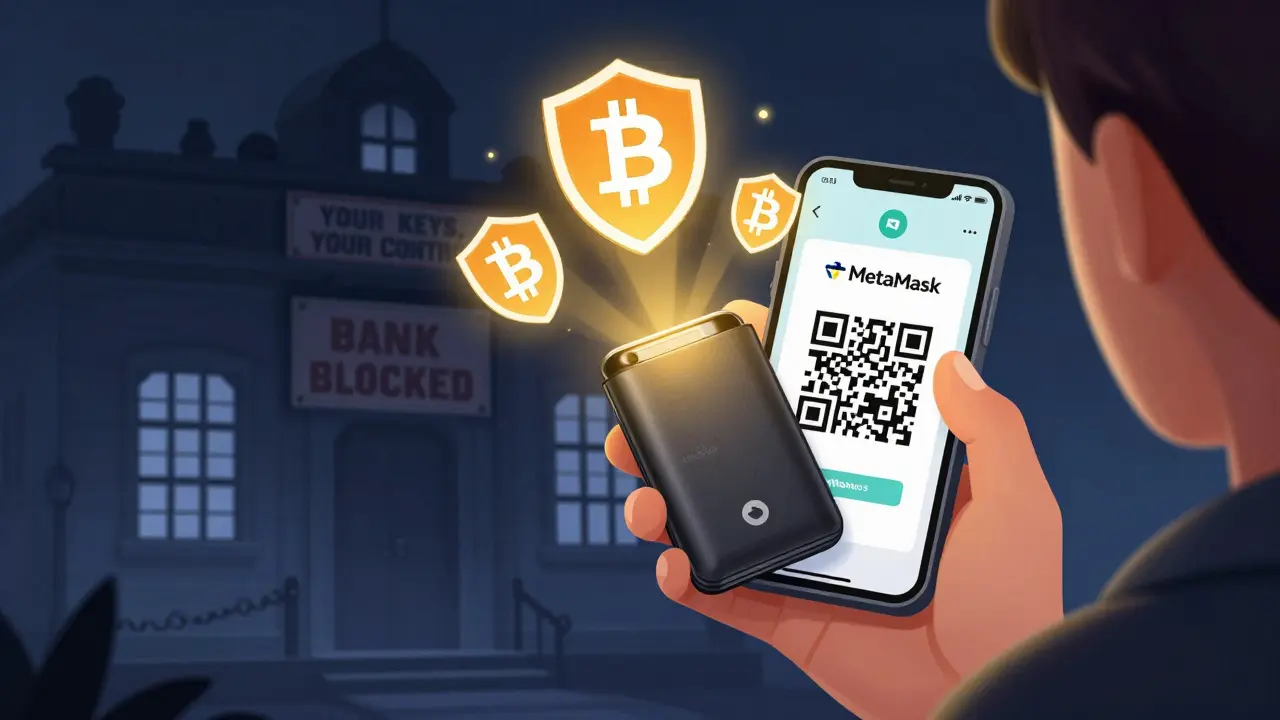
When governments block access to banks, shut down crypto exchanges, or freeze accounts, people don’t lose their money-they just change how they store it. In countries where financial freedom is restricted, non-custodial crypto wallets aren’t just a tool-they’re a lifeline. Unlike apps that hold your coins for you, these wallets put you in complete control. If you own the private keys, no government, bank, or corporation can take your crypto away. That’s the core idea behind non-custodial wallets: not your keys, not your crypto.
What Exactly Is a Non-Custodial Wallet?
A non-custodial wallet is software or hardware that lets you store, send, and receive cryptocurrency without relying on a third party. You alone hold the private keys-the secret codes that prove you own your coins. No company has access. No server stores your data. If you lose your keys, your money is gone forever. There’s no customer service line to call.This is different from custodial wallets like those on Coinbase, Binance, or Kraken. Those services hold your keys for you. They can freeze your account. They can delay withdrawals. They can be forced by regulators to shut down access. In 2022, when FTX collapsed, over $8 billion in user funds disappeared. Even though repayments were promised by mid-2024, users had to wait 18 months and accept partial returns. That’s the risk of trusting someone else with your money.
Non-custodial wallets remove that risk. They’re built on blockchain technology, which means transactions are verified by a decentralized network-not a single company. That’s why they’re so valuable in places like Nigeria, Argentina, Venezuela, or Iran, where capital controls, currency devaluation, or outright bans on crypto exchanges make traditional financial systems unreliable.
How Do They Work in Practice?
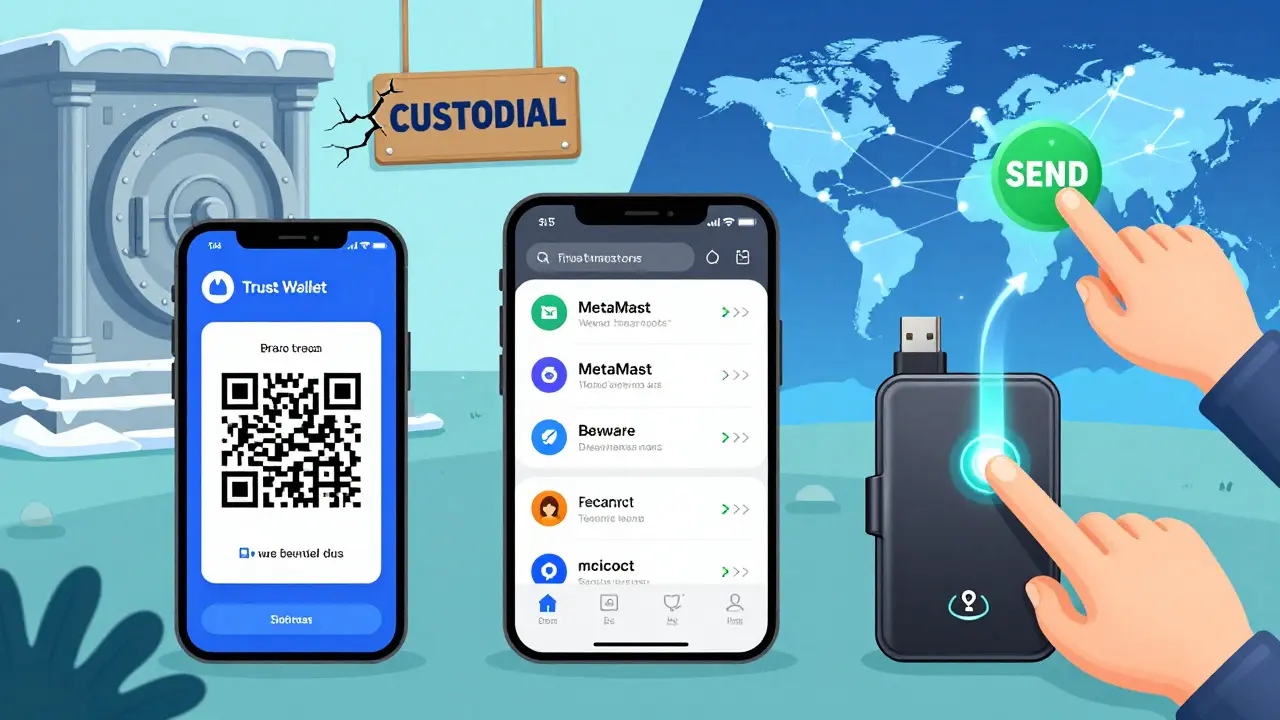
There are three main types of non-custodial wallets:- Browser extensions like MetaMask (version 11.15.0 as of August 2024)-easy to install, great for beginners, and used to interact with decentralized apps (dApps).
- Mobile apps like Trust Wallet (v2.10.0)-convenient for everyday use, supports over 100 blockchains, and lets you scan QR codes to send crypto.
- Hardware wallets like Ledger Nano S ($79) or Ledger Nano X ($149)-physical devices that store keys offline. They’re the most secure option because they never connect to the internet unless you plug them in.
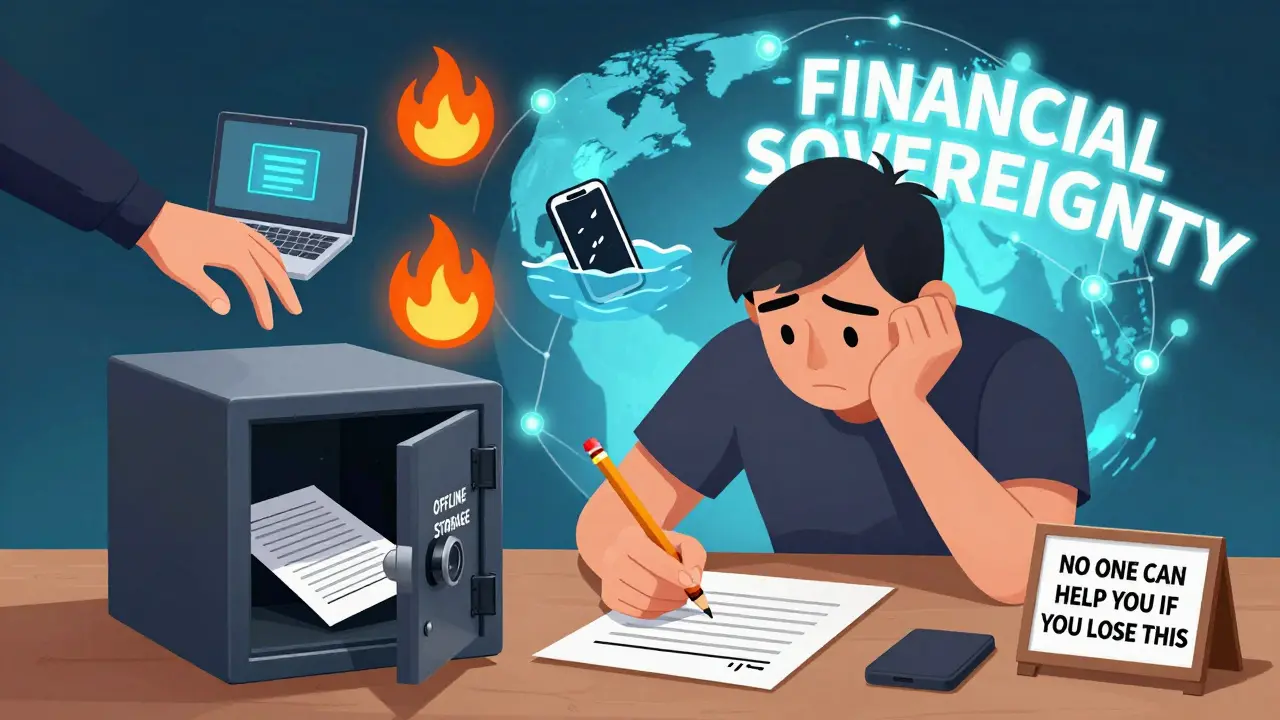
When you set up any of these, you’re given a 12- to 24-word recovery phrase. This is your backup. Write it down on paper. Store it somewhere safe. If your phone breaks, your computer crashes, or you forget your password, this phrase is the only way to get your money back. Lose it? Your crypto is gone. No exceptions.
Transactions on non-custodial wallets cost only blockchain fees-usually between $0.01 and $50, depending on network congestion. There are no hidden service fees. No exchange commissions. No account maintenance charges. You pay only what the network charges to confirm your transaction.
Why Are They Essential in Restricted Countries?
In countries with strict financial controls, non-custodial wallets offer three critical advantages:- No KYC required-You don’t need to submit ID, proof of address, or bank statements. Anyone can download and use them, even if their government bans crypto exchanges.
- No account freezing-Since no company controls your funds, regulators can’t shut down access. Even if a local exchange is blocked, you can still send and receive crypto directly.
- Direct access to DeFi-You can connect to decentralized exchanges like Uniswap or PancakeSwap to swap tokens, earn interest, or borrow without approval from any bank or government.
Reddit user u/PrivacySeeker99, who lives in a country where all crypto exchanges are illegal, said: “In my country where exchanges are banned, MetaMask is my only gateway to DeFi.” That’s not an exception-it’s the reality for millions.
Hardware wallets like Ledger are especially popular in high-risk regions. Because they store keys offline, they’re immune to remote hacking. Ledger’s own documentation confirms that “the signing of the transaction by the private keys is done offline within the hardware wallet itself before being sent online to the blockchain.” This means even if your computer is infected with malware, your crypto stays safe.
The Hidden Costs: Risk and Responsibility
There’s a big catch: you are the bank.There’s no one to call if you send crypto to the wrong address. No refund if you’re tricked by a phishing site. No help if you misplace your recovery phrase. BitPay’s 2024 analysis states clearly: “It is impossible to recover digital assets if users lose private keys and/or recovery phrases.”
On Reddit, user u/KeyLoser2024 lost $3,200 after misplacing their seed phrase while moving countries. “I had no backup,” they wrote. “No one could help me. I just lost everything.”
In restricted countries, this risk is amplified. Many users don’t have access to reliable guides, English-language tutorials, or community support. Security practices that are routine in the U.S. or Europe-like storing recovery phrases in a fireproof safe, using air-gapped devices, or verifying contract addresses-are often unknown or hard to learn.
Forvismazars’ March 2025 report warns that “understanding how blockchain transactions work, interacting with different blockchain networks, and safeguarding private keys require a learning curve.” In places where internet censorship is common, users may need a VPN just to download the wallet app or access documentation.
Security Must Be Built Into Every Step
If you’re in a restricted country and plan to use a non-custodial wallet, here’s what you must do:- Write down your recovery phrase by hand-never store it digitally. Take a photo? Someone could hack your phone.
- Use a hardware wallet for more than $1,000-Ledger and Trezor are the most trusted. They cost money, but they’re worth it.
- Verify every smart contract address-Before swapping tokens on Uniswap, double-check the contract on Etherscan or BscScan. Fake contracts look identical to real ones.
- Use a separate wallet for small amounts-Keep your daily spending in a mobile wallet. Store your life savings in hardware.
- Practice with small amounts first-Send $5 to a friend before moving larger sums.
MetaMask’s own onboarding data shows users need 10 to 40 hours of hands-on practice to feel confident. In restricted countries, that learning curve is steeper. But it’s not impossible. Communities on Telegram, Discord, and local forums share tips in local languages. Many users start with YouTube videos in Spanish, Arabic, or Portuguese-often uploaded by other people in the same situation.
What’s Next? The Evolution of Self-Custody
The market for non-custodial wallets is growing. DappRadar estimates over 85 million active users globally as of Q2 2024. In places where governments try to control money, adoption is rising faster than anywhere else.New tools are emerging to help. Ledger now offers Shamir backup-a way to split your recovery phrase into 5 parts. You need 3 to restore your wallet. This reduces the risk of losing everything if one piece is damaged or stolen.
Multi-signature wallets are also gaining traction. These require two or more people to approve a transaction. Imagine a family or trusted friend group using this to protect assets together. It’s not mainstream yet, but in high-risk zones, it’s being tested.
One thing remains clear: no government, bank, or corporation can stop you from owning crypto if you control your own keys. The technology is open-source. The networks are global. The wallets are free to download.
What’s changing isn’t the tech-it’s the awareness. More people in restricted countries are learning that financial sovereignty isn’t a luxury. It’s survival.
Can I use a non-custodial wallet if my country bans crypto?
Yes. Non-custodial wallets don’t require government approval. You can download them from official websites even if local exchanges are blocked. You can send and receive crypto directly on the blockchain. The only barriers are internet access and technical knowledge-not legality.
Is it safe to store crypto in a mobile non-custodial wallet?
It’s safe if you follow basic security rules: use a strong password, never share your recovery phrase, and avoid public Wi-Fi when sending funds. But for anything over $1,000, use a hardware wallet. Mobile wallets are more vulnerable to malware and theft.
What happens if I lose my recovery phrase?
Your crypto is gone forever. There is no way to recover it. No company, government, or developer can help. That’s why writing it down on paper and storing it securely is the most important step in using a non-custodial wallet.
Do I need to use a VPN with non-custodial wallets?
Not always, but often. In countries that block access to wallet websites or blockchain explorers like Etherscan, a VPN is necessary to download the app or check transaction status. It’s not illegal in most places, but check local laws before using one.
Are hardware wallets worth the cost?
If you’re holding more than $1,000 in crypto, yes. Hardware wallets like Ledger Nano S ($79) are designed to keep your keys offline and immune to remote hacking. They’re far more secure than phones or computers. For users in restricted countries, they’re often the only reliable way to protect assets long-term.
Can I be tracked if I use a non-custodial wallet?
Your transactions are public on the blockchain, so anyone can see your wallet address and transaction history. But your real identity isn’t tied to it unless you link it to an exchange or KYC service. To stay private, avoid connecting your wallet to centralized platforms and use privacy-focused tools like Tornado Cash (where legal).

15 Comments