SOHO19 Crypto District

Staking Rewards: How to Earn, Track, and Maximize Your Crypto Yield

When you hear Staking Rewards, the periodic tokens you receive for locking up crypto in a proof‑of‑stake network. Also known as staking payouts, it acts as both incentive and income for participants who help secure the blockchain.

Staking rewards depend on three core factors. First, the underlying consensus model—most networks use Proof of Stake, a mechanism where holding and locking tokens replaces energy‑intensive mining. Second, the role of the Validator, the node that proposes and finalizes blocks while earning a slice of the reward pool. Third, the tokenomics of the specific coin, which set the annual percentage yield (APY), inflation rate, and reward distribution schedule. Together these elements form a feedback loop: higher stakes attract more validators, which strengthens network security, which in turn can raise the perceived value of the reward token.

Key Concepts Behind Staking Rewards

Understanding how rewards are calculated helps you avoid common pitfalls. Most chains calculate payouts by multiplying the amount you stake by the network’s base APY, then adjusting for factors like total staked supply and any performance penalties. For example, a 10% APY on a $5,000 stake yields $500 annually before fees. However, if the network experiences high validator churn, your effective return may dip. Yield farming and liquidity mining are related strategies that also generate token incentives, but they add extra layers of smart‑contract risk. Compared to pure staking, these approaches can boost short‑term earnings at the cost of higher exposure to market volatility and potential smart‑contract bugs.

From a practical standpoint, three tools make managing staking rewards easier. Wallets with built‑in staking dashboards let you see real‑time accruals and compound automatically. Block explorers provide transparent on‑chain reward data, letting you verify that the protocol is distributing payouts as promised. Finally, analytics platforms aggregate validator performance metrics, helping you pick the most reliable nodes or delegations. By combining these resources, you can monitor reward frequency, calculate net APY after fees, and rebalance if a validator’s uptime drops below an acceptable threshold.

Risk management is essential. Staking locks up capital, so you shouldn’t allocate more than you can afford to stay illiquid for the unbonding period—often 7 to 21 days, sometimes longer. Slashing penalties can eat a chunk of your stake if a validator misbehaves, so delegating to reputable, well‑vetted validators reduces that danger. Also keep an eye on token inflation; a high APY might look attractive, but if the token’s supply is expanding rapidly, price pressure could offset the nominal reward.

Looking ahead, many networks are experimenting with hybrid models that blend proof‑of‑stake with additional security layers, such as random validator selection or proof‑of‑authority checkpoints. These innovations aim to keep rewards sustainable while improving decentralization. As the ecosystem evolves, staying informed about protocol upgrades—like changes to reward formulas or new staking mechanisms—will keep your strategy aligned with the latest best practices.

Below you’ll find a curated set of articles that dive deeper into each of these topics. Whether you’re just starting out or looking to fine‑tune an existing portfolio, the guides cover everything from the technical underpinnings of staking to step‑by‑step walkthroughs for claiming rewards on popular chains.

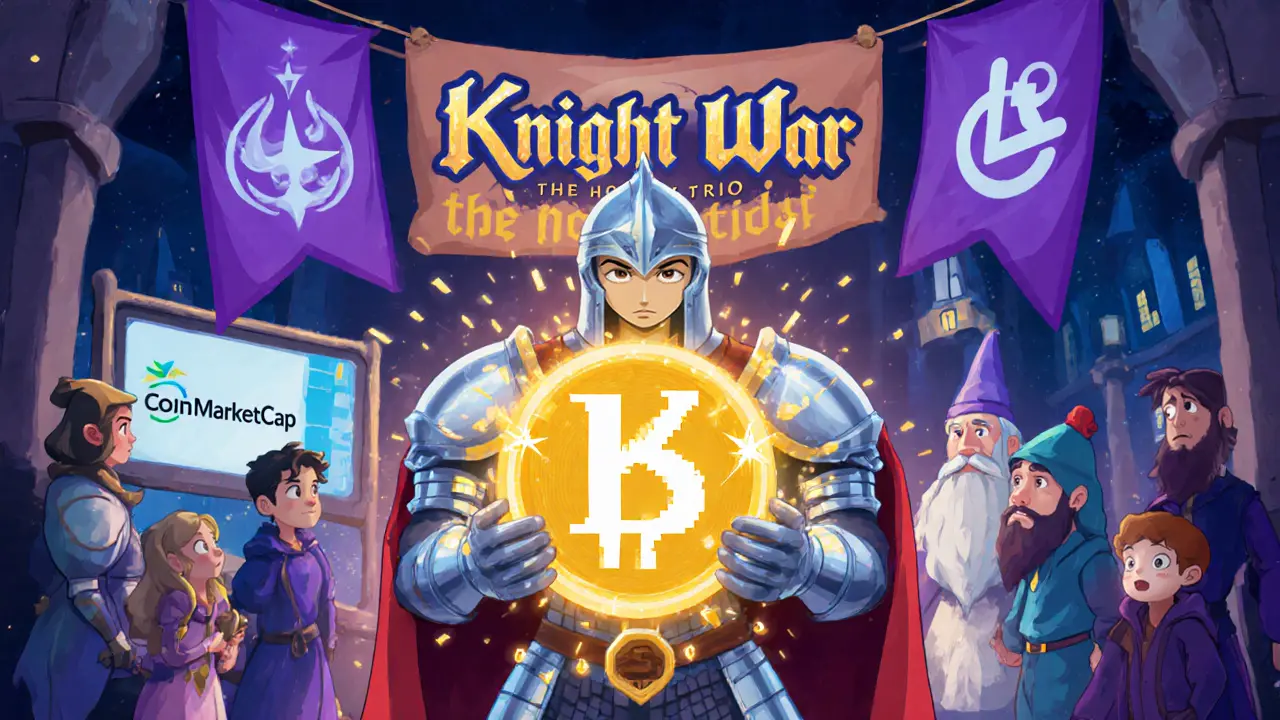
Knight War The Holy Trio (KWS) Token Airdrop Details and How to Claim the CoinMarketCap Campaign
  • 17 Mar 2025
  • Elara Crowthorne
  • 14

Knight War The Holy Trio (KWS) Token Airdrop Details and How to Claim the CoinMarketCap Campaign

Discover what the Knight War The Holy Trio (KWS) token airdrop entails, how to claim it via CoinMarketCap, and key token utilities, price data, and safety tips.

View More

Popular Categories

  • Cryptocurrency Guides (41)
  • Cryptocurrency (32)
  • Cryptocurrency Trading (14)
  • DeFi (10)
  • Blockchain (8)

Latest News

Kazakhstan Crypto Mining Restrictions After Energy Crisis: What’s Legal in 2025

Kazakhstan Crypto Mining Restrictions After Energy Crisis: What’s Legal in 2025

27/Oct/2025
Vietnam’s $91 Billion Crypto Flow: How It’s Happening Despite Restrictions

Vietnam’s $91 Billion Crypto Flow: How It’s Happening Despite Restrictions

1/Nov/2025
BitMEX Crypto Exchange Review: High-Leverage Trading for Pros

BitMEX Crypto Exchange Review: High-Leverage Trading for Pros

9/Nov/2025
What is PayCoin (XPY) - A Detailed Look at the Crypto Coin

What is PayCoin (XPY) - A Detailed Look at the Crypto Coin

30/Apr/2025
TopGoal NFT Airdrop Details: What the 3rd Event Actually Means

TopGoal NFT Airdrop Details: What the 3rd Event Actually Means

11/Oct/2025

Popular Tags

cryptocurrency blockchain Bitcoin crypto exchange review ERC-20 DeFi crypto exchange Binance Smart Chain AI blockchain trading fees crypto airdrop guide how to claim airdrop DYOR token cryptocurrency research tokenized Bitcoin meme coin crypto airdrop 2025 Proof of Stake Proof of Work cryptocurrency exchange security
SOHO19 Crypto District

About

Cryptocurrency Guides

Menu

  • About Us
  • Terms of Service
  • Privacy Policy
  • CCPA
  • Contact Us
© 2025. All rights reserved.