
- 20 Apr 2026
- Elara Crowthorne
- 17
Ever feel like you're working for your social media platforms for free? You spend hours creating posts, sharing photos, and engaging with others, but the big tech giants are the ones making billions from your data. FaceDAO is a decentralized autonomous organization (DAO) and Web 3.0 social network designed to flip this script by paying users for their social activity. By turning likes and comments into a currency, it attempts to solve the age-old problem of data ownership in the digital age.
Quick Takeaways: FaceDAO at a Glance
- Core Idea: A "Social-to-Earn" platform where users earn tokens for creating and consuming content.
- Technical Base: Built as a BEP-20 token on the Binance Smart Chain (BSC).
- Tokenomics: A massive supply of 1 quadrillion tokens, with 90% reserved for community rewards.
- The Hook: Users own their data and identity through a Decentralized Identifier (DID).
- Risk Level: Extremely high, characterized by very low liquidity and minimal market cap.
How the Social Mining Model Works
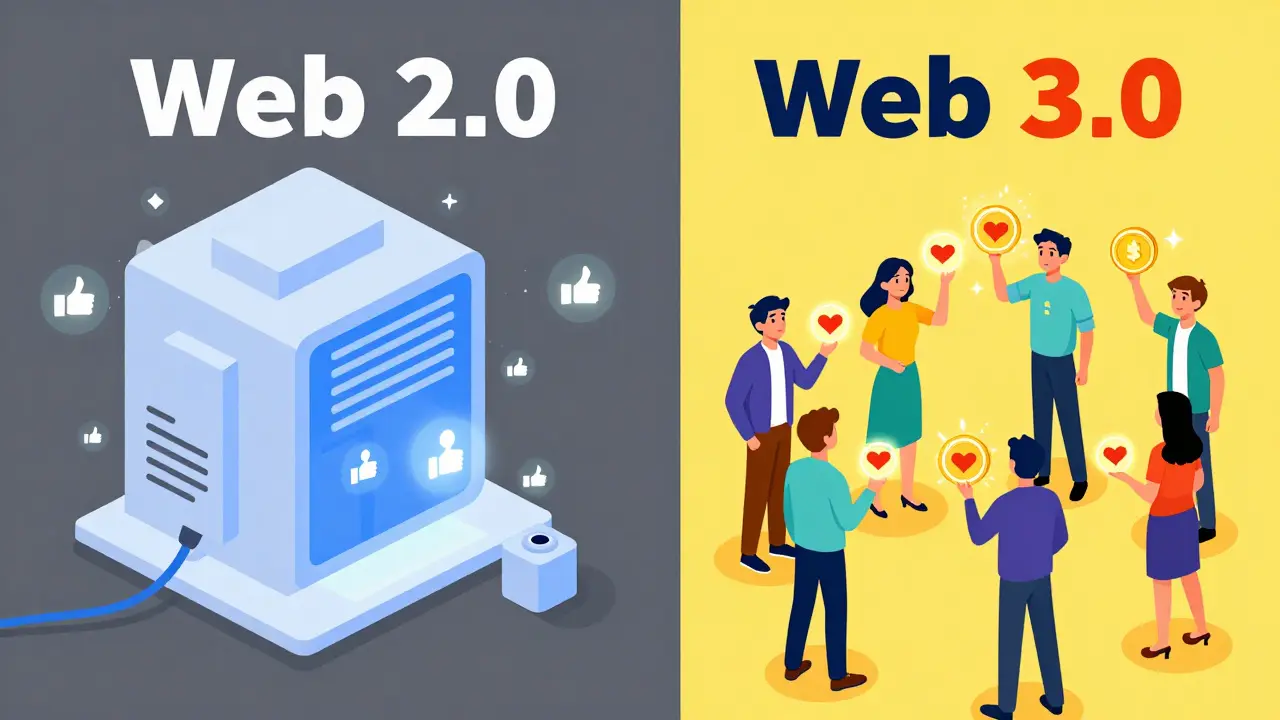
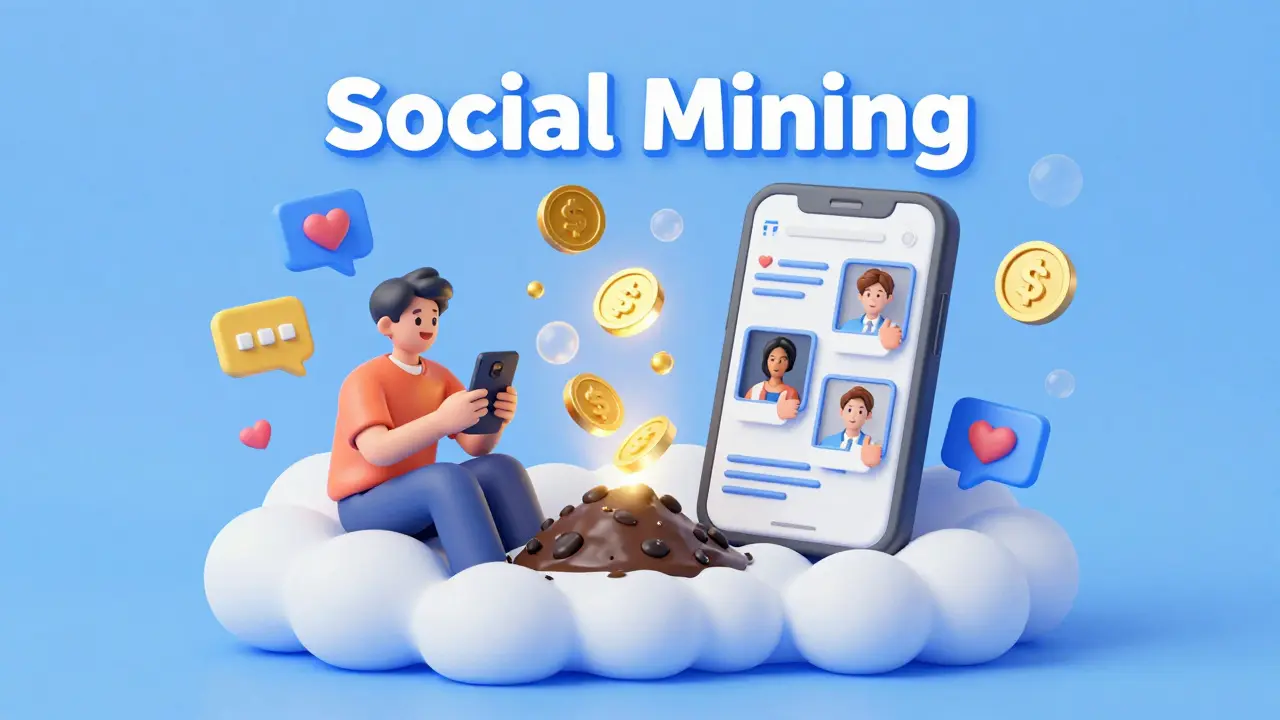
Most of us are used to the Web 2.0 model: you give your data, and the company gives you a free service. FaceDAO moves us into Web 3.0, where the economic incentive is shifted back to the user. This process is called "social mining." Instead of solving complex math problems to secure a network (like Bitcoin does), you "mine" tokens by being active on the platform.
If you're a creator, you earn FACEDAO tokens when people like or share your posts. If you're a consumer, you get rewarded for reading, commenting, and retweeting. It's a circular economy where every interaction has a tangible value. The platform uses a unique FACE identifier, which acts as your private key and Decentralized Identifier (DID). This means you aren't just an account in a corporate database; you own your digital identity.
The Tokenomics of FACEDAO
When looking at the FaceDAO token, the first thing that hits you is the scale. The maximum supply is 1 quadrillion tokens. To put that in perspective, that's a one followed by fifteen zeros. This explains why the individual price per token is a tiny fraction of a cent (often appearing as $0.0000000001).
The project has taken a community-first approach to its distribution. A staggering 90% of the tokens are allocated to the community treasure fund. This fund covers airdrops, rewards for completing tasks, and providing liquidity on Decentralized Exchanges (DEXs). The remaining 10% goes toward the actual plumbing of the project-server costs and infrastructure development.
| Attribute | Value |
|---|---|
| Network Standard | BEP-20 (Binance Smart Chain) |
| Maximum Supply | 1,000,000,000,000,000 (1 Quadrillion) |
| Community Allocation | 90% |
| Development Allocation | 10% |
Is it Actually Decentralized?
The "DAO" part of FaceDAO stands for Decentralized Autonomous Organization. In theory, this means the community helps govern the platform rather than a CEO in a boardroom. By using blockchain technology, the project claims that all information is transparent and immutable. One of their biggest claims is that the system makes it technically impossible to create fake accounts or bot farms, ensuring that every interaction is between real humans.
However, true decentralization is a spectrum. While the tokens live on a blockchain, the actual social interface and the servers that run the app often have centralized points of failure. For a user, the immediate benefit is the lack of registration fees and the ease of setup-you don't need a degree in computer science to start earning tokens.
Trading and Market Reality
If you're looking at the charts, you'll notice something strange: the price of FACEDAO varies wildly depending on which exchange you check. This is a red flag called "fragmented liquidity." Because the total market cap is incredibly small (sometimes reported as low as a few hundred dollars on certain platforms), a single trade of $10 can move the price by a significant percentage.
You can find the token on exchanges like KuCoin, Bybit, and Gate.io. To get started, most users use a Web3 Wallet (like the one integrated into Binance) to purchase the tokens and then move them to the FaceDAO platform to engage in social mining.
The Risks and Red Flags
We can't talk about a micro-cap coin without talking about the risks. FaceDAO is an extremely niche project. The most glaring issue is the lack of transparency regarding the development team and a concrete technical roadmap. In the crypto world, "anonymous teams" are common, but they add a layer of risk if the project suddenly stops being updated.
Furthermore, the extreme supply of tokens means that for the price to reach even a fraction of a penny, an astronomical amount of new capital would need to flow into the project. Most of the current trading volume is negligible, meaning if you buy a large amount of FACEDAO, you might find it very difficult to sell it back without crashing the price further.

How to Get Started with FaceDAO
- Set up a Wallet: Use a compatible Web3 wallet that supports the Binance Smart Chain.
- Acquire Tokens: Create an account on a supported exchange (like Bybit or Gate.io), complete your KYC (identity verification), and trade for FACEDAO.
- Connect to the Platform: Use your wallet to enter the FaceDAO ecosystem.
- Start Mining: Begin posting content, liking others' work, and engaging in discussions to earn rewards.
- Secure Your Gains: Move your earned tokens from the platform back to a secure external hardware wallet to avoid exchange risks.
What exactly is Social Mining?
Social mining is the process of earning cryptocurrency rewards by performing social actions. In FaceDAO's case, this means creating content, commenting on posts, and liking other users' contributions. It replaces the hardware-heavy mining of Bitcoin with human-centric social engagement.
Is the FACEDAO token safe to invest in?
Like all micro-cap tokens, FACEDAO carries a very high risk. The extremely low liquidity and small market capitalization mean the price is highly volatile. It should be treated as a speculative asset rather than a stable investment.
Where can I buy FACEDAO tokens?
FACEDAO is available on several exchanges, including KuCoin, Bybit, Gate.io, LBank, and MEXC. You can also use the Binance Web3 Wallet for integration.
How does FaceDAO handle user data?
FaceDAO uses blockchain technology and Decentralized Identifiers (DIDs) to ensure that users maintain ownership of their own data. Unlike traditional social networks, the platform aims to prevent corporate monetization of personal information without the user's consent.
What is a BEP-20 token?
BEP-20 is the token standard used by the Binance Smart Chain (BSC). It allows tokens like FACEDAO to be easily transferred, traded on decentralized exchanges, and integrated with various Web3 wallets.
What to do if you run into trouble
If you're new to this, you might find that your tokens aren't showing up in your wallet immediately after a trade. Usually, this is because you haven't "added the custom token contract address" to your wallet. You'll need to find the official BEP-20 contract address for FACEDAO and paste it into your wallet's "Import Token" section.
If you're struggling with liquidity-meaning you can't sell your tokens because there aren't enough buyers-your best bet is to look for a Decentralized Exchange (DEX) on the Binance Smart Chain. These pools sometimes offer slightly different pricing and liquidity options than the centralized exchanges.



17 Comments
Love the idea of getting paid for my social presence! 🚀 It's about time we took the power back from the tech giants! ✨
The math here is fundamentally flawed. A quadrillion token supply is a classic hallmark of a project designed to inflate numbers without providing any real utility. It's an obvious attempt to attract retail investors with low unit prices.
We can all learn so much by supporting each other's content on a platform like this! Let's just be careful and help each other stay safe while we explore Web 3.0 together!
imagine actually believing a "dao" with a couple hundred dolars market cap is decentralized lol. its just another pump and dump scheme with a fancy name. the liquydity is a joke.
They want your DID so they can track your every move across the web. This is just a trap to get us into a digital ID system for the new world order. Don't fall for the free money.
It is just a BEP-20 token. That means it is on Binance Smart Chain and that is all it is. People act like it is magic but it is just code.
The sheer audacity to call this a "guide" when it's basically a brochure for a ghost town. I've seen more activity in a dead mall than in the trading volume of this token. It's quite tedious to even discuss such amateurish projects.
It is wonderful to see new ways of engaging with a global community. If we approach this with a spirit of mentorship and patience, we can navigate these risks together.
money is just a story we tell ourselves anyway so why not earn it by talking online
The intersection of decentralized identifiers and social mining is a fascinating, albeit dangerous, experiment in societal engineering. One must wonder who truly controls the nodes in this alleged DAO.
Using a quadrillion tokens is just wrong. It makes the whole system look like a scam. We should have a moral standard for how these tokens are launched.
I'm curious if anyone has actually successfully moved their tokens to a hardware wallet yet. It would be great to share the steps for those of us who are still learning the ropes of Web3!
whatever... just another coin that'll go to zero :) no one cares about social mining anyway
Oh my goodness, the risk level is just so terrifying!!
I simply cannot imagine putting my hard-earned money into something with such low liquidity, it's truly heart-wrenching to think about the losses people might suffer!
I am most hummbley suggeting that we all exercise extreme caution!!
It is a truly tragick situation when novise investors are led into such volitile waters without a proper map! We must support one another in these dizzing times of technologicall shift!
USA should be leading the way in Web3 and not letting these random tokens take over! 🇺🇸 Get some real American projects going! 💥💪
The concept of social mining is interesting from a cultural perspective as it attempts to monetize human interaction. However the lack of transparency in the team remains a significant concern for long term viability.