
- 13 May 2026
- Elara Crowthorne
- 0
There is no single list of crypto exchanges that the Iranian government has officially "banned" by name. Instead, the situation is far more complex and dangerous for users. The reality is a two-pronged trap: international platforms like Tether are freezing accounts due to US sanctions, while the Iranian government restricts domestic trading through strict capital controls and API monitoring.
If you are trying to trade crypto in or from Iran, you aren't just fighting one set of rules. You are navigating a minefield where your funds can be frozen by foreign entities like Bittrex (historically) or current stablecoin issuers, and simultaneously monitored by the Central Bank of Iran. This guide breaks down exactly what is restricted, who is enforcing it, and how these measures impact your ability to hold or move digital assets.
The International Blockade: US Sanctions and OFAC
The most significant barrier for Iranian crypto users comes from outside the country. The US Treasury's Office of Foreign Assets Control (OFAC) enforces strict sanctions against Iran. These sanctions do not just target banks; they extend to cryptocurrency infrastructure.
Major global exchanges and service providers must comply with these sanctions to avoid losing access to the US financial system. This means they voluntarily block users identified as being in Iran. If an exchange detects an IP address, KYC (Know Your Customer) data, or transaction pattern linked to Iran, they will likely freeze the account immediately.
- Account Freezes: Platforms like Binance, Coinbase, and Kraken have suspended operations in Iran. They do this proactively to maintain compliance.
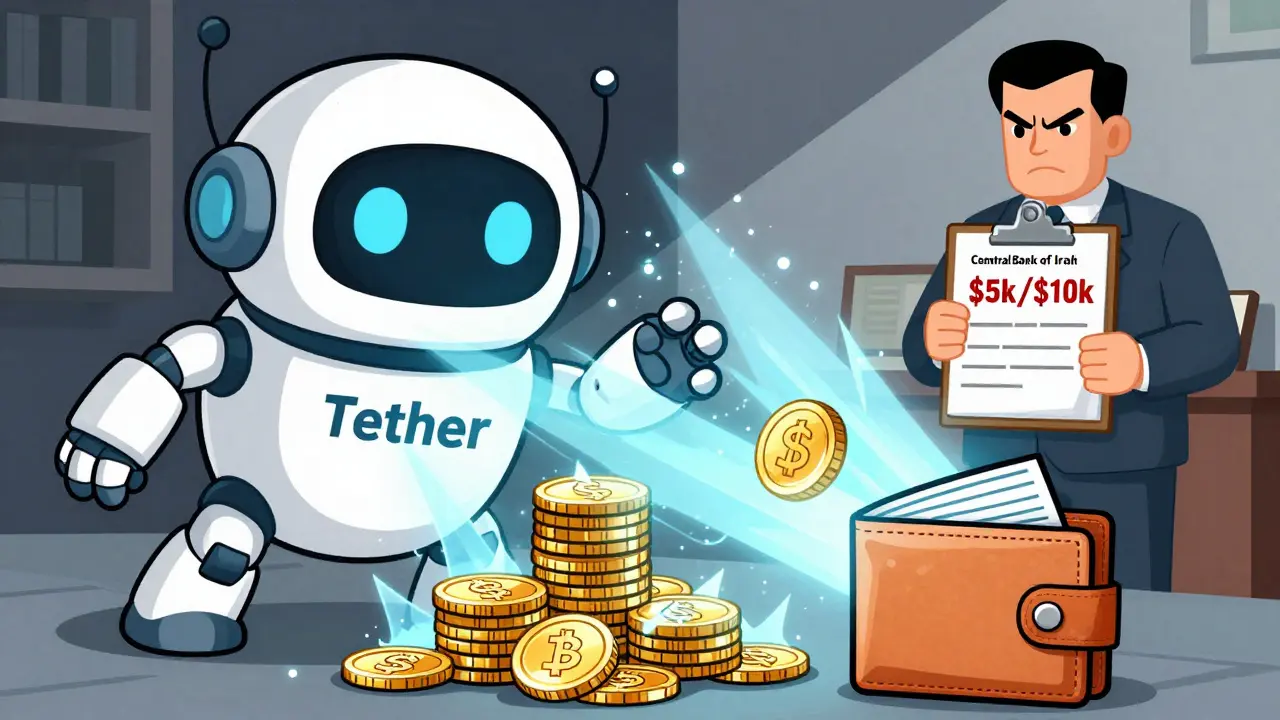
- Stablecoin Risks: Tether, the issuer of the USDT stablecoin, has actively frozen wallets linked to Iranian addresses. In July 2025, Tether executed its largest-ever freeze of Iranian-linked funds, targeting 42 specific addresses. Many of these were connected to major local exchanges.
- Legal Precedents: The case of Bittrex serves as a warning. Although now bankrupt, Bittrex froze Iranian-owned accounts after US sanctions tightened. An Iranian national sued for $88 million, but courts rejected the claim because Terms of Service agreements give exchanges broad discretion to suspend accounts for compliance reasons.
This creates a hostile environment for any Iranian user attempting to use centralized exchanges (CEX) that operate globally. The risk isn't just getting blocked; it's having your entire portfolio locked indefinitely.
Domestic Restrictions: The Central Bank’s Tight Grip
Inside Iran, the government hasn't banned crypto outright, but it has made it incredibly difficult to trade freely. The Central Bank of Iran shifted its stance dramatically in late 2024 and early 2025.
On December 27, 2024, the Central Bank effectively blocked all direct cryptocurrency-to-rial payments through internet websites within Iran. This was a fundamental shift from relative tolerance to active restriction. By January 2025, they began selectively unblocking some trader exchanges, but with a catch: only those operating with the government's own API system could function. This API provides the state with full access to user data, creating a controlled surveillance environment.
Furthermore, the government introduced strict limits on stablecoins. Deputy Governor Asghar Abolhasani established caps in September 2025:
- Purchase Limit: Individuals or legal entities can buy a maximum of $5,000 worth of stablecoins per year.
- Holding Limit: Users are allowed to hold up to $10,000 worth of stablecoins in their balance at any time.
These limits effectively constrain participation in global crypto markets for anyone dealing with larger volumes. If you exceed these thresholds, you risk penalties or account closures under domestic law.
The Fate of Local Exchanges: Nobitex and Others
You might wonder if local Iranian exchanges are safe. Nobitex, Iran's largest cryptocurrency exchange, faces intense scrutiny. While it operates domestically, it is not immune to international pressure.
In July 2025, when Tether froze dozens of addresses, many had substantial exposure to Nobitex. These frozen wallets had established transactional flows to both Nobitex and addresses affiliated with the Islamic Revolutionary Guard Corps (IRGC). This association creates operational challenges for legitimate users who relied on Nobitex. Even if the exchange itself isn't "banned" by the Iranian government, its connectivity to the global market is severely hampered by these freezes.
Other local platforms face similar risks. The Iranian government also launched a comprehensive ban on all cryptocurrency advertising in February 2025, both online and offline. This information restriction aims to limit adoption and awareness, making it harder for new users to find reliable platforms.
Taxation and Legal Status: A Shifting Landscape
It is crucial to understand that crypto is not illegal in Iran, but it is heavily regulated. In August 2025, the Law on Taxation of Speculation and Profiteering was enacted. This law imposed a capital gains tax on cryptocurrency trading for the first time.
Crypto is now positioned alongside other speculative assets like gold, real estate, and forex. This signals Tehran's intent to formally regulate and tax digital asset markets despite the restrictions. If you are trading legally within the narrow bounds allowed by the Central Bank, you are liable for taxes. Failure to report gains can lead to severe financial penalties.
| Entity/Action | Type of Restriction | Impact on Users |
|---|---|---|
| Tether | International Freeze | Freezing of USDT wallets linked to Iranian IPs or addresses. |
| Central Bank of Iran | Capital Controls | Limits on stablecoin purchases ($5k/year) and holdings ($10k). |
| OFAC | Sanctions Enforcement | Global exchanges block Iranian users to avoid US penalties. |
| Nobitex | Operational Risk | Connected to frozen addresses, limiting global liquidity access. |
| Crypto Advertising Ban | Information Control | No public promotion of crypto services allowed in Iran. |
Workarounds and Risks: The Turkey Connection
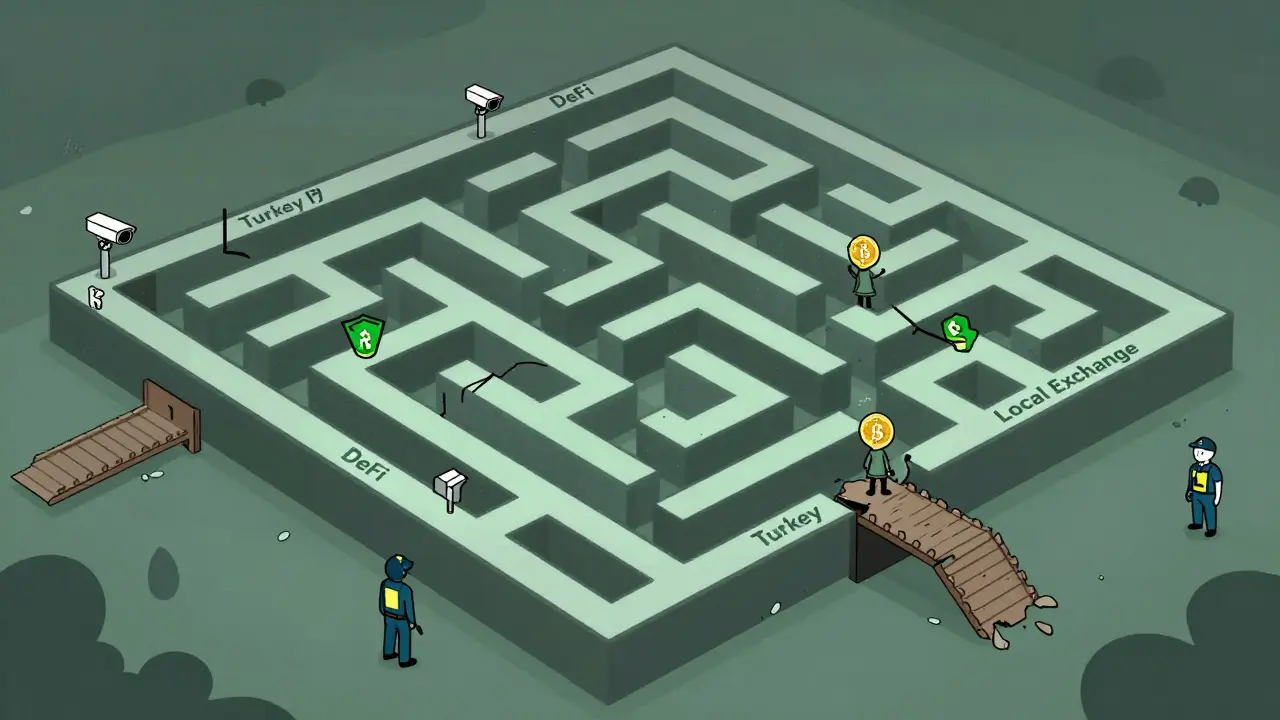
Faced with these restrictions, many Iranian users look for alternatives. Turkey has emerged as a key haven. Its large, dollarized crypto economy and flexible residency channels make it a gateway back into the financial system.
However, this is not without risk. Western governments have identified Turkish companies and intermediaries as central players in Iran's sanctions evasion schemes. Using Turkish proxies or intermediaries to access global exchanges can still trigger sanctions violations. Additionally, moving funds via alternative networks, such as swapping USDT for DAI on the Polygon network, is a common tactic used after Tether freezes. While technically possible, these moves require technical expertise and carry the risk of being flagged by chain analysis firms.
Conclusion: Navigating a Fragmented Ecosystem
There is no simple answer to "which exchanges are banned." Instead, you face a fragmented ecosystem. Global exchanges block you due to US sanctions. Domestic exchanges monitor you due to Iranian regulations. Stablecoin issuers freeze your funds if they detect sanctioned links.
To protect yourself, you must assume that any centralized platform accessible to you is either monitoring your activity or blocking your access entirely. The safest route often involves decentralized finance (DeFi) protocols that do not require KYC, though even these are not immune to smart contract risks or future regulatory crackdowns on bridges and swaps.
Is Bitcoin legal in Iran?
Yes, Bitcoin and other cryptocurrencies are not illegal in Iran. However, they are heavily regulated. The government allows mining but restricts trading through capital controls, taxes, and advertising bans. You can own crypto, but moving it in and out of the country or converting it to Rial is tightly controlled.
Why did Tether freeze Iranian accounts?
Tether froze accounts to comply with US sanctions enforced by OFAC. In July 2025, they targeted addresses linked to Iranian exchanges like Nobitex and IRGC-affiliated entities. This action was taken to prevent Tether from being used to evade international sanctions.
Can I use Binance if I live in Iran?
No. Binance, along with other major global exchanges like Coinbase and Kraken, has suspended services in Iran. Attempting to create an account using Iranian identification or IP addresses will result in immediate suspension and potential freezing of funds.
What are the limits on holding stablecoins in Iran?
As of September 2025, the Central Bank of Iran limits individuals to purchasing $5,000 worth of stablecoins annually and holding a maximum of $10,000 in their balance at any time. Exceeding these limits may result in penalties.
Are there any safe ways to trade crypto in Iran?
Trading carries significant risk. Using local exchanges like Nobitex subjects you to government surveillance and potential international freezes. Using DeFi protocols avoids KYC but requires technical skill. Many users attempt to route transactions through third countries like Turkey, but this also carries legal and financial risks due to sanctions evasion concerns.
