- 24 Sep 2026
- Elara Crowthorne
- 0
You've probably scrolled past it on your exchange watchlist. It’s there, listed alongside giants like Bitcoin and Ethereum, but with a price tag so small you need a calculator just to see the decimal points. This is Angola (AGLA), a blockchain-based infrastructure project designed to address imbalances in profit distribution within its ecosystem. If you’re wondering what this tiny ticker actually does, why it’s listed on major platforms like Coinbase and Binance, and whether it’s worth your attention, you’re in the right place.
The world of cryptocurrency is crowded. Thousands of tokens launch every year, most fading into obscurity. AGLA sits in a unique niche: it’s a micro-cap asset that has secured listings on tier-1 exchanges despite having minimal trading volume and limited public documentation. For investors, this raises a critical question: Is this an early-stage gem with high potential, or a ghost town with thin liquidity? Let’s break down exactly what Angola (AGLA) is, how it functions, and what the data tells us about its current state as of late 2026.
Understanding the Core Concept of AGLA
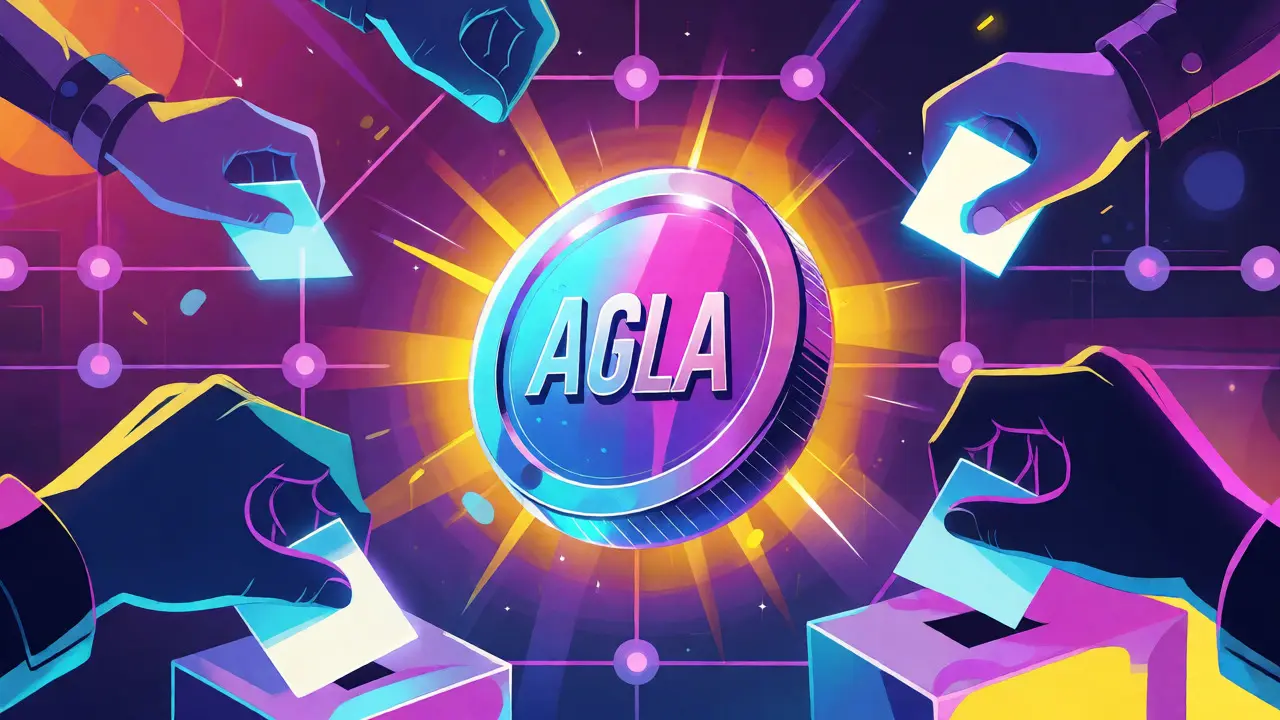
At its heart, Angola is not just a currency; it is a governance instrument. Unlike meme coins driven purely by hype, or utility tokens used strictly for paying transaction fees, AGLA is designed to give holders a voice. The project claims to tackle specific structural issues regarding how profits are distributed in blockchain ecosystems. In plain English, it aims to fix the "who gets paid" problem in decentralized networks.
However, here is the catch: while the concept sounds solid, the execution details remain somewhat opaque. Major aggregators like CoinMarketCap describe it as part of the "Angola system," but detailed whitepapers or clear roadmaps are harder to find compared to established projects. This lack of transparency is common in early-stage or lower-tier altcoins. You aren’t buying a product you can hold in your hand; you are buying a stake in a protocol’s future decision-making process.
Think of it like owning shares in a company where the dividend policy is still being written. You have the voting power (the governance token), but the actual business model (the profit distribution mechanism) is still evolving. This makes AGLA a speculative play on infrastructure development rather than a stable store of value.
Tokenomics: Supply, Circulation, and Scarcity
To understand any crypto asset, you must look at the numbers. Tokenomics tell you if the supply is controlled or chaotic. For Angola (AGLA), the structure is relatively straightforward but significant in scale.
- Total Maximum Supply: 3 billion AGLA tokens.
- Circulating Supply: Approximately 2 billion AGLA tokens.
- Circulation Rate: Roughly 67% of the total supply is currently in circulation.
Why does this matter? A 67% circulation rate means that nearly one-third of all tokens are still locked up or held by the team/investors. This creates potential sell pressure in the future as these remaining tokens enter the market. If the demand doesn't grow proportionally, the price could face downward pressure. Conversely, if the project gains traction, the reduced circulating supply might help stabilize the price. But right now, with 2 billion tokens floating around, scarcity isn't exactly driving the bus.
Price Analysis and Market Volatility
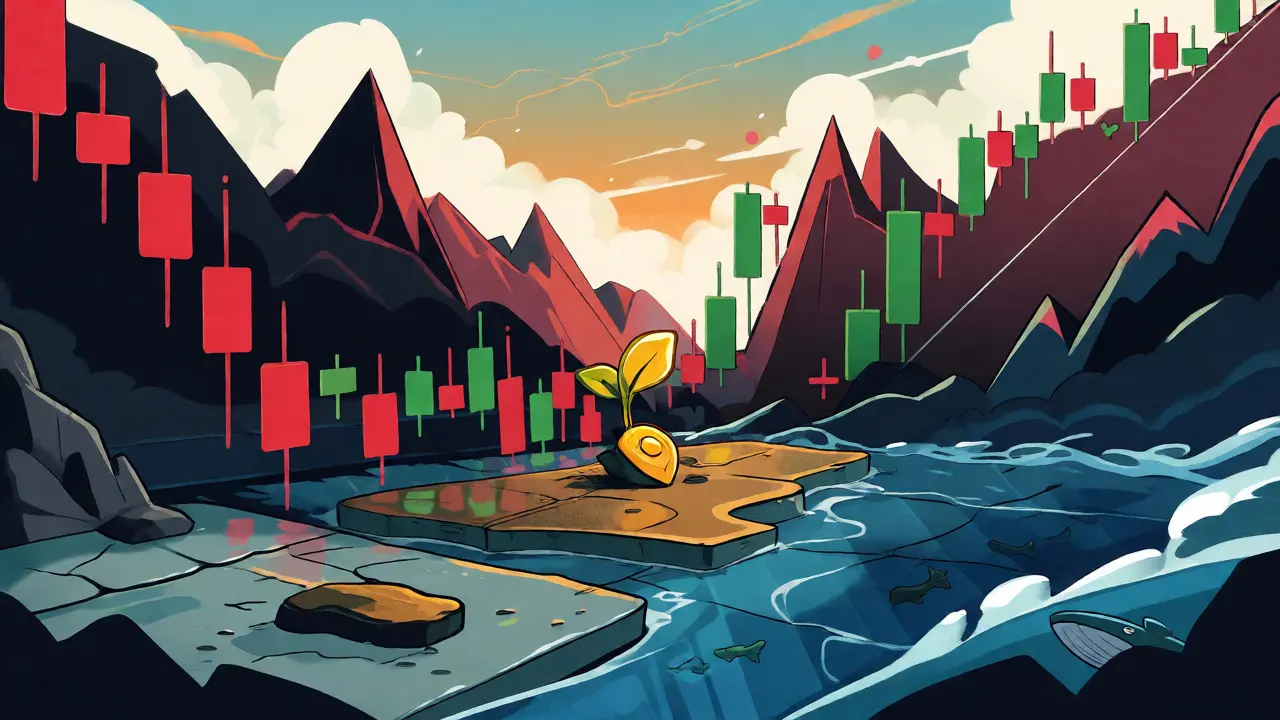
If you check the price today, you’ll likely see a number that looks like a typo. As of recent data from May 2026, AGLA trades at approximately $0.0000028 USD. On some platforms, due to rounding errors or extremely low liquidity, it might even display as $0.00.
Don’t let the small number fool you. While the unit price is negligible, the volatility is real. Historical data from Indonesian exchange Pluang shows a massive swing between an all-time low of Rp1.61 and an all-time high of Rp7,240.93. That is a difference of thousands of percent. This kind of movement is typical for micro-caps. They don’t move because of fundamental changes in technology; they move because of sudden bursts of interest or large sell-offs by whales.
The inconsistency in pricing across exchanges is another red flag. Crypto.com lists it at $0.0000028, while Binance’s conversion tool might show close to zero. This discrepancy suggests that arbitrage opportunities exist, but more importantly, it indicates fragmented liquidity. You aren’t trading in a deep pool; you’re fishing in separate, shallow ponds.
Liquidity and Exchange Availability
Here is where things get tricky for traders. AGLA is listed on heavyweights like Binance, Coinbase, and Crypto.com. Being on Coinbase is a badge of legitimacy-it means the token passed basic compliance checks. However, listing does not equal tradability.
Reports indicate that while AGLA appears on Crypto.com’s interface, it was marked as "not tradable yet" during certain periods. This happens when a token is approved for display but hasn’t fully integrated into the trading engine or lacks sufficient order book depth. Gate.io offers live tracking, and Pluang allows buying and selling, but the 24-hour trading volume often registers as N/A or extremely low.
| Exchange | Status | Approx. Price (USD) | Notes |
|---|---|---|---|
| Binance | Listed | ~$0.0000028 | Conversion tool available; low volume reported. |
| Coinbase | Listed | Data varies | High visibility, but limited active trading pairs. |
| Crypto.com | Informational | $0.0000028 | Marked as 'not tradable' in some snapshots. |
| Gate.io | Active Trading | $0.0000028 | Provides live charts and USD conversion. |
| Pluang | Active Trading | IDR Denominated | Shows historical volatility from IDR 1.61 to 7,240. |
This fragmented availability means you cannot simply buy AGLA anywhere. You need to check which platform actively supports trading pairs for your region. If you try to buy on a platform where it’s only informational, you’ll be stuck watching the chart without being able to act.
The Risks: Why Low Volume Matters
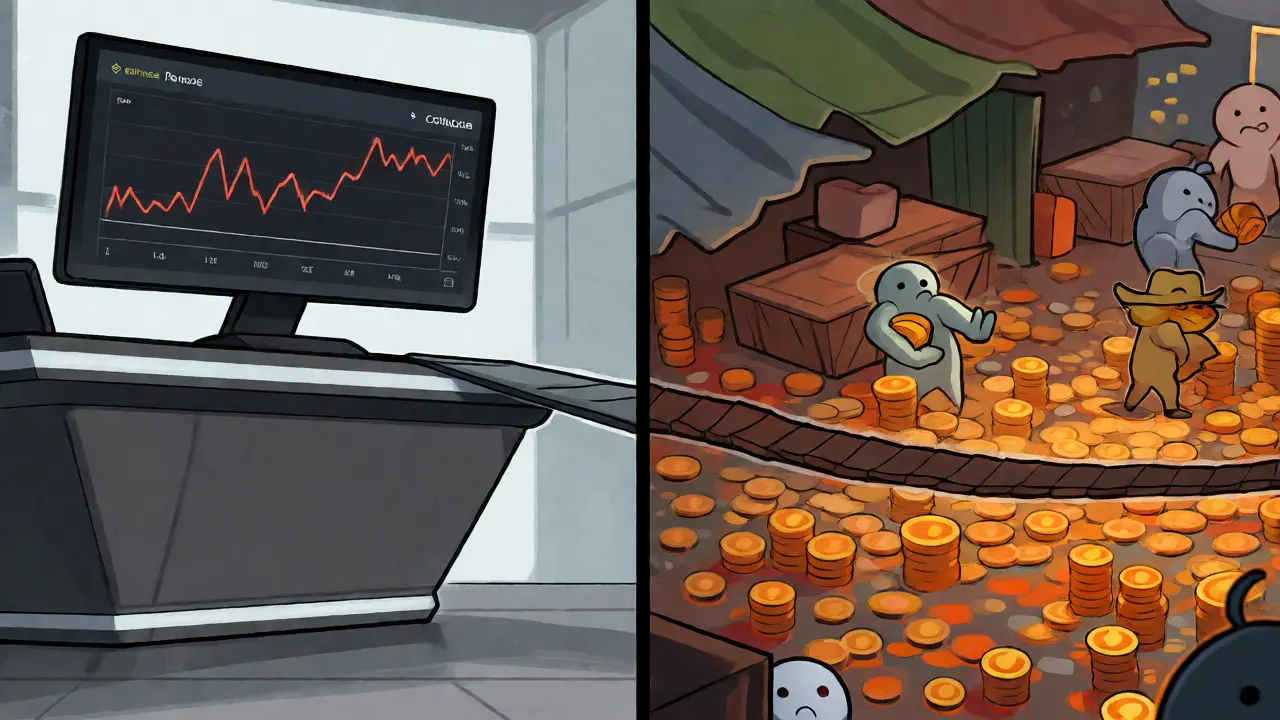
Investing in a coin with a price of $0.0000028 is exciting until you try to sell. Liquidity risk is the biggest danger here. When trading volume is low, the order book is thin. This means two things:
- Slippage: If you try to sell a moderate amount of AGLA, you might crash the price because there aren’t enough buyers at the current level. You might end up selling at a much lower price than expected.
- Exit Difficulty: Getting out of a position can be hard. If the market turns bearish, sellers flood the thin order books, and buyers disappear. You could be left holding the bag with no one to trade with.
Furthermore, the lack of comprehensive public information-such as a clearly defined founding date, prominent leadership team, or detailed technical roadmap-adds to the uncertainty. Established projects usually have years of blog posts, GitHub commits, and community updates. AGLA feels quieter. This silence can mean many things, but for a retail investor, it usually translates to higher risk.
Is AGLA Worth Your Attention?
So, should you put money into Angola (AGLA)? There is no simple yes or no. It depends entirely on your strategy.
If you are looking for a safe haven, this isn’t it. The micro-cap nature, combined with low liquidity and unclear long-term vision, makes it volatile. However, if you are a high-risk speculator looking for asymmetric bets, AGLA offers the classic "lottery ticket" profile. It has the exposure of being on major exchanges (like Binance and Coinbase), which provides a floor of credibility, but the upside potential of a token that hasn’t yet captured mainstream attention.
Keep an eye on the trading volume. If volume starts to increase consistently across multiple exchanges, it signals growing interest. If it remains near zero, the token may struggle to gain momentum regardless of its technological promises.
What is the main purpose of the Angola (AGLA) token?
The AGLA token primarily functions as a governance instrument within the Angola blockchain ecosystem. Its stated goal is to address imbalances in profit distribution structures, allowing token holders to participate in decision-making processes regarding the protocol's future.
Where can I buy Angola (AGLA) cryptocurrency?
AGLA is listed on several major platforms including Binance, Coinbase, Crypto.com, Gate.io, and Pluang. However, trading availability varies. Some platforms may list it for informational purposes only without active trading pairs, so always verify if the "Buy/Sell" function is active before depositing funds.
Why is the price of AGLA so low?
The low price per unit (approx. $0.0000028 USD) is largely due to its high circulating supply of 2 billion tokens and its status as a micro-cap asset. High supply generally leads to lower individual token prices unless demand is exceptionally high, which is currently not the case for AGLA.
Is Angola (AGLA) a good investment?
This depends on your risk tolerance. AGLA is considered a high-risk, high-potential-reward micro-cap coin. It suffers from low liquidity and limited public documentation, which increases volatility and exit risks. It is suitable for speculative portfolios but not for conservative long-term holdings.
What is the maximum supply of AGLA?
The maximum total supply of Angola (AGLA) tokens is capped at 3 billion. Currently, approximately 2 billion tokens are in circulation, meaning about 67% of the total supply is active in the market.
