- 30 Aug 2026
- Elara Crowthorne
- 0
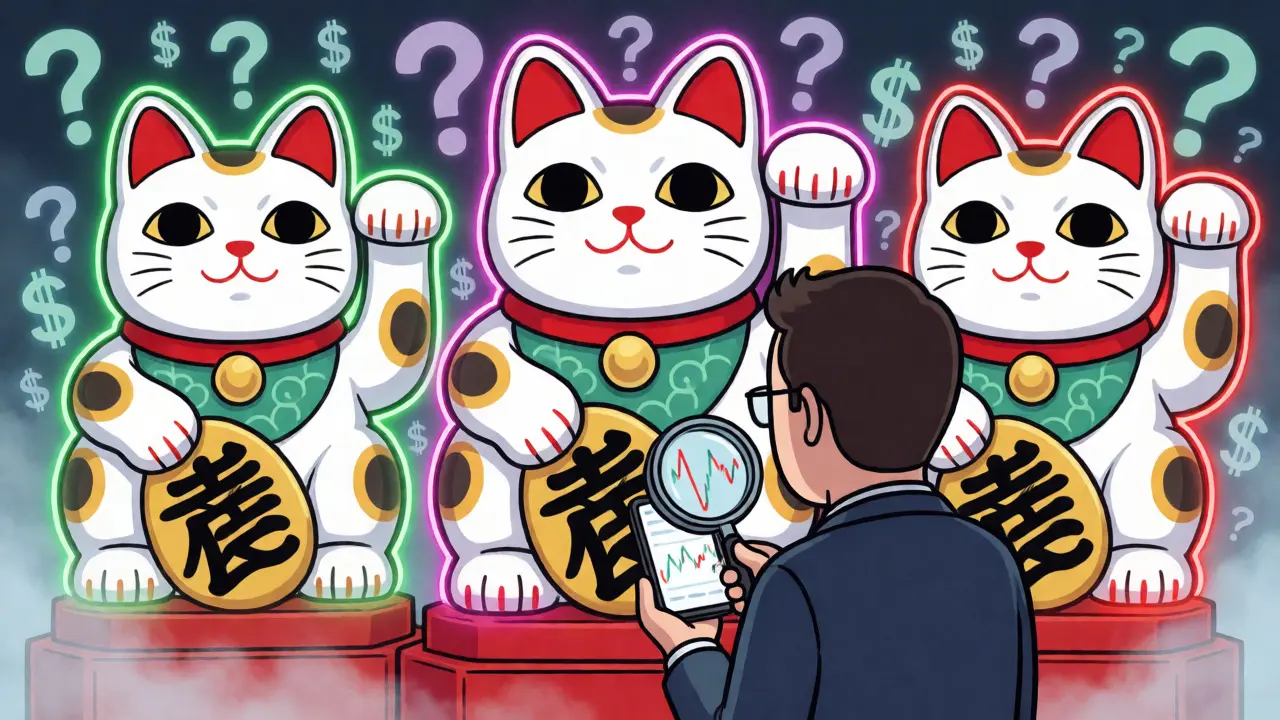
You see a cat waving its paw. You think "lucky money." Then you see a Maneki (NEKO) cryptocurrency token with that exact image and a price tag of five zeros after the decimal point. Your brain does a quick calculation: if I buy $100 now, will I be rich by 2050? Or will I just own a digital souvenir?
Here is the hard truth before we even start: Maneki (NEKO) is not Bitcoin. It is not Ethereum. It is likely not even what you think it is. The name "Maneki" refers to the Japanese beckoning cat, a symbol of good fortune. But in the crypto world, names are cheap, and confusion is expensive. If you are searching for this token, you are probably looking at a chart that looks like a heartbeat monitor flatlining. Let’s figure out why.
The Name Game: NEKO vs. NEKI vs. MANEKI
First things first. You need to know which cat you are buying. The research shows at least three distinct tokens using similar naming conventions. This is a classic trap in the altcoin market.
- Maneki (NEKO): The primary token often searched. Low valuation, high volatility projections.
- Maneki-neko (NEKI): A related but separate asset. Often confused with NEKO.
- Maneki Neko (MANEKI): Another variant. Sometimes these are forks or completely different projects trying to ride the same wave.
Why does this matter? Because when you look up "price prediction," you might be reading data for NEKI while holding NEKO. They have different supply schedules, different blockchains, and frankly, different levels of liquidity. Always check the contract address. Never trust the ticker symbol alone.
| Ticker | Status | Liquidity Risk | Data Availability |
|---|---|---|---|
| NEKO | Active but niche | High | Limited historical data |
| NEKI | Near-zero volume | Extreme | Reported as "not traded anywhere" recently |
| MANEKI | Fragmented | High | Sparse documentation |
What Is It Actually Doing?
Most people assume every crypto has a use case. Smart contracts! DeFi yield! NFT minting! For Maneki (NEKO), the answer is usually: nothing yet. Or maybe something very small that hasn't been documented well.
Based on available sources, there is no clear whitepaper detailing a robust technical infrastructure. There is no mention of a dedicated development team releasing regular GitHub updates. In the current market, investors want utility. They want to know *why* they should hold a token besides "it might go up." With Maneki, the value proposition appears to be purely speculative. It is a meme coin. Its value comes from community hype, social media trends, and the general hope that someone else will buy it for more than you paid.
This isn't necessarily bad. Dogecoin started as a joke. Shiba Inu was a copycat. But those projects built massive communities and ecosystems. Maneki seems to lack that critical mass. Without a strong community, a meme coin is just code sitting on a blockchain.
The Price Prediction Trap
If you search for "Maneki NEKO price prediction," you will find charts going vertical. BitScreener, for example, projects prices reaching $0.02845 in favorable conditions. That sounds amazing if you bought at $0.00001. But let's look closer at how these predictions work.
Platforms like CoinCodex admit they struggle with this token. Why? Because there is barely any trading history. Their algorithms need hours or days of consistent data to make sense of patterns. When a token trades at $0.0₍₄₎153 (that’s four zeros after the decimal) with near-zero volume, the algorithm is essentially guessing based on noise.
Consider the 2050 forecast. Some models suggest a peak of $0.03764. That implies a return of over 9,000%. Does that mean you should mortgage your house to buy in? No. It means the model assumes the project survives for 24 years without dying. Most micro-cap coins do not survive 24 months, let alone decades.
Here is a reality check on the numbers:
- Bull Case: Hype returns, whales enter, price spikes 600%.
- Bear Case: Liquidity dries up completely, price drops 99%.
- Base Case: The token trades sideways with minimal volume for years.
Liquidity: The Silent Killer
This is the most important section. Read it twice.
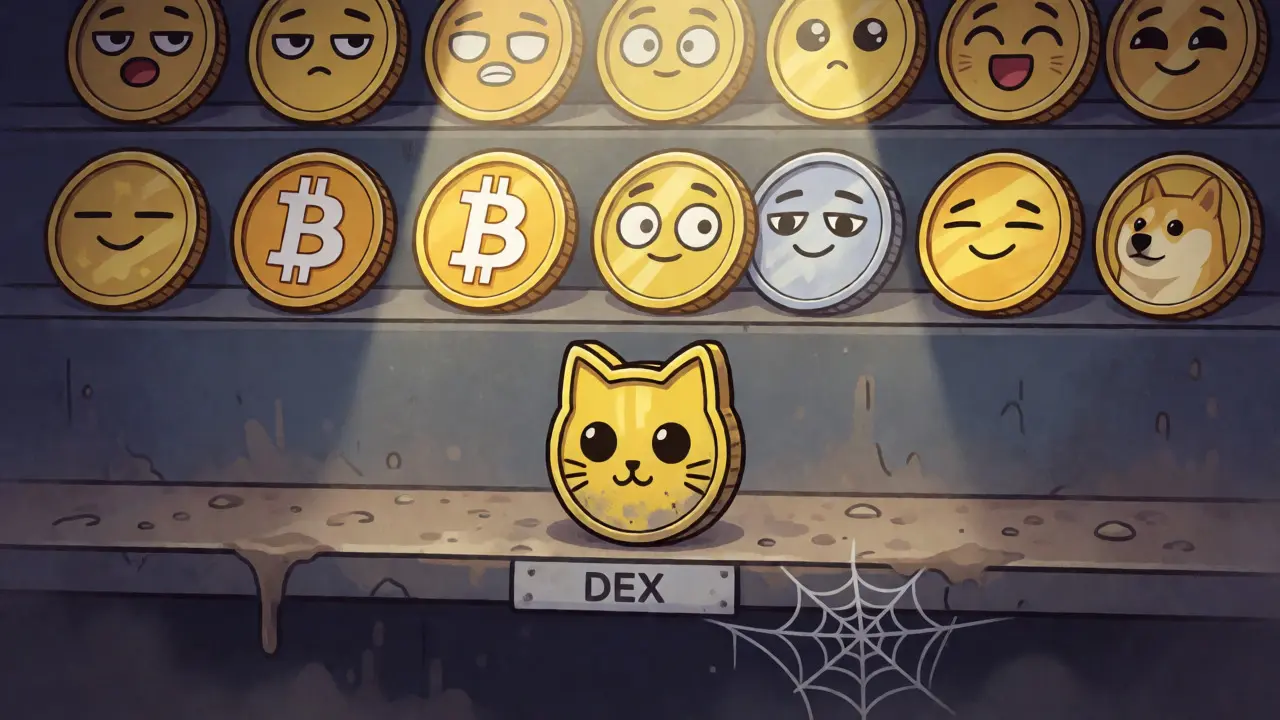
BeInCrypto reported that Maneki-neko (NEKI) had a market capitalization of $0.00 and 24-hour trading volume of $0.00. Holder.io confirmed it was "not traded anywhere." Even if NEKO has slightly better stats, the liquidity crisis is real across this ecosystem.
What does zero liquidity mean for you?
- You cannot sell easily. If you buy $1,000 worth of NEKO, you might be the only seller today. To exit, you might have to lower your price significantly to attract a buyer.
- Slippage is brutal. Buying or selling large amounts moves the price against you instantly.
- Exchange delisting risk. If volume stays near zero, exchanges remove the pair. Then you are stuck holding a token you can’t trade.
In Wellington, where I live, we don’t buy cars that have no fuel gauge. You shouldn’t buy crypto with no volume data either. It is flying blind.
How to Buy (If You Must)
Since major exchanges like Coinbase or Binance likely do not list Maneki (NEKO), you are in Decentralized Exchange (DEX) territory. This adds another layer of complexity and risk.
You will likely need to use Uniswap (if on Ethereum) or Raydium/Solana-based DEXs depending on the chain. Here is the workflow:
- Get a wallet like MetaMask or Phantom.
- Fund it with the native chain currency (ETH, SOL, etc.).
- Find the correct Contract Address. Copy-paste it. Do not type it.
- Swap your funds for NEKO.
- Expect high gas fees relative to your investment size if on Ethereum.
Remember: Every swap costs money. If you buy $50 worth of NEKO and pay $10 in gas fees, you are already down 20% before the price moves an inch.
Red Flags to Watch For
Before you click "buy," check these three things. If any fail, walk away.
- Contract Ownership: Is the contract renounced? If not, the developer can mint new tokens or pause trading.
- Holder Distribution: Use a block explorer. Do the top 10 wallets hold 90% of the supply? If yes, one person can crash the price.
- Social Activity: Are the Twitter/X posts recent? Or did they stop posting six months ago? Dead socials equal dead projects.
Currently, user reviews and community feedback for Maneki are virtually non-existent. This silence is louder than a shout. It suggests the project may have peaked in interest long ago.
Is It Worth It?
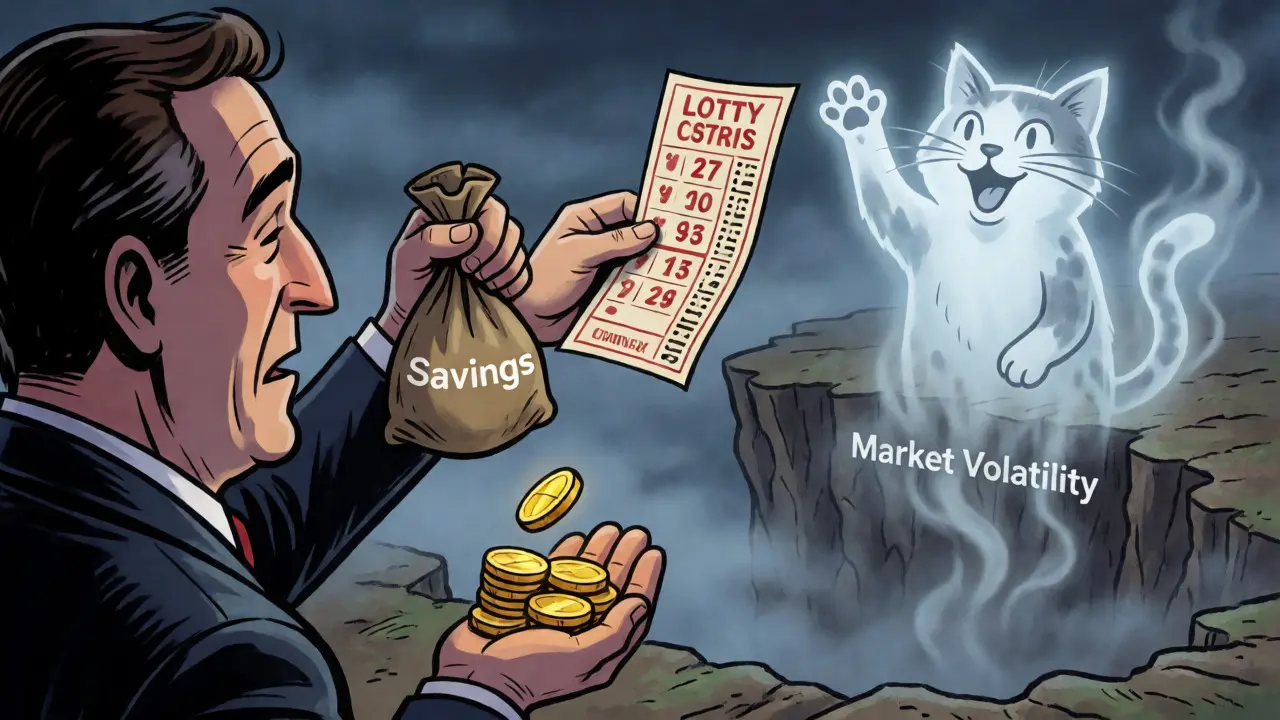
Let’s be honest. Maneki (NEKO) is a lottery ticket. Not an investment. An investment implies a reasonable expectation of return based on fundamentals. A lottery ticket implies a tiny chance of a huge payout, balanced against a high probability of losing everything.
If you enjoy the thrill of hunting for obscure gems, and you can afford to lose 100% of the money you put in, then sure. Play around. But do not expect this to pay your rent. Do not expect it to replace your savings. Treat it as entertainment expense, like a movie ticket or a fancy coffee.
The broader crypto market favors projects with clear utility, active teams, and transparent tokenomics. Maneki lacks all three in the public eye. Until the developers release a roadmap, secure a listing on a mid-tier exchange, and show actual trading volume, it remains a speculative ghost town.
What is the difference between NEKO and NEKI?
They are two different tokens with similar names. NEKO is often referred to as Maneki, while NEKI is Maneki-neko. They may exist on different blockchains or have different supply caps. Confusing them can lead to buying the wrong asset. Always verify the contract address.
Why is Maneki (NEKO) so cheap?
The price is low due to a combination of high total supply and extremely low demand. Low trading volume means there are few buyers, keeping the price depressed. Additionally, many such tokens launch with large supplies to facilitate easy trading in fractions.
Can I trust price predictions for Maneki?
Treat them with extreme skepticism. Algorithms require historical data to make accurate forecasts. Since Maneki has limited trading history and near-zero volume, these predictions are largely mathematical extrapolations rather than reliable financial advice.
Where can I buy Maneki (NEKO)?
It is unlikely to be on major centralized exchanges like Coinbase. You will typically find it on decentralized exchanges (DEXs) such as Uniswap or PancakeSwap, depending on the blockchain it runs on. Always check the latest listings on aggregators like CoinGecko or DexScreener.
Is Maneki (NEKO) a scam?
Not necessarily a scam, but it carries high risk. Many micro-cap tokens are legitimate experiments that simply fail to gain traction. However, the lack of transparency, absent development updates, and poor liquidity raise red flags. It fits the profile of a "dead" or abandoned project more than a thriving startup.
