
- 9 Aug 2026
- Elara Crowthorne
- 16
Have you ever stumbled upon a crypto coin with a ticker like TMED and wondered what it actually does? It’s not a meme coin, and it’s not trying to replace Bitcoin. Instead, it sits at the intersection of two massive industries: blockchain technology and global healthcare. This project is called MDsquare.
If you are looking at this token in August 2026, you might be confused by the data. You see a total supply of billions, but the circulating supply often shows as zero. The price hovers near nothing. So, is it dead? Is it a scam? Or is it just waiting for its moment? Let’s break down exactly what MDsquare is, how it was supposed to work, and where it stands today.
The Core Idea: Blockchain Meets Telemedicine
MDsquare is a healthcare-focused ecosystem built on the Ethereum blockchain designed to connect patients and doctors worldwide via remote video consultation and AI services. The team behind it, based in South Korea, launched the concept around mid-2018. Their pitch was simple but ambitious: use blockchain to secure medical data and create an economic loop that rewards everyone involved.
In a traditional telemedicine setup, you pay a doctor, they give you advice, and the data stays in their private database. MDsquare wanted to change that. They envisioned a platform where patients could share health data from wearable devices or home monitors. In return for sharing this valuable information, patients would earn TMED tokens. Doctors would earn TMED for providing consultations and creating medical content. Hospitals could accept TMED for bills. It was designed to be a "virtuous economic ecosystem" where every participant got paid in crypto.
How the Platform Was Supposed to Work
To understand if TMED has value, you have to look at the utility it was built for. The architecture relies on the Ethereum blockchain, meaning TMED is an ERC-20 token. This makes it compatible with standard wallets like MetaMask and allows it to be traded on exchanges that support Ethereum assets.
The proposed workflow looks like this:
- Data Entry: Users register health info from IoT devices (like heart rate monitors) onto the platform.
- Reward Distribution: The system logs these actions on the blockchain and issues TMED tokens to the user’s wallet.
- Service Access: Patients use these tokens to pay for remote video calls with doctors. The app even included 24/7 language interpretation to help travelers talk to local physicians abroad.
- Provider Earnings: Doctors and clinics receive compensation in TMED for their time and expertise.
This model tries to solve a big problem in healthcare: patient engagement. By giving people financial incentives to track their health, the platform hoped to generate better data for research and personalized care.
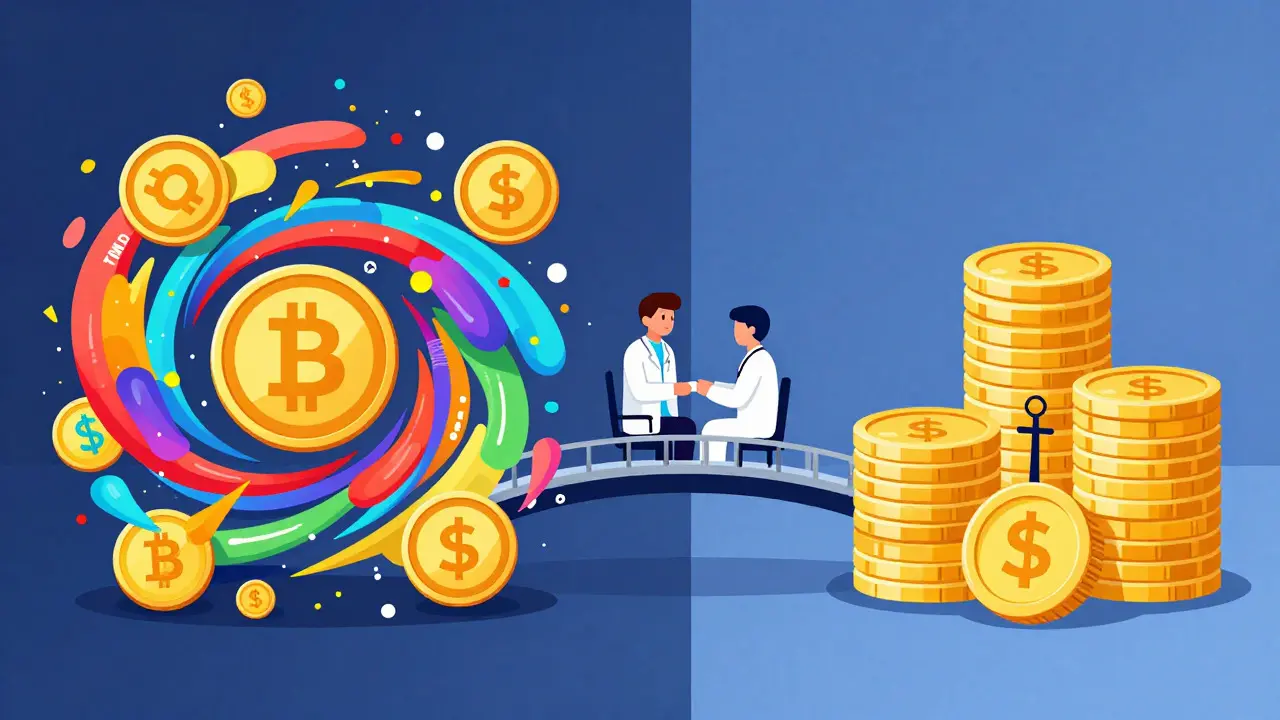
The Dual-Token System: TMED vs. MD Points
Here is where it gets interesting, and also a bit complicated. If you’ve been in crypto long enough, you know prices swing wildly. Imagine going to a doctor for a checkup, and the fee doubles because the crypto market crashed overnight. That’s bad for business.
To fix this, MDsquare introduced a secondary currency called MD Points (MDP). This is not a cryptocurrency. It is a stable internal credit tied to the US Dollar. Here is how the flow works:
- You buy MD Points using real money (USD, KRW) or your TMED tokens.
- You pay the doctor in MD Points. The price is fixed and stable.
- Doctors can hold their earnings in MD Points or convert them back to TMED if they want exposure to the crypto market.
This dual-token strategy is smart in theory. It protects the medical service providers from volatility while keeping the speculative upside for the TMED holders. However, managing two currencies adds friction. Users have to understand which token to use when, which can confuse non-crypto-savvy patients.
Current Status and Market Data (August 2026)
Let’s talk about the elephant in the room. If you check major trackers like CoinMarketCap or Yahoo Finance today, the picture is stark. As of early 2026, the data tells a story of dormancy.
| Metric | Value / Status |
|---|---|
| Total Supply | 28,000,000,000 TMED |
| Circulating Supply | 0 TMED (on major trackers) |
| Token Type | ERC-20 (Ethereum) |
| Price Range | $0.00000000 - $0.000009 USD |
| Market Cap | Negligible / Micro-cap |
| Trading Volume (24h) | $0 - $566 USD |
Why is the circulating supply listed as zero? This usually means one of two things. Either the tokens are locked in private wallets and not actively trading on public order books, or the liquidity pools on exchanges have dried up completely. When volume hits zero, price discovery stops. You might find a pair on a minor exchange showing a tiny price, but there’s no one else buying or selling to make that number meaningful.
Bitget ranks TMED outside the top 7,000 cryptocurrencies. For context, the top 100 coins dominate almost all retail attention. Being ranked #7,000+ puts TMED in the "dust" category-tokens that exist but have little active community interest or developer momentum right now.
Is MDsquare Still Active?
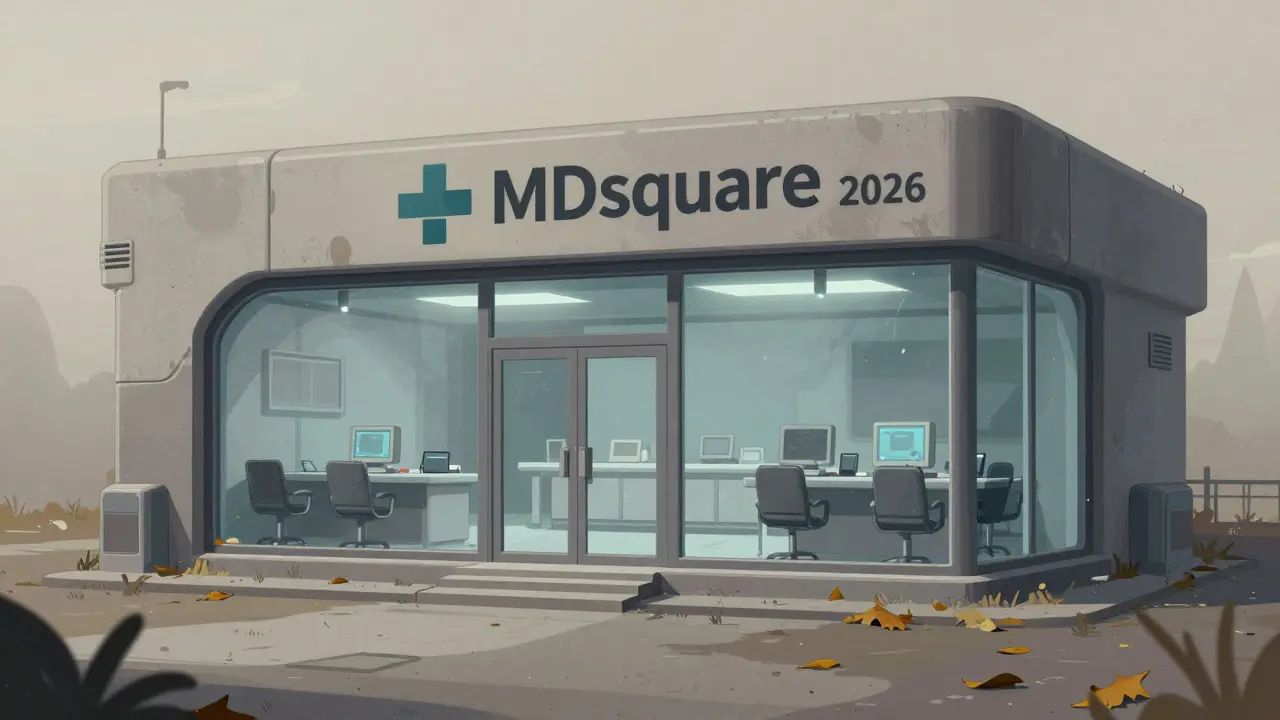
Activity is hard to pin down. The project had a strong media push in 2018, with press releases from PR Newswire and Enterprise Times highlighting its Korean origins and blockchain security features. But since then, the digital footprint has faded.
The official social media channels, like their X (formerly Twitter) account @_mdsquare, haven’t shown significant recent activity compared to the launch period. There are no major news updates from 2024 or 2025 about new hospital partnerships, app updates, or regulatory approvals. In the fast-moving world of crypto, silence for several years is rarely a good sign.
However, "inactive" doesn’t always mean "dead." Sometimes projects pivot quietly. But without a live, popular app, active GitHub commits, or regular community reports, it’s hard to verify if the telemedicine platform is still functioning as intended. Most users today likely access telehealth through mainstream apps like Teladoc or Amazon Clinic, which don’t require crypto wallets.
Risks and Challenges
If you are considering holding or buying TMED, you need to weigh the risks carefully. This is not an investment for the faint of heart.
- Liquidity Risk: With near-zero volume, getting out of a position can be difficult. You might own thousands of tokens but struggle to sell them without crashing the price further.
- Regulatory Hurdles: Healthcare is heavily regulated. HIPAA in the US and GDPR in Europe set strict rules on data privacy. Storing health records on a public blockchain like Ethereum raises questions about anonymity and compliance. Has MDsquare solved this? Public audits are scarce.
- Competition: Big tech companies are entering the health space. Apple Health, Google Fit, and dedicated telemedicine giants offer seamless experiences without the complexity of crypto payments.
- Adoption Gap: For a token to have value, people must use it. If doctors aren’t logging in to consult, and patients aren’t uploading data, the reward mechanism breaks down.
How It Compares to Other Health Coins
MDsquare isn’t alone in trying to merge crypto and health. Projects like MediBloc or HealthNanode have tried similar approaches. MediBloc, for instance, focuses more on decentralized identity and data ownership rather than direct payment for consultations.
Unlike many modern DeFi projects that rely on complex yield farming, MDsquare’s model is utility-based. But utility requires users. Without a critical mass of doctors and patients, the network effect never kicks in. This is the "chicken and egg" problem that kills many platform tokens.
Final Thoughts on TMED
So, what is MDsquare? It is a well-conceived idea from 2018 that aimed to tokenize the healthcare economy. The technical design-using ERC-20 tokens for rewards and stable points for payments-was logical. But execution is everything in crypto.
As of August 2026, TMED appears to be a dormant asset. The lack of circulating supply, minimal trading volume, and absence of recent development news suggest it has lost its competitive edge. If you already hold TMED, you’re likely sitting on a speculative bet that the project will revive. If you’re thinking of buying, ask yourself: why choose a micro-cap health token over established platforms or broader market leaders? The risk-reward ratio currently leans heavily toward risk.
Keep an eye on the official channels. If you see renewed activity, updated whitepapers, or partnerships with real-world clinics, the narrative might change. Until then, treat TMED as a curiosity in the history of blockchain healthcare experiments rather than a reliable financial instrument.
What is the current price of MDsquare (TMED)?
As of 2026, the price of TMED is extremely low, often fluctuating between $0.00000000 and $0.000009 USD depending on the exchange. Major trackers like CoinMarketCap may show a price of zero due to a lack of trading volume. Always check multiple sources for the most accurate real-time data.
Is MDsquare a scam?
There is no definitive evidence labeling MDsquare as a outright scam; it was a legitimate project launched in 2018 with a clear whitepaper and press coverage. However, its current status as a dormant token with near-zero liquidity carries high speculative risk. Investors should proceed with caution and do their own research.
Where can I buy TMED tokens?
TMED is an ERC-20 token, so it can theoretically be held in any Ethereum-compatible wallet. However, finding an active exchange listing can be difficult. Minor exchanges or peer-to-peer platforms might list it, but liquidity is very thin. Check aggregators like Bitget or P2P.Army for current availability.
What is the difference between TMED and MD Points?
TMED is the volatile cryptocurrency used for rewards and speculation. MD Points (MDP) are a stable internal currency pegged to the US Dollar, used for paying for actual medical services to protect users from crypto price swings.
Does MDsquare still have an active app?
Public information regarding an active, widely-used MDsquare telemedicine app in 2026 is scarce. Social media activity has been minimal since the initial launch phase. Users interested in telemedicine typically use mainstream platforms that do not require cryptocurrency integration.


16 Comments
dead coin.
You people are so naive. The zero circulating supply isn't a bug, it's a feature of the great reset they're orchestrating from Seoul. They locked it all up to manipulate the market cap while the rest of us chase paper gains on Bitcoin. It’s a classic pump and dump wrapped in healthcare jargon to make you feel like you’re investing in 'the future' instead of just gambling. Wake up. The liquidity is gone because they siphoned it off into offshore accounts years ago. This whole MDsquare thing was just a data harvesting operation for Korean biotech firms. They got your health data, they got your tokens, and now they’re laughing at you. Don’t be a sheep. Check the blockchain explorer yourself if you have the guts. You’ll see the wallets are empty or moved to mixing services. It’s over. Move along.
oh my god this article is so boring but also kinda scary? i mean who even uses crypto for doctors anymore?? its like using a hammer to crack a nut when you could just call an ambulance lol. i tried downloading that app back in the day and it crashed every time i opened it. totally wasted my time. why do these korean startups always promise the moon and deliver nothing? ugh makes me wanna cry. anyway thanks for the info i guess? maybe ill check it again next year if im still alive 😂
Indeed! The analysis provided here is quite thorough; however, one must consider the broader implications of such technological stagnation. Is it not possible that the project is merely biding its time? Perhaps there is a strategic silence at play. We should remain hopeful, for innovation often comes in waves. Let us keep our eyes on the horizon!
Ah, the sweet nectar of forgotten dreams! 🌹 To think we once believed in the sanctity of decentralized medicine. How quaint. I remember the early days, oh how we danced in the digital rain. Now we stand in the ashes of what could have been. It is tragic, truly. A symphony cut short by the dissonance of reality. But fear not, my friends, for in every ruin lies the seed of a new garden. Or perhaps just a weed. Who knows? Life is messy, and crypto is messier. Let us embrace the chaos with open arms and a glass of fine wine. 🍷
the epistemological crisis here is palpable. we are trying to apply cryptographic verification to biological processes which are inherently fluid and subjective. it is a category error. the tokenomics assume a static value exchange for dynamic health outcomes. this is fundamentally flawed ontology. the md points attempt to stabilize this but only create a dual-layered illusion of control. ultimately the platform fails because it tries to quantify the unquantifiable. the human body is not a ledger.
looks like another failed experiment to me. people want easy money not better healthcare. the idea was okay but execution was trash. probably too complicated for regular folks. doctors dont want to deal with crypto headaches. patients just want quick answers. simple as that. no need for all this blockchain nonsense when you can just use zip code based telehealth apps. move on already.
I’ve been thinking about this a lot lately, and it really fascinates me how these projects come and go like seasons changing. It’s almost poetic in a way, isn’t it? The rise and fall of digital empires built on air and hope. I wonder if any of the developers are still working on something similar under a different name. Maybe they learned from their mistakes. Or maybe they’re just moving on to the next big thing. It’s interesting to observe the pattern though. Every few years there’s a new angle on health tech. First it was wearables, then AI diagnostics, now blockchain records. Do you think the next iteration will finally stick around longer than a tweet cycle?
everyone says its dead but thats exactly what they want you to think. silence is golden in the crypto world especially when you are accumulating bags quietly. the zero volume is a smokescreen. wait until the announcement drops then watch the price fly. you guys are too impatient. real investors hold through the dark times. don’t let the FUD get to you. this is a diamond hand test.
Hey there! 👋 Just wanted to drop by and say that while TMED might seem quiet right now, it’s important to look at the fundamentals rather than just the hype. Many projects take time to mature. If you’re interested in healthcare crypto, keep an eye on MediBloc too since they have a slightly different approach. Stay positive and keep learning! 😊
LISTEN UP!!! This is a total waste of space!!! Why are we even talking about this garbage?! Get out of the market NOW!!! Buy gold!!! Buy land!!! Crypto is for losers!!! Stop dreaming!!! WAKE UP!!!
yo listen up fam. this coin is basically dust. i dug into the contracts and its a mess. smart money left ages ago. dont throw your hard earned cash into a black hole. if u really wanna bet on health tech go look at some actual established plays. tm ed is just a ghost town. save urself the headache and move on. trust me on this one.
😢 sad indeed. 💔
It’s fascinating to ponder the intersection of trust and technology. In a world where data is currency, does the medium matter more than the message? MDsquare tried to bridge that gap with elegance, yet stumbled on the rocks of adoption. Perhaps the true value wasn’t in the token, but in the lesson it taught us about decentralization in regulated industries. What do you think? Was the dream too big for the tools available?
Hey everyone! Just wanted to chime in and say that failure is part of the journey. These pioneers paved the way for better systems later on. We should appreciate the effort they put in, even if it didn’t pan out commercially. Keep pushing forward! 🌟
morality has no place in market efficiency. the fact that people lost money is irrelevant. the system worked as intended. those who fell for it lacked discipline. blame yourselves not the protocol. the blockchain doesn't lie only humans do. accept your fate and stop whining. it's weak.