- 26 Jul 2026
- Elara Crowthorne
- 0
Ever heard of Onyxcoin and wondered if it’s just another meme coin or something with actual utility? You aren’t alone. With a ticker symbol of XCN, this cryptocurrency often sparks confusion because of its name similarity to JPMorgan’s internal blockchain system. But here is the truth: Onyxcoin is a completely separate, decentralized project built for real-world financial applications.
If you are looking at your portfolio and seeing XCN pop up on exchanges like Coinbase or Kraken, you need to understand what drives its value. It isn’t hype; it’s infrastructure. This guide breaks down exactly what Onyxcoin is, how its Layer 3 technology works, and whether it fits into your investment strategy in 2026.
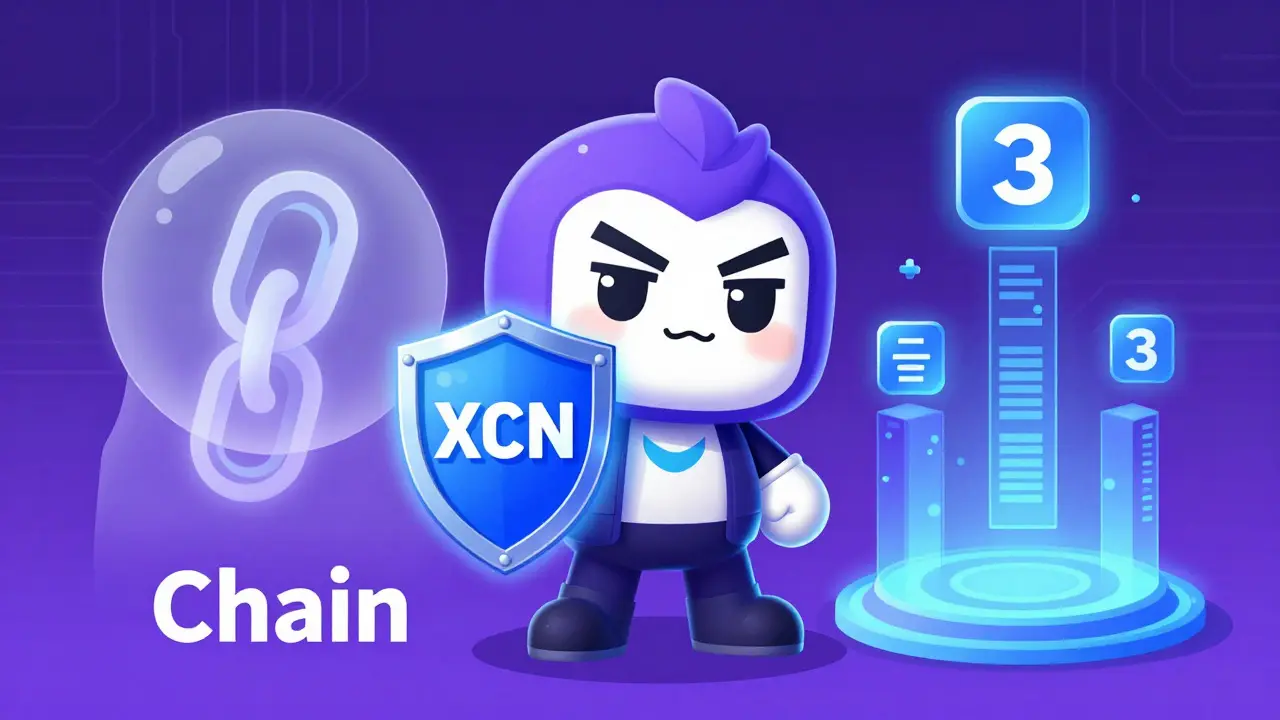
The Origin Story: From Chain to Onyx
To understand where Onyxcoin is going, you have to look at where it came from. The project didn’t start as "Onyx." It began as part of the Chain ecosystem, a web3 financial services platform focused on enterprise-grade infrastructure. Initially launched around 2021, the token was known as CHN.
In early 2023, the team executed a major rebrand. They changed the name from Chain to Onyxcoin but kept the XCN ticker. Major centralized exchanges like Bittrex Global and KuCoin updated their listings to reflect this change. Why the shift? The goal was to move away from generic branding and establish a distinct identity centered on the Onyx Protocol. This protocol is designed to be a modular Layer 3 blockchain specifically for financial-grade decentralized applications.
A common point of confusion involves JPMorgan Chase. The bank runs a private blockchain called Onyx for institutional settlements. Many new users assume Onyxcoin (XCN) is backed by the bank. It is not. As clarified by community moderators and educational blogs in 2025, Onyxcoin is an independent, community-governed network. It has no affiliation with traditional banking institutions. This distinction is crucial because it means XCN relies on decentralized consensus rather than corporate permission.
How Onyxcoin Works: The Layer 3 Architecture
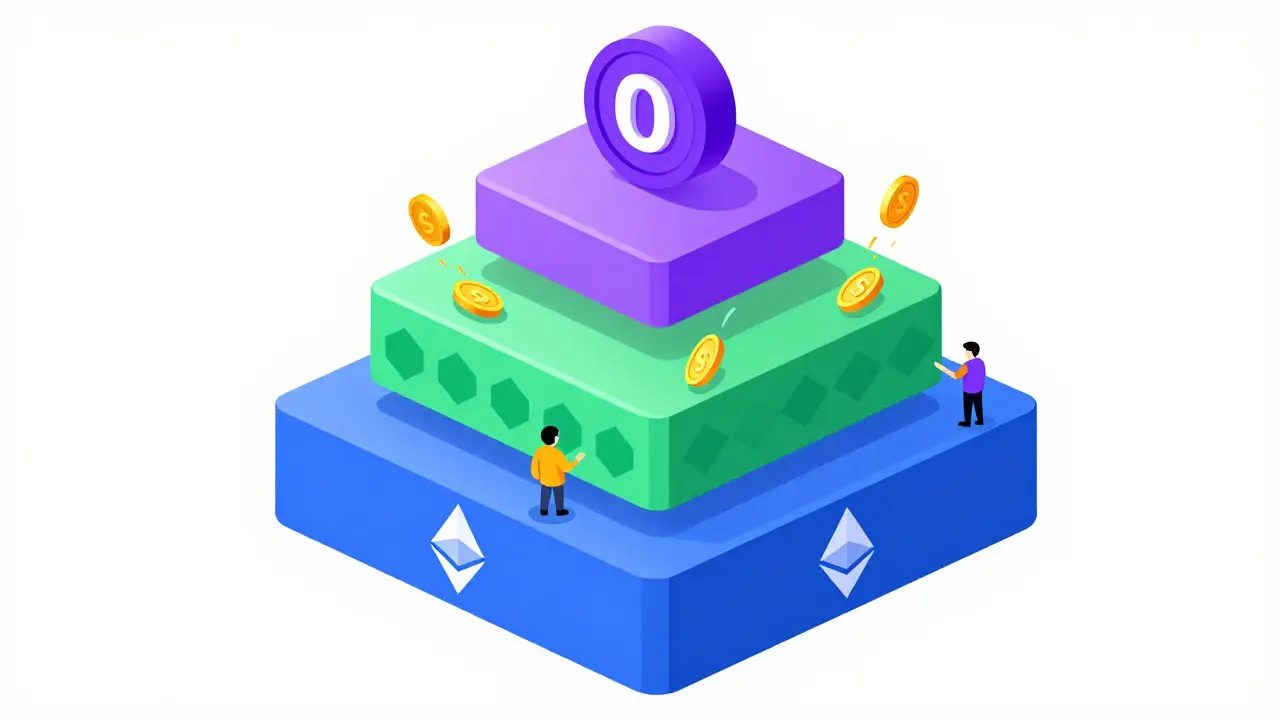
So, what makes Onyxcoin different from thousands of other tokens? The answer lies in its architecture. Onyx is classified as a Layer 3 blockchain. To visualize this, think of Ethereum as the base layer (Layer 1). Solutions like Arbitrum sit on top as Layer 2 scaling networks. Onyx builds on top of those, using Arbitrum Orbit technology and settling transactions on Coinbase’s Base network.
This stacking approach gives Onyx specific advantages:
- Speed and Cost: By operating on Layer 3, transaction fees are significantly lower than on mainnet Ethereum, and confirmations are near-instant.
- Financial Focus: Unlike general-purpose chains, Onyx is optimized for lending markets, credit protocols, and multi-asset support.
- EIP-1559 Implementation: The protocol uses this Ethereum improvement proposal to create predictable gas fees and periodically burn a portion of the XCN used for transactions.
In practical terms, XCN serves three primary functions within this ecosystem. First, it pays for gas fees when you execute smart contracts. Second, it powers the lending markets where users deposit collateral to borrow assets without KYC checks. Third, it grants governance rights. If you hold XCN, you can vote on protocol upgrades, such as changing interest rate models or adding new supported assets.
Tokenomics: Supply, Burns, and Deflationary Pressure
When evaluating any crypto asset, tokenomics are king. How many coins exist? Are more being created? Is there a mechanism to reduce supply? For Onyxcoin, the numbers tell a story of gradual deflation mixed with vesting unlocks.
| Metric | Value / Detail |
|---|---|
| Total Supply | ~48.47 Billion XCN (Original Design) / ~53.4 Billion (Including Wrapped/Bridged Variants) |
| Circulating Supply | Approximately 38-39 Billion XCN (as of June 2026) |
| Consensus Mechanism | Proof of Stake (via underlying L2/L1 infrastructure) |
| Burn Mechanism | EIP-1559 style burns on transaction fees |
| Governance | Onyx DAO (Voting via staked XCN) |
The total supply figure can be confusing because different data providers track it differently. The original whitepaper cites a fixed supply of roughly 48.47 billion tokens. However, platforms like CoinGecko may report higher totals (around 53 billion) due to wrapped versions or bridged variants that exist across different chains. As of late 2026, approximately 38 to 39 billion XCN are actively circulating.
The deflationary aspect comes from the EIP-1559 implementation. Every time you use the Onyx network, a portion of the gas fee paid in XCN is burned-permanently removed from circulation. While individual burns might seem small, over time, high network activity reduces the available supply. This creates upward pressure on price if demand remains constant or increases. Additionally, the Onyx DAO controls treasury reserves and grants, ensuring that funds are allocated to ecosystem growth rather than arbitrary inflation.
Market Performance and Volatility Profile
Let’s talk about price, because that’s likely why you clicked here. As of July 2026, Onyxcoin trades in the low fractions of a cent. Data from CoinGecko and CoinMarketCap places the price between $0.0037 and $0.0041 USD. With a circulating supply nearing 39 billion, the market capitalization hovers around $144 million to $160 million.
Historically, XCN has been volatile. It reached an all-time high of approximately $0.18 during the 2022-2023 bull cycle. Since then, it has experienced significant drawdowns, dropping nearly 98% from its peak. This is typical for mid-cap DeFi tokens that rely on narrative shifts and protocol adoption.
Traders should note that XCN often experiences sharp rallies followed by corrections. For instance, listings on major exchanges like Upbit in South Korea have triggered volume spikes exceeding 1,700% in single days. Conversely, periods of low news flow see quiet accumulation. Technical analysts often watch the $0.005 level as a key resistance zone. Breaking above this consistently could signal a shift in momentum, while failure to hold support near $0.003 might indicate further downside.
Real-World Utility: Lending and RWA Tokenization
Utility is what separates sustainable projects from short-lived trends. Onyxcoin focuses heavily on two areas: decentralized lending and Real-World Asset (RWA) tokenization.
The Onyx Liquidity Protocol allows users to deposit digital assets as collateral to borrow other tokens. Unlike traditional banks, there are no credit checks. Your collateral ratio determines your borrowing power. This peer-to-peer lending model unifies liquidity across multiple asset types, including ERC-20 tokens and NFTs.
More importantly, Onyx is positioning itself in the RWA sector. This involves bringing off-chain assets-like invoices, bonds, or real estate claims-onto the blockchain. By providing a compliant, scalable Layer 3 environment, Onyx aims to bridge institutional finance with DeFi. In July 2025, the team announced Onyx V2, which included compliance features aligned with the CLARITY Act, framing XCN as a "Digital Commodity Token." This regulatory clarity is essential for attracting institutional partners who want exposure to crypto without legal ambiguity.
How to Buy and Store Onyxcoin (XCN)
If you decide to invest, acquiring XCN is straightforward. It is listed on several major centralized exchanges, including Coinbase, Kraken, KuCoin, and Bittrex. Here is a simple process to get started:
- Create an Exchange Account: Sign up for a reputable exchange like Coinbase or Kraken. Complete the necessary identity verification (KYC).
- Deposit Funds: Add fiat currency (USD, EUR, etc.) via bank transfer or credit card.
- Buy XCN: Search for "Onyxcoin" or "XCN" in the marketplace. Place a market or limit order based on your desired entry price.
- Transfer to Wallet (Optional): For long-term holding, consider moving your tokens to a non-custodial wallet. MetaMask supports XCN on the Ethereum network, and Ledger hardware wallets also list support for securing these assets.
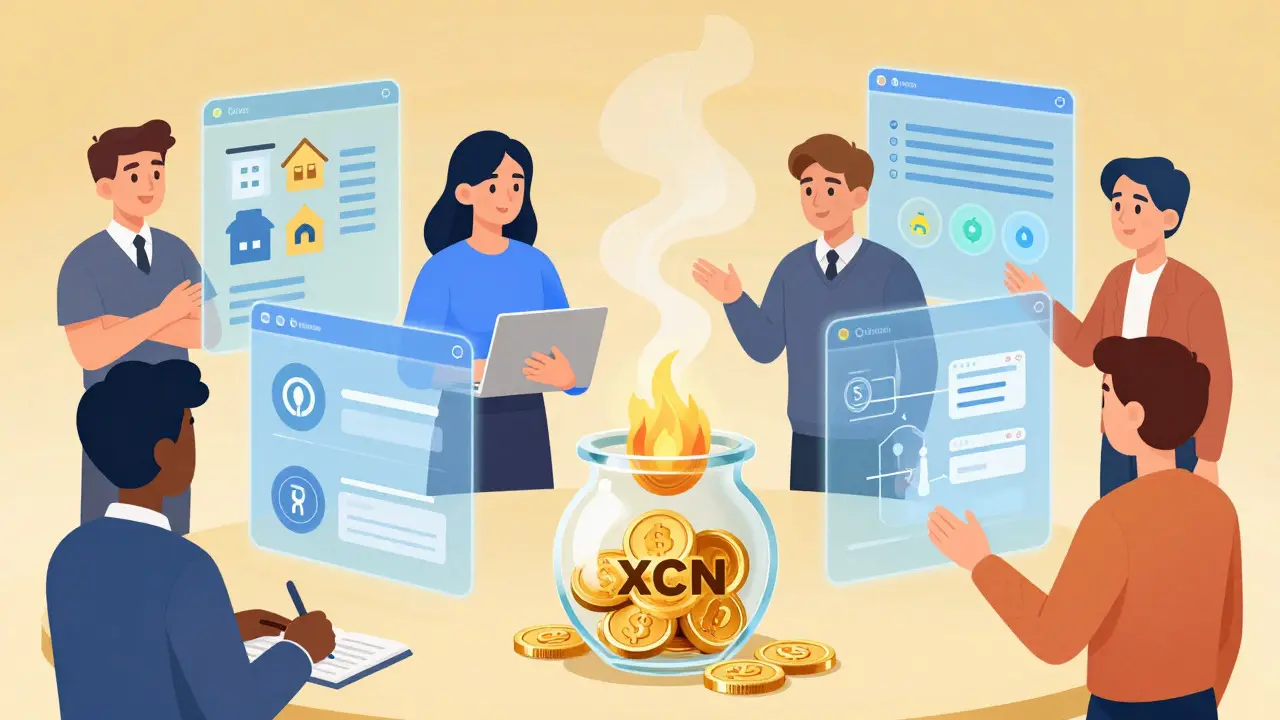
Once you hold XCN, you can stake it to earn rewards and participate in the Onyx DAO. Staking not only generates yield but also gives you voting power on proposals like OIP-60, which introduced gas-free wallets for certain interactions. This active participation helps secure the network and aligns your interests with the protocol’s success.
Risks and Considerations
No investment is without risk. Before buying XCN, consider these factors:
- Volatile Price Action: Like many mid-cap altcoins, XCN can swing wildly. Be prepared for potential losses of 50% or more during bear markets.
- Supply Dilution: While burns reduce supply, ongoing vesting schedules release more tokens into circulation. Monitor the circulating supply metrics regularly.
- Competition: The DeFi lending space is crowded. Competitors like Aave and Compound have larger ecosystems. Onyx must prove its Layer 3 advantage is significant enough to attract users away from established players.
- Regulatory Uncertainty: Despite efforts toward compliance, crypto regulations are evolving. Changes in US or global laws could impact how XCN is traded or taxed.
Onyxcoin represents a niche but ambitious attempt to build financial-grade infrastructure on Ethereum. Its focus on lending, RWAs, and Layer 3 scalability offers genuine utility beyond speculation. However, investors should approach it with caution, understanding both its technological strengths and its historical volatility.
Is Onyxcoin (XCN) affiliated with JPMorgan?
No. Onyxcoin (XCN) is a decentralized cryptocurrency project independent of JPMorgan Chase. While JPMorgan operates a private blockchain named Onyx for institutional settlements, it has no connection to the public XCN token or the Onyx Protocol.
What is the maximum supply of XCN?
The original design specifies a total supply of approximately 48.47 billion XCN. However, some trackers report higher figures (around 53 billion) due to wrapped or bridged variants. As of mid-2026, roughly 38-39 billion tokens are in circulation.
Can I buy Onyxcoin on Coinbase?
Yes. Onyxcoin (XCN) is listed on Coinbase, allowing users to buy, sell, and stake the token directly through the platform’s interface. It is also available on Kraken, KuCoin, and Bittrex.
What is the purpose of the Onyx Protocol?
The Onyx Protocol is a Layer 3 blockchain built for financial-grade decentralized applications. It enables multi-asset lending, real-world asset (RWA) tokenization, and provides a scalable environment for smart contract execution with low fees.
How does XCN achieve deflation?
Onyx implements EIP-1559, which means a portion of the transaction fees paid in XCN is burned (permanently destroyed) rather than distributed to validators. Over time, consistent network usage reduces the total circulating supply.