- 10 Jul 2026
- Elara Crowthorne
- 0
Remember the days when buying into the "metaverse" meant gambling on a single token like Decentraland or The Sandbox? If one project failed, your portfolio took a massive hit. That was the reality for most crypto investors until Metaverse Index (MVI), an ERC-20 index token created by the decentralized autonomous organization (DAO) Index Coop, changed the game. Instead of picking winners, MVI lets you buy a pre-built basket of top-performing metaverse and NFT assets with a single transaction. But does it still make sense to hold MVI in 2026, given the sector's volatility?
In this guide, we’ll break down exactly what MVI is, how its unique weighting system works, and whether it remains a viable tool for gaining exposure to virtual worlds today. We’ll also look at the current state of liquidity and what you need to know before swapping ETH for MVI.
What Is the Metaverse Index (MVI)?
Index Coop is a crypto asset management DAO specializing in creating index tokens that track specific sectors of the cryptocurrency market. Think of them as the S&P 500 creators of the blockchain world. Their flagship product, MVI, was launched to provide diversified exposure to the metaverse, gaming, and non-fungible token (NFT) sectors.
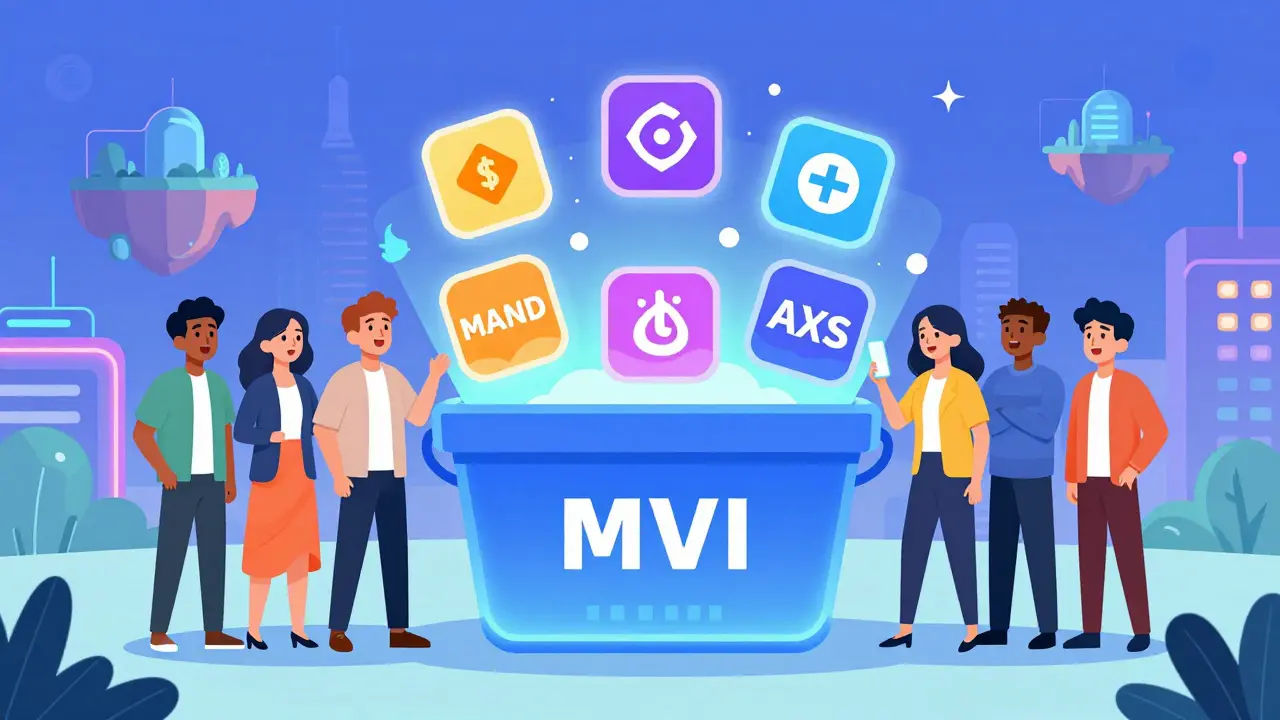
When you buy one MVI token, you aren’t just buying a coin; you are buying a fractional share of a basket containing roughly 15 to 16 different Ethereum-based tokens. This basket includes heavyweights like The Sandbox (SAND), Decentraland (MANA), Axie Infinity (AXS), and Illuvium (ILV). The goal is simple: capture the growth of the entire virtual economy without having to research and trade ten different projects individually.
MVI operates as an ERC-20 token on the Ethereum blockchain. However, thanks to bridging mechanisms, it is also available on Layer-2 networks like Polygon and Arbitrum. This means you can hold or trade MVI on these faster, cheaper networks while maintaining parity with the main Ethereum version.
How Does MVI Work? The Weighting Methodology
Not all index funds are created equal. Some weight their holdings equally, while others weight them by market cap. MVI uses a more sophisticated approach called liquidity-adjusted, root capitalization-weighting. Here’s what that actually means for your investment:
- Square-Root Market Cap: Instead of letting the biggest tokens dominate completely (like a standard market-cap index), MVI uses the square root of each token’s market capitalization. This reduces the influence of the largest coins slightly, allowing smaller but promising projects to have a meaningful voice in the index.
- Liquidity Filters: The index only includes tokens that have sufficient trading volume and liquidity on decentralized exchanges (DEXs). This ensures that Index Coop can actually buy and sell these assets during rebalancing without causing massive price slippage.
- Strict Inclusion Criteria: To get into the MVI basket, a token must be Ethereum-based, have a circulating market cap over $50 million, and at least three months of operational history. It must also fall into specific categories on CoinGecko, such as Non-Fungible Tokens, Virtual Reality, Augmented Reality, or Entertainment.
This methodology is crucial because it prevents the index from being overly concentrated in one or two failing projects. If a major metaverse token loses value or liquidity, the algorithm automatically adjusts the weights during periodic rebalancing (typically monthly).

The Rise and Fall: MVI Price History
To understand where MVI stands today, you have to look at its dramatic journey. The token launched in early 2021, right as the world fell in love with the concept of the metaverse.
| Date | Event | Approximate Price |
|---|---|---|
| April 2021 | Launch on TokenSets platform | $150 - $100 |
| November 2021 | All-Time High (ATH) during metaverse hype | $373 |
| November 2022 | Market correction and crypto winter | $30.74 |
| July 2025 | Stabilization phase | $20.09 |
| May 2026 | Current low-liquidity environment | $3.99 - $4.08 |
The drop from $373 to under $5 represents a loss of over 98% from its peak. This isn’t necessarily a sign that the underlying projects are worthless, but rather a reflection of the broader crypto market cycles. The metaverse sector experienced a massive boom-and-bust cycle similar to dot-com stocks in the late 1990s. While user adoption slowed, the infrastructure remained. Today, MVI trades with very low daily volume-often under $200-which indicates it has become a niche instrument rather than a mainstream retail favorite.
Tokenomics and Supply: Why It’s Different
If you’re used to checking a coin’s inflation rate or staking rewards, you won’t find those here. Because MVI is an index token, it doesn’t have traditional tokenomics. There is no new supply being minted to pay validators or developers.
Instead, the supply of MVI is determined by the number of people who swap ETH for it. When you buy MVI, you receive a token that represents a claim on the underlying basket of assets. You can later redeem your MVI for the actual constituent tokens (like SAND or MANA) if you wish to exit the index strategy. The maximum supply figure often cited (around 39,602 MVI) refers to the initial representation of the basket, but cross-chain deployments on Polygon and Arbitrum have complicated these numbers. Always check the live smart contract data on Index Coop’s dashboard for the most accurate circulating supply figures.

How to Buy and Use MVI in 2026
Buying MVI requires basic knowledge of DeFi. You cannot buy it directly with a credit card on a centralized exchange like Coinbase. Here is the step-by-step process:
- Get an Ethereum-Compatible Wallet: Set up MetaMask, Trust Wallet, or another wallet that supports ERC-20 tokens.
- Fund Your Wallet: Purchase ETH on a centralized exchange and transfer it to your wallet address. You will need extra ETH to pay for gas fees (transaction costs).
- Connect to Index Coop: Go to the official Index Coop application. Connect your wallet securely.
- Select Network: Choose between Ethereum, Polygon, or Arbitrum. Using Polygon or Arbitrum will significantly reduce your gas fees compared to Ethereum mainnet.
- Swap ETH for MVI: Enter the amount of ETH you want to invest and confirm the transaction. You will now hold MVI tokens.
Once you own MVI, you can hold it as a long-term bet on the metaverse sector. Alternatively, advanced users can use MVI as collateral in other DeFi protocols or provide liquidity on DEXs, though this carries additional smart contract risk.
Is MVI Still Worth Investing In?
The answer depends entirely on your belief in the future of virtual worlds. MVI offers a distinct advantage: diversification. By holding MVI, you avoid the risk of betting everything on a single game or platform that might shut down. You gain exposure to the leaders in NFTs, gaming, and social VR simultaneously.
However, there are significant risks to consider in 2026:
- Low Liquidity: With daily trading volumes often below $200, selling large amounts of MVI could result in significant slippage (getting a worse price than expected).
- Sector Volatility: The metaverse narrative has cooled considerably since 2021. Without a surge in new user adoption or revenue from virtual platforms, the underlying assets may remain stagnant.
- No Yield: Unlike some DeFi tokens, MVI does not generate passive income. Its value only increases if the total value of the underlying basket rises.
For small-scale investors who want a "set it and forget it" way to stay exposed to the metaverse without managing multiple wallets, MVI remains a unique tool. For large institutional players or those seeking high liquidity, it may currently be too illiquid.
Who created the Metaverse Index (MVI)?
MVI was created by Index Coop, a decentralized autonomous organization (DAO) focused on building index tokens for various crypto sectors. It was launched using the Set Protocol smart contracts on the TokenSets platform.
Can I buy MVI on Binance or Coinbase?
No, MVI is primarily traded on decentralized exchanges (DEXs) and through the Index Coop app. You typically need to swap ETH for MVI directly on-chain. It is not widely listed on major centralized exchanges due to its niche status and lower liquidity.
What tokens are inside the MVI basket?
The basket changes periodically based on market cap and liquidity, but historically includes major metaverse and NFT tokens such as The Sandbox (SAND), Decentraland (MANA), Axie Infinity (AXS), Illuvium (ILV), and Enjin Coin (ENJ).
Why did MVI’s price drop so much from its all-time high?
MVI peaked in November 2021 during the height of the metaverse hype cycle. As the broader crypto market entered a bearish phase and interest in virtual worlds cooled, the underlying assets lost value, causing MVI to follow suit. This reflects the high volatility of speculative tech sectors.
Is MVI available on Layer-2 networks?
Yes, MVI is available on Polygon and Arbitrum in addition to Ethereum mainnet. These versions are officially supported by Index Coop and allow for cheaper transactions and faster swaps.
