- 11 Jun 2026
- Elara Crowthorne
- 0
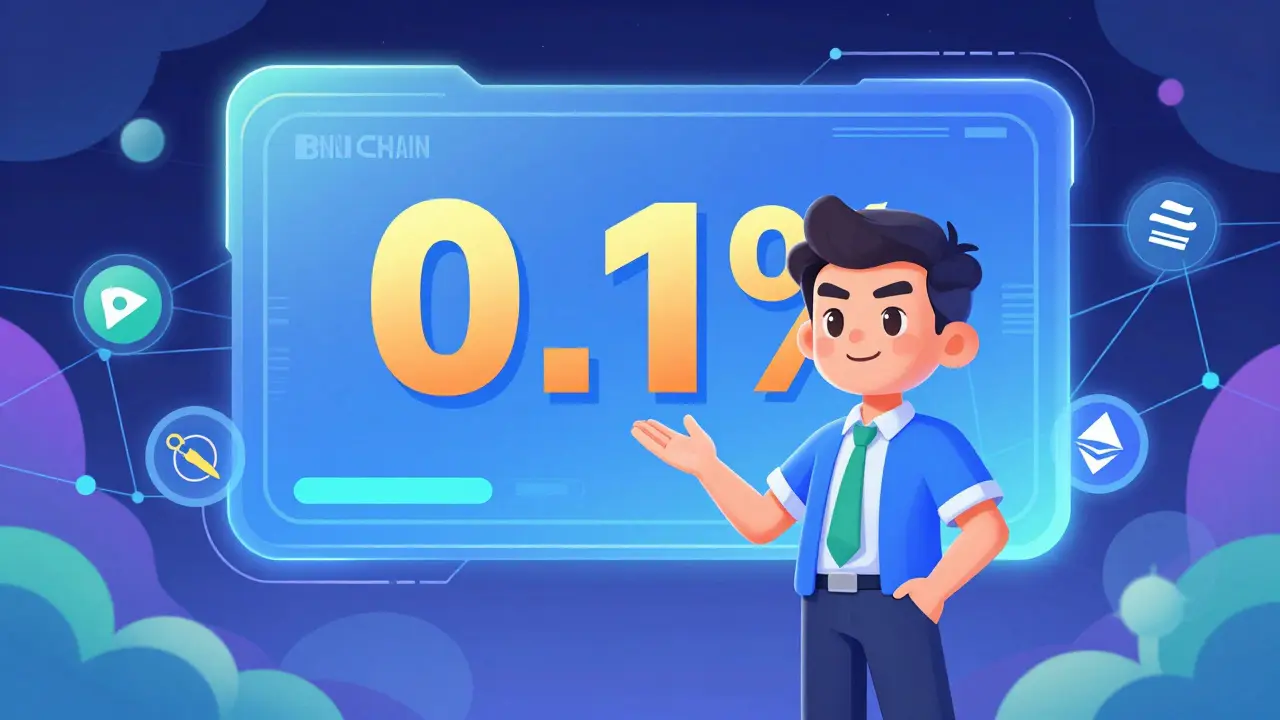
Have you ever looked at your trading fees and felt like you were paying a premium just to move money around? In the world of decentralized finance (DeFi), fees can eat into profits faster than market volatility. That is exactly why Biswap V3 has caught the attention of traders since its launch. It promises something that sounds almost too good to be true: a flat 0.1% trading fee on swaps. For context, most major decentralized exchanges charge between 0.25% and 0.3%. But does this low-cost model come with hidden traps? Let’s look under the hood of Biswap V3 to see if it is a legitimate opportunity or just another flash-in-the-pan protocol.
What Exactly Is Biswap V3?
To understand where we are going, we need to know where we started. Biswap is a decentralized exchange (DEX) platform originally built on Binance Smart Chain (now BNB Chain) that has expanded to support multiple blockchain networks including Ethereum, Base, and Arbitrum. Established in 2022, the project gained immediate credibility by winning the Binance Most Valuable Builder (MVB) program and receiving funding from Binance Labs. This backing is significant because Binance Labs rarely invests in projects without rigorous due diligence.
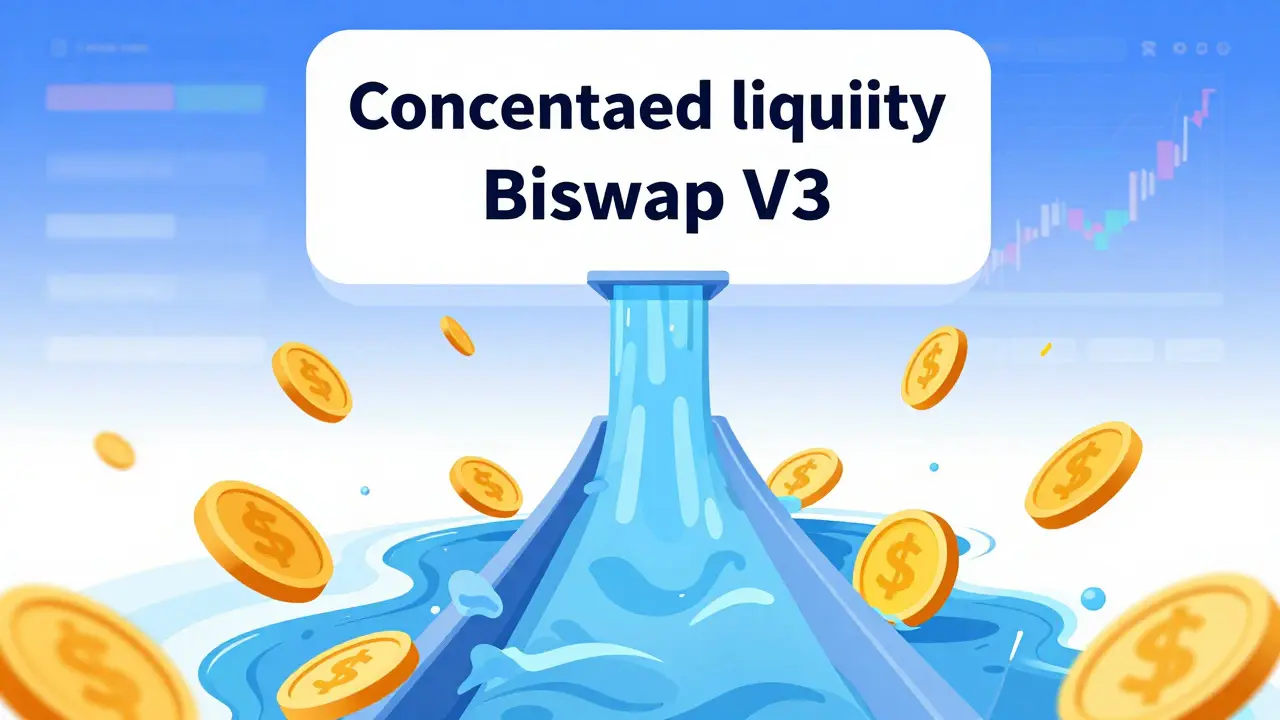
The "V3" in the title refers to an upgrade in their Automated Market Maker (AMM) protocol. If you have used Uniswap V3, you will recognize the concept. Traditional AMMs spread liquidity across all possible price ranges, which is inefficient. V3 introduces concentrated liquidity. This means liquidity providers (LPs) can allocate their capital to specific price ranges where they expect trading activity to occur. The result? Higher capital efficiency for LPs and potentially lower slippage for traders. For Biswap, this upgrade was crucial to compete with giants like Uniswap and PancakeSwap while maintaining their aggressive low-fee structure.
The Core Appeal: Ultra-Low Fees and Tokenomics
The headline feature of Biswap is undoubtedly its fee structure. A 0.1% fee on swaps is aggressively low. How do they afford this? It comes down to how they distribute that tiny percentage. Of the 0.1% fee collected:
- 0.05% goes directly to liquidity providers.
- 0.05% is allocated for burning the native BSW token.
This creates a semi-deflationary mechanism. As more people trade on Biswap, more BSW tokens are burned, reducing the total supply. This aligns the interests of traders (who want low fees) with holders (who want scarcity). However, there is a catch. Because the fee is so low, the platform relies heavily on high volume to generate enough revenue to sustain operations and rewards. If volume drops, the ecosystem tightens.
The native token, BSW is the governance and utility token of the Biswap platform with a maximum supply of 700 million tokens., plays a central role here. With a max supply of 700 million, the allocation is weighted heavily toward community incentives. Over 80% of the supply is reserved for farming and staking rewards. Another 9% is held by the team (with vesting schedules), 5% for an investment fund, and 1% for a SAFU insurance fund. This heavy emission schedule is designed to bootstrap liquidity quickly but raises questions about long-term sell pressure.
Trading Experience and Multichain Support
In 2026, being stuck on one blockchain is a liability. Gas fees on Ethereum can still spike during busy periods, making small trades unprofitable. Biswap addresses this by supporting multiple chains: BNB Chain, Ethereum, Base, and Arbitrum. This multichain approach allows users to switch networks seamlessly within the same interface. You can connect your wallet once and trade assets across different ecosystems without needing separate accounts or complex bridging processes outside the app.
The user interface is clean and familiar to anyone who has used other DEXs. There is no Know Your Customer (KYC) requirement. You simply connect your Web3 wallet-like MetaMask, Trust Wallet, or Rabby-and start swapping. This anonymity is a core tenet of DeFi, appealing to privacy-conscious users. However, it also means there is no customer support hotline to call if you make a mistake. You are responsible for your own security.
Beyond simple swaps, Biswap offers several other features:
- Liquidity Pools: Earn fees by providing liquidity. V3 pools offer higher APYs due to concentrated liquidity, with some pairs like USDT/BSW reporting annual percentage yields (APY) of 40-45% during peak periods.
- Farms: Stake LP tokens to earn additional BSW rewards.
- NFT Marketplace: Buy and sell NFTs using BSW or other supported tokens.
- Launchpad: Early access to new token launches, often requiring BSW staking for participation rights.
Risks and Weaknesses: What They Don’t Tell You
No financial product is without risk, and DeFi protocols carry unique dangers. While the Binance Labs backing adds a layer of trust, it does not eliminate risk. Here are the critical weaknesses you need to consider before depositing funds.
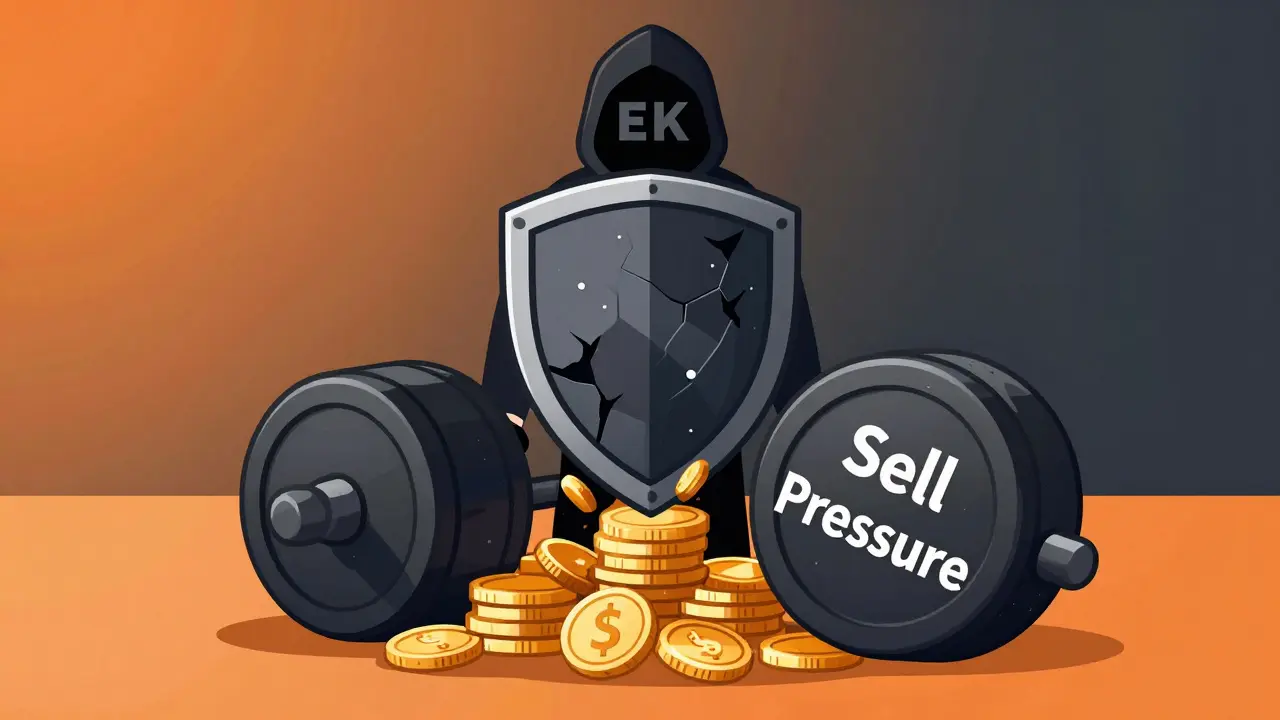
Anonymous Team: Despite the credible backing, the development team remains anonymous, operating under the pseudonym 'EK'. In the crypto world, anonymity is common but risky. If the team disappears or acts maliciously, there is no legal recourse. The MVB status suggests they are vetted, but it doesn't guarantee future behavior.
Token Sell Pressure: The tokenomics model relies on massive emissions to attract liquidity. When over 80% of the supply is distributed as rewards, many recipients choose to sell immediately rather than hold. This constant selling pressure can suppress the price of BSW, even if the platform is growing. You need to ask yourself: are you holding BSW because you believe in the long-term vision, or because you are chasing short-term yield?
Security History: Biswap has experienced a documented security exploit in the past. While the team resolved the issue and implemented stronger safeguards, it serves as a reminder that smart contracts are complex codebases vulnerable to bugs. Always use a hardware wallet for significant amounts and never approve unlimited spending allowances.
Intense Competition: The DEX market is crowded. Uniswap, PancakeSwap, Curve, and Jupiter all fight for the same users. Biswap’s main advantage is low fees, but competitors can easily match this. If Biswap cannot differentiate itself through superior technology or exclusive features, users may migrate elsewhere when better yields appear.
Who Should Use Biswap V3?
Biswap is not for everyone. It is best suited for specific types of users. If you are a high-frequency trader looking to minimize costs on mid-cap tokens, the 0.1% fee structure is hard to beat. If you are a liquidity provider comfortable with managing concentrated liquidity positions and understanding impermanent loss, the potential APYs can be attractive.
However, if you are a beginner who prefers guided experiences, centralized exchanges with customer support might be safer. If you are investing large sums of money and require absolute certainty about the team behind the product, the anonymity factor might be a dealbreaker.
| Feature | Biswap V3 | Uniswap V3 | PancakeSwap V3 |
|---|---|---|---|
| Trading Fee | 0.1% | 0.05% - 1% | 0.01% - 0.25% |
| Supported Chains | BNB, ETH, Base, Arbitrum | ETH, Polygon, Arbitrum, Optimism, etc. | BNB, Ethereum, zkSync, etc. |
| Native Token Utility | Governance, Burning, Launchpad | Governance only | Governance, Staking, Lottery |
| Team Transparency | Anonymous (EK) | Public | Public |
| KYC Required | No | No | No |
Final Verdict: Proceed with Caution
Biswap V3 is a competent, well-funded DeFi platform that delivers on its promise of low fees. The integration of concentrated liquidity makes it a viable option for sophisticated traders and liquidity providers. The Binance Labs endorsement provides a level of legitimacy that many smaller DEXs lack. However, the anonymous team and aggressive token emissions mean you should treat it as a higher-risk asset compared to established public teams.
If you decide to use Biswap, start small. Test the swap functionality with a small amount first. Monitor your liquidity positions closely, as V3 requires active management to maximize returns and minimize impermanent loss. Keep an eye on the BSW token price action; if sell pressure overwhelms buy interest, the sustainability of the reward model could be challenged. In the fast-moving world of DeFi, adaptability is your best defense.
Is Biswap safe to use in 2026?
Biswap is considered relatively safe due to its Binance Labs funding and MVB program recognition, which implies rigorous auditing. However, like all DeFi platforms, it carries risks including smart contract vulnerabilities and the anonymity of the development team. Users should always use hardware wallets and avoid connecting to suspicious links.
How does Biswap V3 differ from V2?
The primary difference is the introduction of concentrated liquidity in V3. Unlike V2, where liquidity is spread across all prices, V3 allows providers to focus capital on specific price ranges. This increases capital efficiency and potential earnings for LPs but requires more active management to adjust positions as prices change.
What is the minimum amount to trade on Biswap?
There is no official minimum trade amount set by the protocol. However, practical limits are determined by network gas fees and the minimum output required to prevent dust transactions. On L2 networks like Arbitrum or Base, fees are negligible, allowing for very small trades. On Ethereum mainnet, gas costs may make small trades uneconomical.
Can I withdraw my funds anytime from Biswap?
Yes, you can withdraw your underlying assets from liquidity pools or unstake from farms at any time, subject to network confirmation times. However, be aware of impermanent loss if you withdraw from a volatile pool. There are no lock-up periods for standard liquidity provision, though some farm rewards may have vesting schedules.
Why is the BSW token price volatile?
BSW volatility is driven by its high emission rate for farming rewards. Many users sell their earned rewards immediately, creating constant sell pressure. Additionally, as a governance and utility token tied to a competitive DEX sector, its value fluctuates based on platform volume, competitor actions, and broader crypto market trends.