
- 31 Aug 2026
- Elara Crowthorne
- 0
Imagine running a bank in Lagos. For years, you couldn't touch Bitcoin with a ten-foot pole because the Central Bank of Nigeria (CBN) threatened to shut you down for facilitating crypto transactions. Then, suddenly, the rules changed. Now, you can serve crypto users, but only if they play by a new set of strict rules written by the Securities and Exchange Commission (SEC). This isn't just a minor update; it's a complete overhaul of how money moves in Africa's largest economy.
If you work in finance, fintech, or compliance in Nigeria, understanding these changes is no longer optional-it’s survival. The landscape shifted dramatically with the introduction of the Investment and Securities Act (ISA) 2025. This law didn't just tweak existing regulations; it redefined what cryptocurrency is under Nigerian law. It moved digital assets from a legal grey zone into the clear light of day, classifying them as securities. That means the SEC now has direct authority over exchanges and service providers, while banks must navigate a tricky balance between serving customers and avoiding regulatory fines.
The Big Shift: How the ISA 2025 Changed Everything
Before March 31, 2025, crypto in Nigeria was like the Wild West. You could buy Bitcoin, sell Ethereum, or trade stablecoins, but nobody knew exactly who was in charge. The CBN banned banks from helping crypto companies, pushing trading underground into peer-to-peer markets. But the Investment and Securities Act (ISA) 2025, signed by President Bola Ahmed Tinubu, ended that ambiguity. It officially recognized digital assets as securities. This is a huge deal because it places crypto exchanges under the same regulatory umbrella as stock brokers and asset managers.
Why does this matter for financial institutions? Because it creates a clear path for legitimacy. Previously, banks were terrified of touching anything related to crypto. Now, the law provides a framework. If a platform is licensed by the SEC, banks can legally provide banking services to them. This reverses the restrictive stance from 2021, where the CBN essentially told banks to cut ties with crypto firms. The new era is about integration, not isolation. But don't mistake this for a free-for-all. The SEC Director-General, Emomotimi Agama, made it clear: this is about building a "dynamic, inclusive and resilient capital market." Translation? They want growth, but they want it controlled.
Who Is In Charge? Mapping the Regulatory Landscape
You might think one regulator handles everything. Wrong. In Nigeria, crypto regulation is a three-headed monster, and each head has its own job. Understanding who reports to whom saves you from sending documents to the wrong office.
- The Securities and Exchange Commission (SEC): They are the boss of the platforms. They license Virtual Asset Service Providers (VASPs), supervise their operations, and protect investors. If an exchange wants to operate legally, it needs an SEC license.
- The Central Bank of Nigeria (CBN): They watch the money supply and financial stability. While they lifted the ban on banks serving licensed VASPs in late 2023, they still monitor how crypto affects the Naira. They ensure that the flow of digital currency doesn't destabilize the traditional banking system.
- The Nigerian Financial Intelligence Unit (NFIU): They are the detectives. Their job is anti-money laundering (AML) and counter-terrorism financing (CTF). Every transaction above certain thresholds gets flagged here. If your institution ignores NFIU reporting requirements, you're asking for trouble.
For a financial institution, this means compliance isn't a one-stop shop. You need to satisfy the SEC's operational standards, the CBN's monetary policies, and the NFIU's transparency rules simultaneously. It’s complex, but it’s manageable if you know which door to knock on.

Licensing Requirements for VASPs and Banks
If you run a crypto exchange or a wallet service, you cannot operate without a license. Period. The SEC requires all Virtual Asset Service Providers (VASPs) to secure authorization before commencing operations. Homegrown platforms like Quidax and Busha received their licenses in 2024, setting the precedent for others.
What does the licensing process look like? It’s not just filling out a form. You need to prove:
- Financial Stability: Can you handle customer funds safely?
- Technical Security: Do you have robust cybersecurity measures?
- AML/CFT Compliance: Can you track who is buying and selling?
- Investor Protection: Do you have clear terms of service and dispute resolution mechanisms?
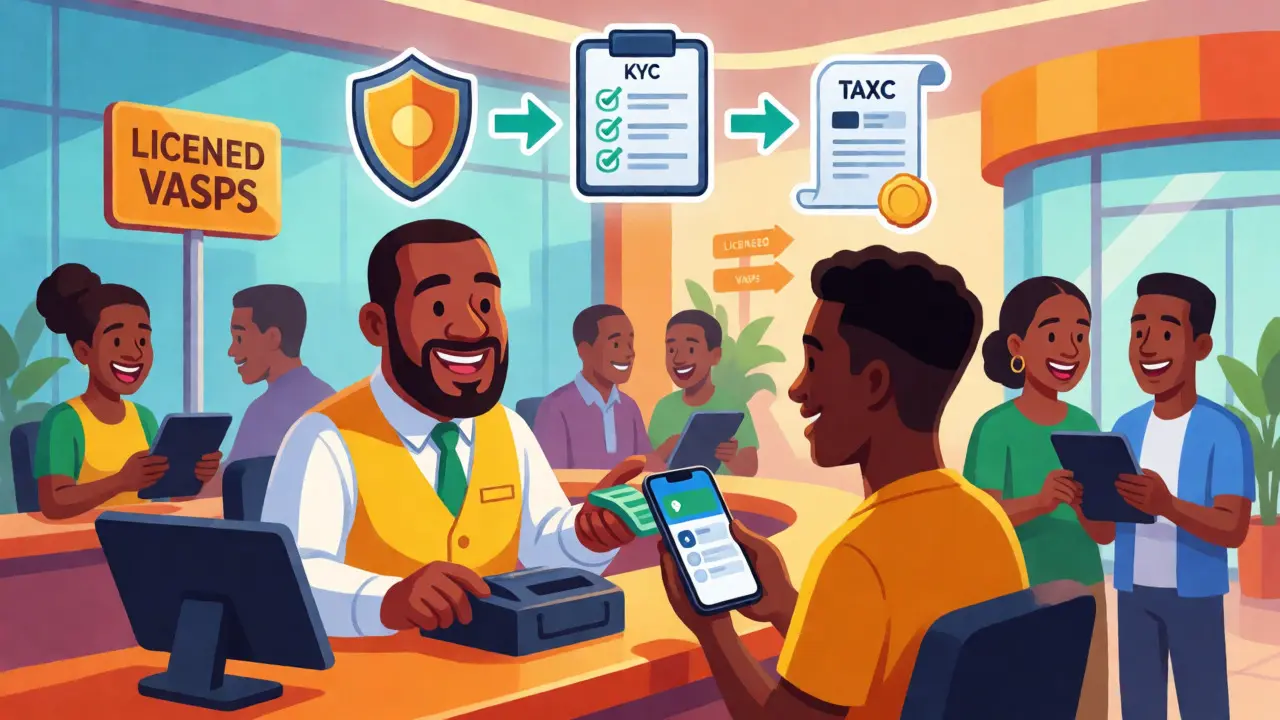
For banks, the rule is simpler but stricter: you can only open accounts for VASPs that hold a valid SEC license. Serving an unlicensed crypto firm exposes the bank to penalties. This creates a natural filter. Banks become gatekeepers, ensuring that only compliant players enter the formal financial ecosystem. If you’re a startup looking for banking partners, getting your SEC license first is your golden ticket.
| Feature | Pre-2025 Status | Post-ISA 2025 Status |
|---|---|---|
| Legal Status of Crypto | Grey area / Not explicitly defined | Classified as Securities |
| Banking Services | Banned for most crypto activities | Allowed for Licensed VASPs |
| Primary Regulator | CBCN (via circulars) | SEC (with CBN oversight) |
| Taxation | Unclear enforcement | Specific NTAA 2025 obligations |
| Penalties for Non-compliance | Varied / Administrative | Fixed fines & License revocation |
Taxation and Penalties: The Cost of Ignoring the Rules
Money talks, and the Nigerian government is listening closely. The Nigeria Tax Administration Act (NTAA) 2025, effective from 2026, introduced specific tax obligations for crypto businesses. This isn't just about income tax; it's about transaction visibility.
Here is the scary part for non-compliant operators: if you fail to meet these tax and reporting duties, you face immediate financial pain. The initial penalty for default is ₦10 million ($6,693) in the first month. For every subsequent month you remain non-compliant, you pay an additional ₦1 million ($669). That adds up fast. And if you ignore it long enough, the SEC can suspend or revoke your license entirely. Shutting down operations is a much bigger loss than paying the fine.
Financial institutions need to integrate tax tracking into their systems now. The SEC is working on amendments to better monitor centralized exchange transactions for tax purposes. Expect more detailed reporting requirements in the coming years. Don't wait until the tax audit hits your desk to figure out how to report your crypto gains.
Nigeria’s Market Context: Why This Matters Globally
You might wonder, "Is this really worth the hassle?" Look at the numbers. Between July 2024 and June 2025, Nigeria processed an estimated $92.1 billion in cryptocurrency transaction volume. That’s nearly double South Africa’s activity during the same period. Nigeria ranks first globally in peer-to-peer (P2P) crypto transaction volume. People aren't just speculating; they are using crypto for remittances, savings against inflation, and everyday commerce.
Despite this massive adoption, the Nigerian Naira remains the only legal tender. You can't buy bread with Bitcoin directly. But the demand is undeniable. By 2026, projections suggest Nigeria will have 28.69 million crypto users. This user base is hungry for regulated, safe platforms. The regulatory clarity provided by the ISA 2025 positions Nigeria as a potential fintech innovation hub. Foreign investors are watching. They want to know if their money is safe. A clear regulatory framework answers that question better than any marketing campaign.
Action Plan for Financial Institutions
So, what should you do today? Here is a practical checklist for navigating the new guidelines:
- Audit Your Clients: Identify which of your business clients are involved in crypto. Are they licensed VASPs? If not, prepare for a difficult conversation about account closure or restriction.
- Update KYC Procedures: Standard Know Your Customer checks aren't enough. Integrate blockchain analytics tools to trace source of funds for crypto-related transactions.
- Engage with the SEC: Attend industry forums and webinars hosted by the SEC. Stay updated on guidance notes regarding specific asset classes.
- Review Insurance Coverage: Ensure your cyber liability insurance covers losses related to digital asset custody or transfer errors.
- Train Your Staff: Tellers and relationship managers need to understand the difference between a licensed VASP and an unlicensed P2P trader. Misinformation leads to compliance breaches.
Compliance is not a burden; it’s a competitive advantage. Institutions that adapt quickly will capture the growing segment of crypto-affluent Nigerians who want seamless banking experiences. Those that cling to old fears will lose market share to agile fintechs that embrace the new rules.
Can I use cryptocurrency for official payments in Nigeria?
No. Cryptocurrency is not recognized as legal tender in Nigeria. You cannot use Bitcoin or Ethereum to pay for goods and services directly in shops. However, you can hold it as an investment or use it for transfers via licensed platforms. The Nigerian Naira remains the sole legal currency for official settlements.
Do banks need special permission to serve crypto companies?
Banks do not need a separate license to serve crypto companies, but they must ensure the crypto company holds a valid license from the SEC. Since the policy reversal in 2023, banks are permitted to provide banking services to licensed Virtual Asset Service Providers (VASPs). Serving unlicensed entities carries regulatory risk.
What happens if a crypto exchange operates without an SEC license?
Operating without a license subjects the exchange to severe penalties. Under the new framework, the SEC can impose fines starting at ₦10 million for the first month of non-compliance, plus ₦1 million for each subsequent month. More critically, the SEC has the authority to suspend or revoke the operator's ability to conduct business, effectively shutting them down.
How does the ISA 2025 affect taxation for crypto traders?
The Nigeria Tax Administration Act (NTAA) 2025 establishes specific tax obligations for VASPs and potentially individual traders. While details on individual capital gains tax implementation are still evolving, VASPs must comply with strict reporting standards. Failure to report results in significant monthly penalties. The SEC is working on frameworks to enable monitoring of centralized exchange transactions for accurate tax collection.
Is the Central Bank of Nigeria still against cryptocurrency?
The stance has evolved from prohibition to regulation. The CBN initially banned banks from facilitating crypto transactions in 2021. However, following the ISA 2025 and previous updates in 2023, the CBN now supports a regulated environment. They focus on financial stability and monetary policy alignment rather than outright bans, allowing banks to engage with licensed crypto entities.