- 13 Jul 2026
- Elara Crowthorne
- 0
Have you ever wanted to buy a piece of a high-value digital artwork without needing hundreds of thousands of dollars? Or maybe you’ve tried trading NFTs only to find they are painfully illiquid, sitting in your wallet with no easy way to sell them quickly. That friction is exactly what Pandora (PANDORA) aims to solve. It isn’t just another meme coin or a standard utility token. It is the first major project built on an experimental standard called ERC404, which attempts to merge the fluidity of regular cryptocurrencies with the uniqueness of non-fungible tokens.
If you clicked this article because you saw the ticker $PANDORA trending or heard about "semi-fungible" tokens, you’re in the right place. We will break down how this hybrid technology works, why it was such a massive hype machine in early 2024, and what the reality looks like for investors in mid-2026. Spoiler alert: it’s complex, volatile, and still considered highly experimental by the broader crypto community.
The Core Concept: Merging Two Worlds
To understand Pandora, you have to look at the two types of tokens it combines. On one side, you have ERC-20 tokens. These are fungible, meaning every unit is identical to the next-like dollars in your bank account. You can easily trade fractions of them on exchanges. On the other side, you have ERC-721 tokens. These are non-fungible, meaning each one is unique-like a specific house or a painting. They are notoriously hard to trade in small amounts because you usually have to buy the whole asset.
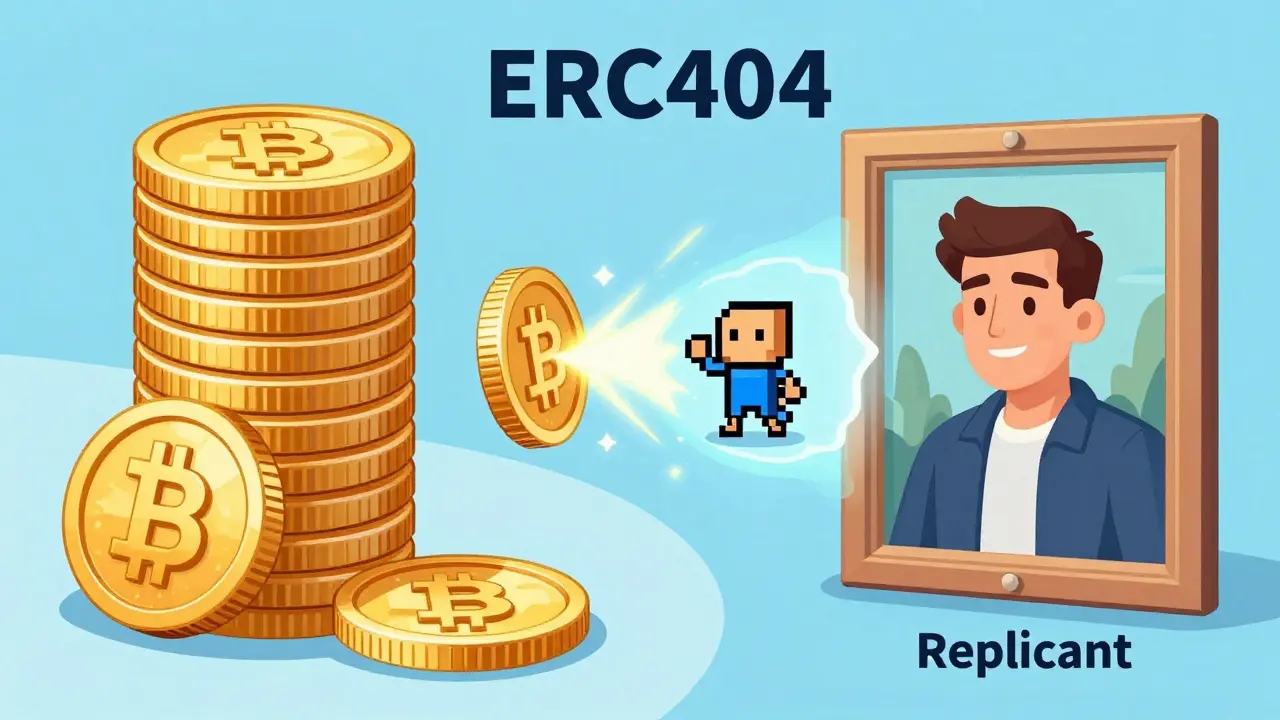
Pandora Labs LLC created the ERC404 standard to bridge this gap. Think of it as a smart contract that does double duty. When you hold exactly one full PANDORA token in your wallet, the system automatically mints a unique NFT for you called a Replicant. If you sell half of that PANDORA token, the NFT doesn't disappear entirely; instead, the remaining balance reflects fractional ownership, but the moment you drop below one full token, the associated NFT burns. Conversely, if you buy enough tokens to reach a whole number again, a new Replicant minting event triggers.
This design solves a specific problem: liquidity. In traditional NFT markets, if you want to sell a rare Bored Ape, you have to find a buyer willing to pay the full price. With ERC404, anyone can buy or sell the underlying PANDORA token on a decentralized exchange like Uniswap. This creates a continuous market for the value tied to those NFTs, allowing for instant entry and exit that static NFT collections simply cannot offer.
How the "Replicants" and Rarity Work
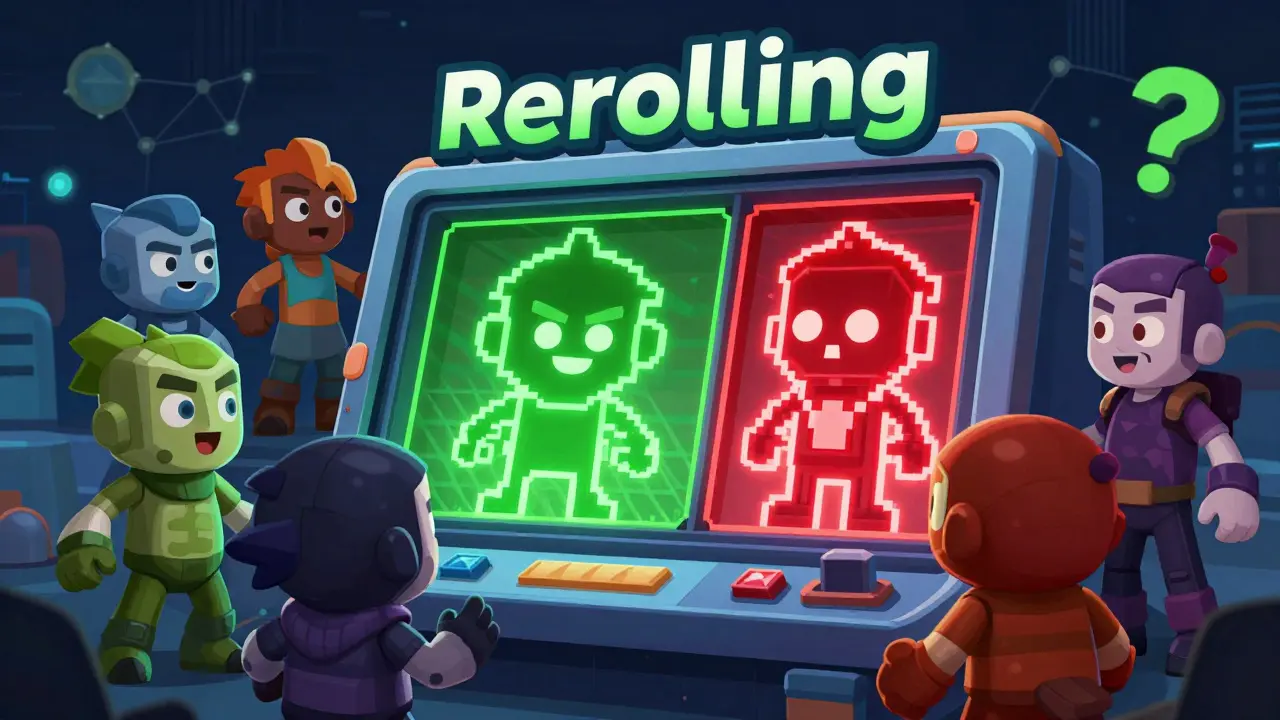
The visual component of Pandora consists of 10,000 Replicant NFTs. But here is where it gets tricky-and gamified. Unlike most NFT collections where your image is fixed forever, Replicants regenerate. Every time the PANDORA token moves through your wallet (when you buy, sell, or transfer), the associated NFT changes its appearance.
This regeneration mechanic introduces a layer of randomness similar to opening loot boxes in video games. Each Replicant is assigned a rarity band:
- Green Replicants: These are the most common traits. Most holders will see these frequently.
- Red Replicants: These are the rarest tier. Finding a Red Replicant is akin to hitting the jackpot.
Because the image regenerates with every transaction, users often engage in "rerolling." They might buy and sell small amounts of PANDORA repeatedly, hoping that the next regeneration yields a rarer, more valuable Red Replicant. This behavior turns token trading into a speculative game of chance. While this adds excitement, it also means the aesthetic value of holding the token is never stable. You could wake up to a common Green trait after holding a rare one overnight, simply due to network activity or partial transfers.
Tokenomics and Supply Mechanics
Let’s look at the hard numbers behind the project. The total supply of PANDORA ERC-20 tokens is capped at 10,000. This directly corresponds to the maximum number of Replicant NFTs that can exist simultaneously when wallets hold integer amounts of the token.
However, the data from mid-2026 shows some interesting discrepancies between the token market and the NFT market. According to analytics from CoinGecko and CoinMarketCap around July 2026:
| Metric | Value | Context |
|---|---|---|
| Total Token Supply | 10,000 PANDORA | Fixed cap linked to NFT max supply |
| NFTs Minted | ~11,124 | Cumulative mints over time (some burned) |
| Unique NFT Holders | 483 | Highly concentrated ownership |
| NFT Floor Price | ~$50,355 | Valuation per individual Replicant |
| Token Price | ~$148 | Price of single ERC-20 unit |
| Token Market Cap | ~$1.48 Million | Significantly lower than NFT notional value |
Notice the disconnect? The NFT collection has a theoretical market capitalization exceeding $560 million based on floor prices, yet the tradable token itself has a market cap of only about $1.5 million. This suggests that while a small group of roughly 483 wallets holds the vast majority of the NFT value, the liquid token market has cooled considerably since its peak. The average holder controls around 23 NFTs, indicating a niche, high-net-worth user base rather than broad retail adoption.
Historical Volatility: From Hype to Reality
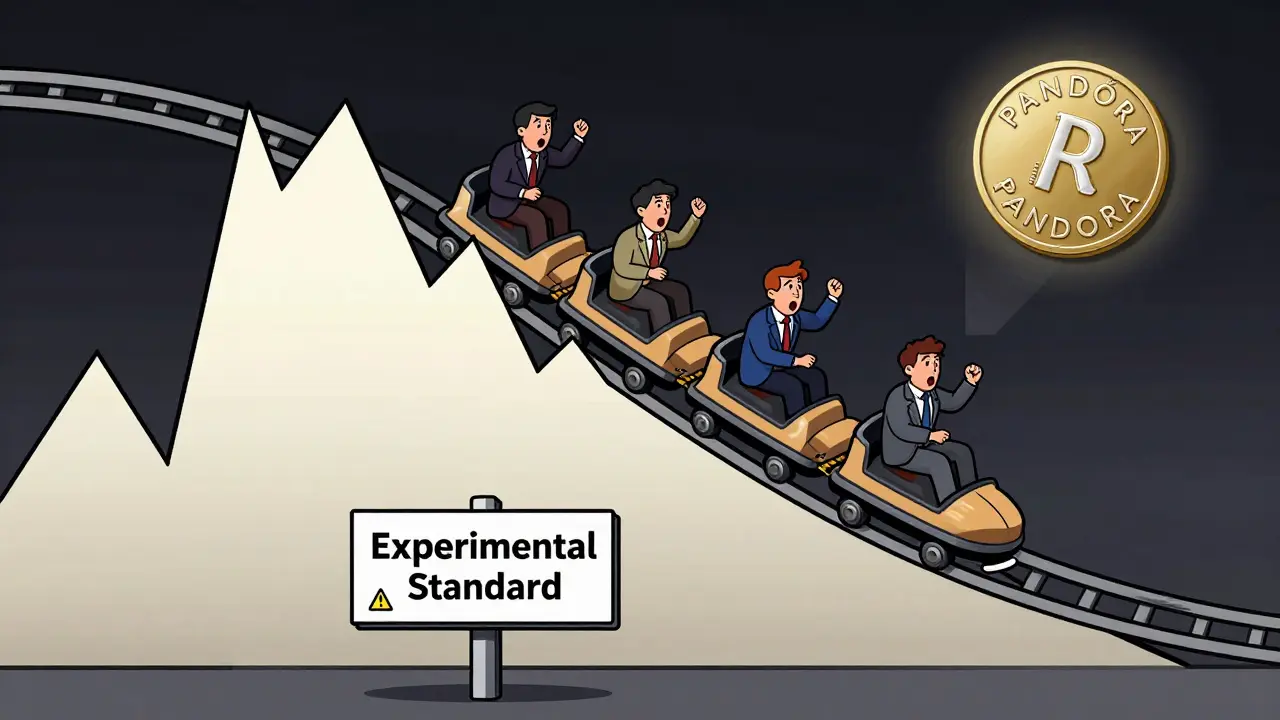
You cannot discuss Pandora without addressing its wild price history. Launched in early 2024, PANDORA became the poster child for the ERC404 experiment. Within days of launch, the token price surged from approximately $1,500 to over $32,000. That is a more than 20x increase in less than a week. At its peak, the project briefly boasted a market capitalization in the hundreds of millions of dollars, fueled by intense speculation and the novelty of "semi-fungibility."
But crypto cycles are brutal. By February 2024, despite cumulative sales topping $90 million for the NFT collection, the token price had already fallen roughly 55% from its highs. Fast forward to mid-2026, and the daily trading volume has dropped to under $50,000. The meteoric rise turned into a slow grind. This pattern highlights a critical risk: ERC404 projects are subject to extreme boom-and-bust dynamics. The initial hype drove prices far beyond fundamental utility, and as the novelty wore off, liquidity dried up.
Is ERC404 Safe and Standardized?
Here is the elephant in the room: ERC404 is not an official Ethereum Improvement Proposal (EIP). It is an unofficial, experimental implementation. Major industry players like Ledger and Bankless have explicitly labeled it as such. This matters because standardization ensures compatibility across wallets, exchanges, and DeFi protocols.
Since ERC404 forces a single smart contract to behave as both an ERC-20 and an ERC-721, many existing tools struggle to read it correctly. You might see your token balance on one app but not your NFT on another. Some decentralized finance (DeFi) platforms may reject ERC404 tokens entirely because their code expects pure ERC-20 standards. This lack of universal support increases operational risk. If you decide to interact with Pandora, you need to be comfortable troubleshooting interface quirks and verifying transactions manually, as automated gas estimators or portfolio trackers might fail.
How to Buy and Store PANDORA
If you still want to participate, here is the practical path. You generally have two routes: Centralized Exchanges (CEX) or Decentralized Exchanges (DEX).
- Choose Your Exchange: As of mid-2026, PANDORA is listed on several CEXs including Tapbit, Hotcoin, WEEX, and CoinW. Alternatively, you can use DEXs like Uniswap if you prefer self-custody.
- Secure a Wallet: For DEX trading, you’ll need a Web3 wallet like MetaMask. Write down your seed phrase physically. Do not store it digitally. Losing this means losing access to your assets permanently.
- Fund Your Account: Purchase ETH or USDT. Transferring funds to your wallet can take several minutes depending on Ethereum network congestion.
- Swap for PANDORA: Connect your wallet to the exchange. Swap your base currency for PANDORA. Remember, buying even a fraction of a token contributes to the liquidity pool, but you won’t get a minted Replicant NFT until you hold a full integer amount (e.g., 1.0, 2.0).
- Monitor Your NFT: Once you hit a whole number, check OpenSea or Blur to see your newly minted Replicant. Keep in mind it may regenerate if you move the tokens again.
Be aware of fees. Blockchain transfers cost gas fees, and some payment methods on CEXs carry higher premiums. Always verify the contract address before interacting, as scams targeting popular experimental tokens are common.
Alternatives in the ERC404 Space
Pandora isn’t alone. Several other projects attempted to ride the ERC404 wave. Notable mentions include DeFrogs (DEFROGS), EtherRock, and Monkees (MONKEES). However, Pandora remains the most prominent due to being the first mover. These alternatives often focus on different thematic communities but share the same technical risks and liquidity challenges. If you are interested in semi-fungible tokens, Pandora offers the deepest liquidity and the largest historical dataset, making it the primary case study for this technology.
Is Pandora (PANDORA) a good investment in 2026?
Pandora is considered a high-risk, speculative asset. While the NFT floor price remains high among a concentrated group of holders, the token's market cap and trading volume have significantly decreased from its 2024 peak. It is suitable only for investors who understand experimental token standards and can tolerate extreme volatility.
What happens to my NFT if I sell half my PANDORA tokens?
If you hold 1 PANDORA and sell 0.5, you drop below the threshold required to hold a full NFT. The associated Replicant NFT will burn (disappear). You now own fractional value represented by the remaining 0.5 token, but no visual NFT asset until you buy back enough to reach 1.0 again.
Why do Replicant NFTs change appearance?
The ERC404 standard ties the NFT state to the token balance. Every time the token balance changes (due to buys, sells, or transfers), the smart contract triggers a regeneration event, assigning new visual traits and a new rarity band to the NFT.
Is ERC404 an official Ethereum standard?
No. ERC404 is an experimental, unofficial implementation. It has not been ratified as an Ethereum Improvement Proposal (EIP). This means it lacks universal support across all wallets and DeFi protocols, increasing the risk of compatibility issues.
Where can I buy PANDORA tokens?
You can buy PANDORA on centralized exchanges like Tapbit, Hotcoin, and WEEX, or via decentralized exchanges like Uniswap using ETH or USDT. Ensure you are using a compatible Web3 wallet that supports ERC404 tokens.
