

- 24 May 2026
- Elara Crowthorne
- 0
You might have seen WECAN listed on exchanges like Bitstamp or Kraken and wondered what it actually does. Unlike Bitcoin or Ethereum, which aim to be digital money for everyone, WECAN is a specialized utility token built for the banking and wealth management industry. It powers a system designed to make compliance checks faster, cheaper, and more secure for private banks.
If you are looking for a quick answer: Wecan Group is a Swiss company that builds blockchain tools for financial institutions. The WECAN token is the fuel that keeps their network running. It is not meant for buying coffee; it is used to pay for recording data proofs on a blockchain. This article breaks down exactly how it works, who uses it, and whether it has any value for you as an investor.
The Problem Wecan Solves: Banking Compliance
Before understanding the token, you need to understand the problem. Banks spend billions of dollars every year on RegTech (Regulatory Technology). Every time a new client opens an account, the bank must perform strict checks known as KYC (Know Your Customer), KYB (Know Your Business), and AML (Anti-Money Laundering).
Here is the catch: these processes are slow, repetitive, and often involve sharing sensitive personal data via insecure emails or fragmented databases. If a client moves from one bank to another, they often have to repeat the entire verification process. For private banks and wealth managers dealing with high-net-worth individuals, this friction is a major headache.
Wecan Group, founded in 2015 by Vincent Pignon and based in Geneva, Switzerland, stepped in to fix this. They created a platform where banks can share verified compliance data securely. Instead of sending raw documents back and forth, they use cryptography to prove that a check has been done without exposing the actual private details.
How Wecan Chain Works
The core technology behind Wecan Group is called Wecan Chain. It is not a public blockchain like Bitcoin where anyone can join. It is a hybrid, multi-layer architecture designed for privacy and security.
- Private Network: Sensitive data (like passport scans or proof of income) stays within the private networks of the participating banks. It never touches the public internet.
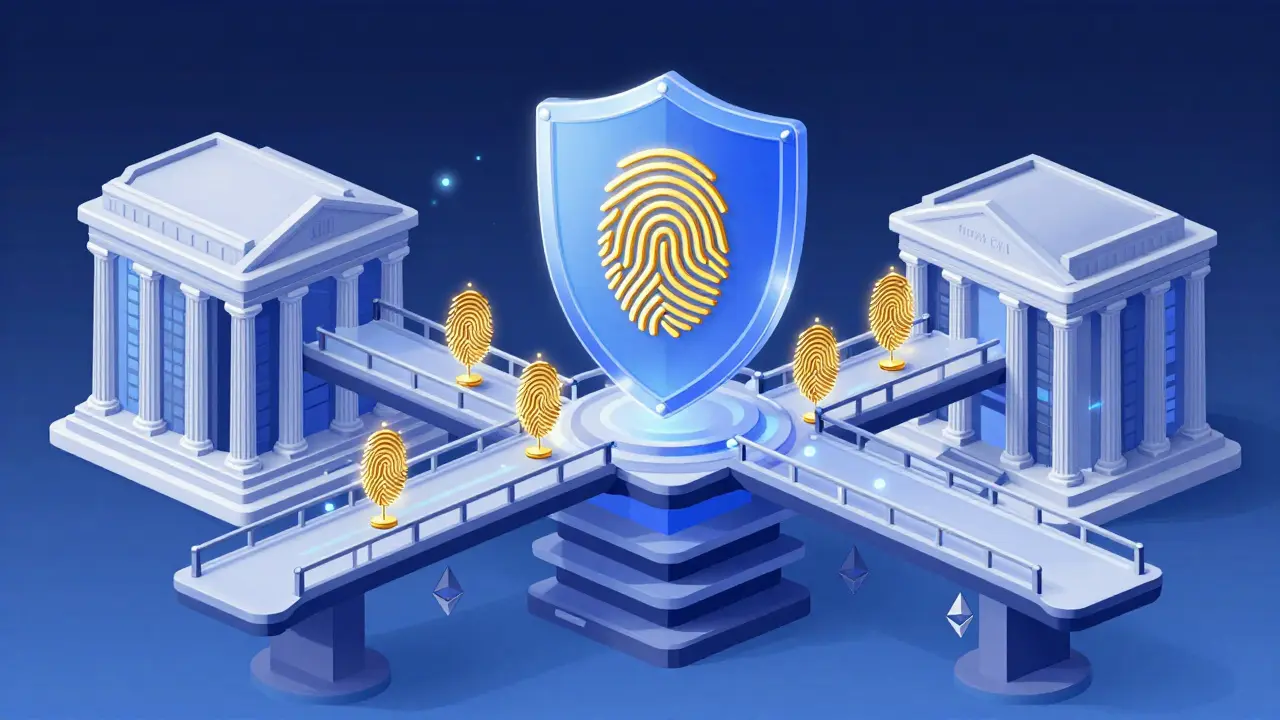
- Wecan Chain: When a compliance action happens (e.g., "Client X was verified on Date Y"), a cryptographic hash (a unique digital fingerprint) of that event is recorded on Wecan Chain. This creates an immutable, time-stamped record that cannot be altered later.
- Ethereum Anchoring: To ensure the Wecan Chain itself isn't tampered with, these hashes are periodically anchored to the Ethereum blockchain. This leverages Ethereum’s massive security and decentralization without putting private banking data on the public ledger.
This structure allows banks to audit their processes easily. If a regulator asks, "Did you verify this client before lending them money?" the bank can point to an unchangeable record on the blockchain. The use of Zero-Knowledge Proofs ensures that the validity of the data can be proven without revealing the data itself.
What Does the WECAN Token Do?
Now, let's talk about the coin. WECAN is an ERC-20 utility token on the Ethereum network. Its purpose is narrow and specific. It is not a currency for payments, nor is it a governance token that gives you voting rights over the company.
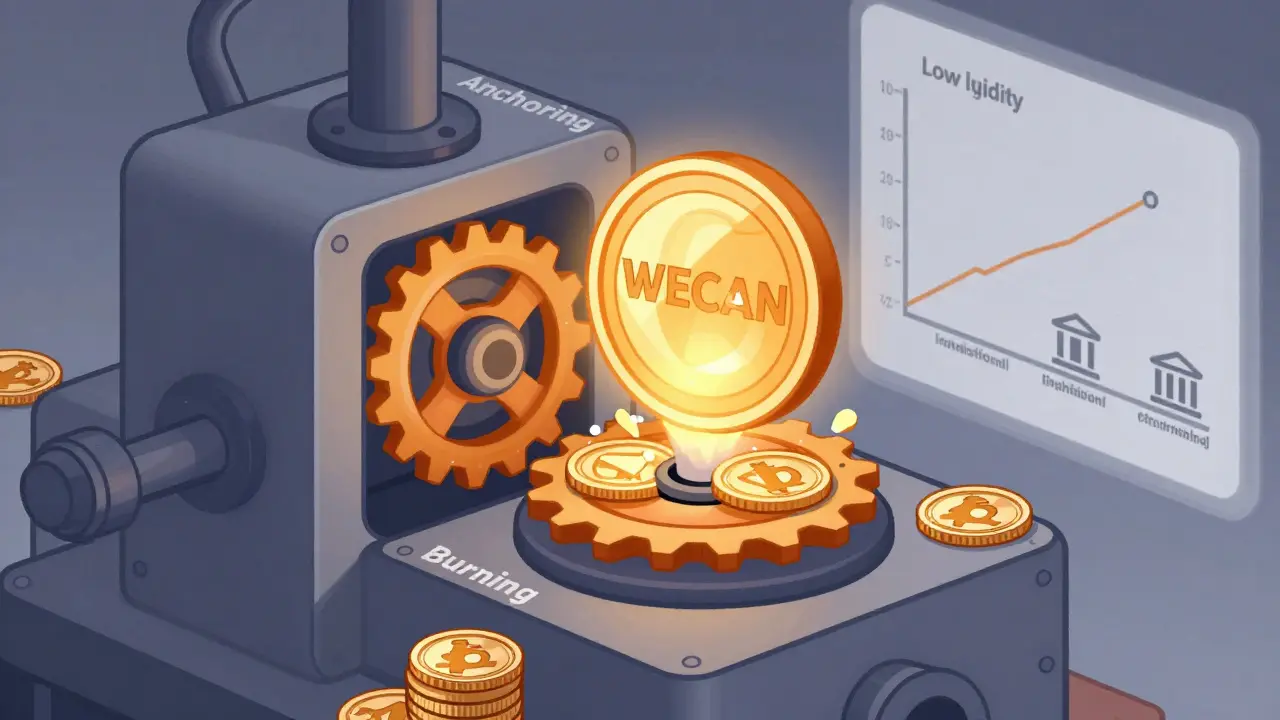
The primary function of WECAN is to pay for anchoring fees. When a bank uses Wecan’s software to record a compliance transaction on Wecan Chain, they must pay a small fee in WECAN tokens. This fee covers the computational cost of writing the data hash to the blockchain.
There is also a deflationary mechanism at play. With every transaction, a small portion of the WECAN tokens paid as fees is burned (permanently removed from circulation). This means that as more banks use the platform, the total supply of WECAN decreases slightly, which theoretically supports the token's scarcity.
Key Products: Wecan Comply and Connect
Wecan Group offers two main products that drive demand for the token:
- Wecan Comply: This is the data management hub. It helps banks manage KYC/KYB/AML data. It automates the request and sharing of compliance information between different financial institutions. If Bank A already verified a client, Bank B can access that verified status securely through Wecan Comply, saving weeks of manual work.
- Wecan Connect: Think of this as a secure, compliant instant messaging app for bankers. Standard email is not secure enough for sharing sensitive financial data. Wecan Connect provides an encrypted channel for communication, with all messages logged and anchored to the blockchain for audit trails.
According to CoinMarketCap, Wecan Group has secured over 100 institutional clients. These are primarily private banks and wealth managers in Europe and Switzerland. The success of the WECAN token depends entirely on how much these institutions use these two products.
Tokenomics and Market Data
Let's look at the numbers. As of mid-2026, here is the snapshot of the WECAN token:
| Metric | Value |
|---|---|
| Blockchain | Ethereum (ERC-20) |
| Circulating Supply | ~1.7 Billion WECAN |
| Market Cap | ~$7.4 Million USD |
| Average Price | ~$0.0012 - $0.0013 USD |
| 24h Volume | ~$25,000 - $36,000 USD |
| Initial Price | CHF 0.001 |
A few things stand out here. First, the market cap is relatively small (around $7.4 million). This makes it a micro-cap asset. Second, the trading volume is low. On days with only $25k-$36k in volume, large buy or sell orders can cause significant price swings (slippage).
The token is traded on major regulated exchanges like Bitstamp, Kraken, and is accessible via Coinbase converters and Binance Web3 Wallet. Bitstamp serves as the primary reference for EUR pricing. Because it is an ERC-20 token, you can hold it in any standard Ethereum wallet like MetaMask, provided you trust the contract address.
Risks and Limitations
Before you consider buying WECAN, you should be aware of the risks. This is not a mainstream retail crypto project.
- Liquidity Risk: With low daily volume, exiting a large position quickly without affecting the price is difficult. You might find yourself unable to sell if the market thins out.
- Centralization: Wecan Chain is a proprietary network controlled by Wecan Group. It is not decentralized in the same way Bitcoin is. If the company shuts down or fails to maintain the infrastructure, the network stops working.
- Adoption Dependency: The value of WECAN is tied directly to the usage of Wecan Comply and Connect. If banks stop using the platform or switch to competitors, the demand for anchoring fees drops, and the token loses its utility.
- Lack of Transparency: Detailed tokenomics, such as team vesting schedules or exact maximum supply caps, are not fully disclosed in public whitepapers. There are also no widely cited independent security audits from firms like CertiK or Trail of Bits available in public records.
Is WECAN a Good Investment?
That depends on your goals. If you are looking for a speculative bet on the growth of RegTech and blockchain adoption in traditional finance, WECAN fits the narrative. The global RegTech market is projected to grow rapidly, driven by stricter regulations and higher compliance costs.
However, if you want a liquid asset that you can trade frequently, WECAN is likely not suitable. The low volume and niche use case mean it will not move in sync with broader crypto trends like Bitcoin or Ethereum. It is a "buy and hold" type of asset for those who believe specifically in Wecan Group’s ability to expand its client base beyond its current 100+ institutions.
Remember, the token has no intrinsic value outside of the Wecan ecosystem. It does not pay dividends, and it does not grant ownership in the company. Its value is purely functional: it pays for services on a specific network.
Conclusion
Wecan Group is a serious player in the Swiss fintech space, solving real problems for private banks. The WECAN token is the engine that keeps their compliance network honest and auditable. While it lacks the hype and liquidity of major cryptocurrencies, it represents a practical application of blockchain technology in the real world. Just keep in mind that its fate is tied tightly to the business success of Wecan Group itself.
Is WECAN a security or a utility token?
WECAN is classified as a utility token. It is used to pay for anchoring fees on the Wecan Chain network. It does not represent equity in Wecan Group, nor does it promise profits or dividends. However, regulatory classifications can vary by jurisdiction, so always consult local laws.
Where can I buy WECAN?
You can trade WECAN on centralized exchanges like Bitstamp and Kraken. It is also available via Coinbase converters and can be accessed through decentralized exchanges using the Binance Web3 Wallet. Since it is an ERC-20 token, it resides on the Ethereum network.
Who uses Wecan Group products?
Wecan Group primarily serves private banks, wealth managers, and financial institutions. Their goal is to streamline KYC, KYB, and AML compliance processes for these entities, particularly in Europe and Switzerland. They reportedly have over 100 institutional clients.
Does WECAN have a maximum supply?
Public documentation does not explicitly state a hard maximum supply cap. However, the circulating supply is approximately 1.7 billion tokens. The token has a deflationary mechanism where a portion of tokens is burned with each transaction, slowly reducing the total supply over time.
Is my data safe on Wecan Chain?
Yes, privacy is a core feature. Sensitive personal data never leaves the private networks of the banks. Only cryptographic hashes (proofs of existence) are recorded on the Wecan Chain and anchored to Ethereum. This ensures auditability without exposing private information to the public.
How is WECAN different from other crypto projects?
Unlike consumer-focused cryptos, WECAN is a B2B (Business-to-Business) tool. It doesn't aim to replace cash or enable peer-to-peer payments. Instead, it focuses on regulatory compliance and data integrity for financial institutions, making it a niche RegTech solution rather than a general-purpose currency.
