
- 3 May 2026
- Elara Crowthorne
- 14
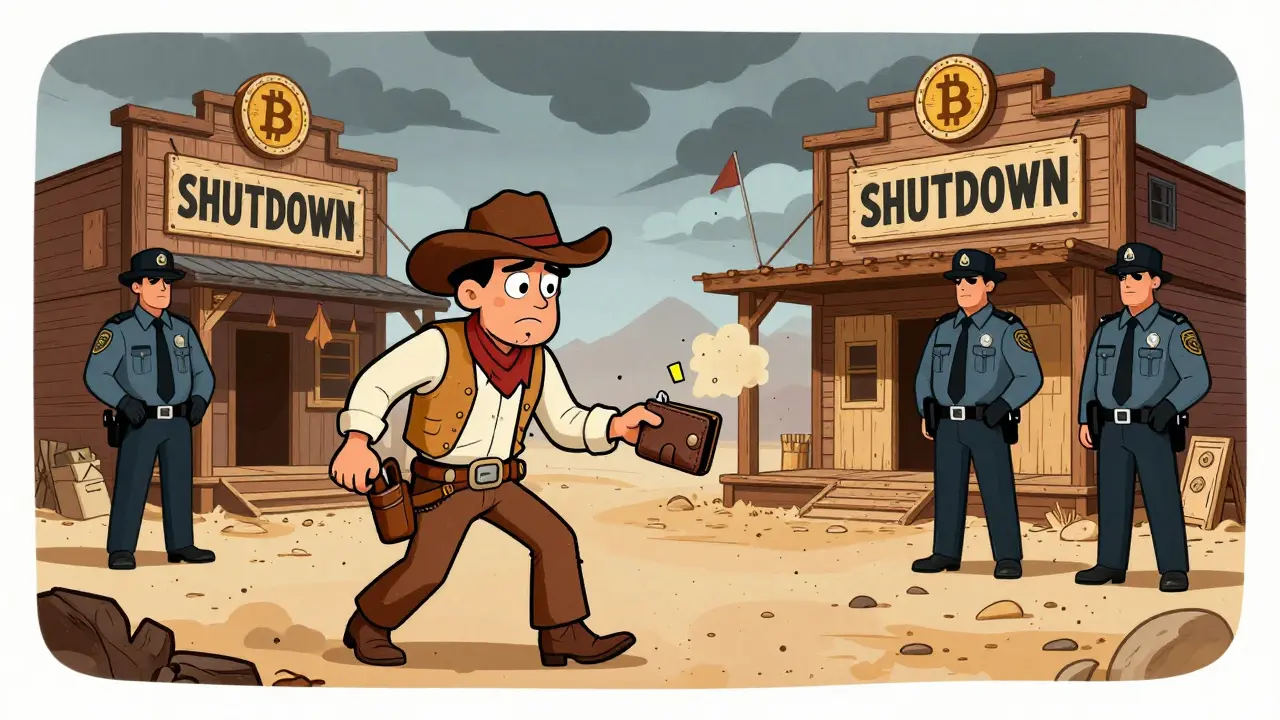
Remember when you could buy Bitcoin with a burner email and zero questions asked? Those days are officially over. If you’ve been trying to use No-KYC crypto exchanges that allow trading without identity verification, you’ve probably noticed something strange lately. Your favorite platform might be gone, blocked by your bank, or simply inaccessible from your region. This isn’t a glitch. It’s a coordinated global crackdown.
In 2024 and 2025, governments worldwide stopped treating anonymous cryptocurrency platforms as harmless tech experiments. They started treating them as national security threats. The result? A wave of shutdowns, fines, and forced relocations that have reshaped the crypto landscape. By early 2026, operating a major exchange without Know Your Customer (KYC) protocols is practically impossible in any regulated market. Here’s why this is happening, what it means for your funds, and where the industry is heading.
The End of Anonymity: Why Authorities Cracked Down
To understand the shutdowns, you need to look at what regulators see. When you trade on an unverified platform, you’re not just buying digital assets; you’re potentially facilitating money laundering, terrorism financing, or sanctions evasion. For years, these activities flew under the radar because no one was checking who was behind the wallets. That changed when financial intelligence units realized they were losing billions to illicit flows through crypto channels.
The turning point came as regulatory bodies recognized that unverified exchanges pose substantial risks to financial stability. Identity verification shifted from being an "optional enhancement" to a legal prerequisite. In India, for example, the Financial Intelligence Unit (FIU-IND) issued notices to 25 offshore exchanges in 2025 for violating the Prevention of Money Laundering Act. Platforms like Huione, Paxful, Changelly, and BitMex were told to get out. The directive wasn’t just a warning; authorities directed the complete takedown of their apps and URLs within India. If you’re in India, you can’t even access those sites anymore.
This isn’t limited to Asia. The logic is simple: if you offer financial services, you must report suspicious activity. Without knowing who your customers are, you can’t do that. So, regulators shut you down. It’s blunt, but it’s effective.
High-Profile Shutdowns and Relocations
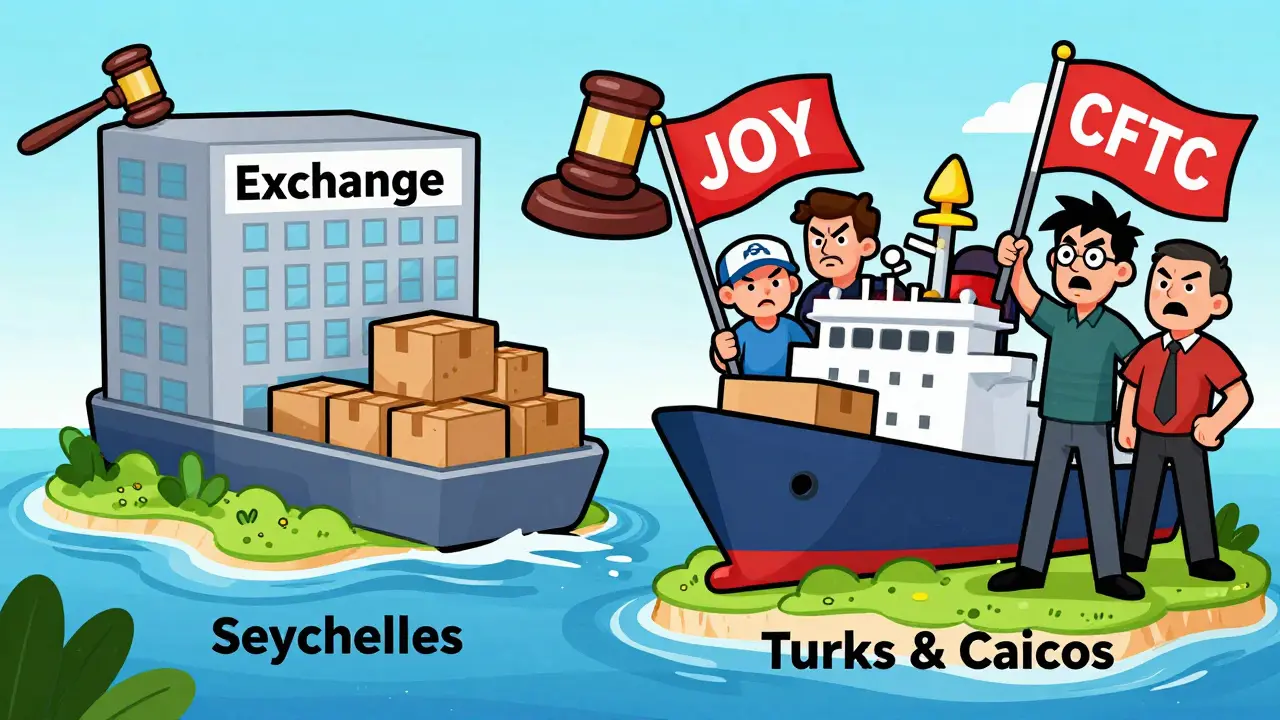
You don’t have to look far to see the consequences. One of the biggest stories in 2025 was the exodus from the Seychelles. Until September 2025, the Seychelles was a haven for crypto firms due to its light-touch regulation. Then, the government introduced comprehensive legislation requiring all Virtual Asset Service Providers (VASPs) to obtain licenses. Overnight, major exchanges had to choose: comply or leave.
KuCoin chose to leave. Facing pressure in the Seychelles and intense scrutiny from the U.S., KuCoin re-domiciled to the Turks and Caicos Islands. But moving didn’t solve their problems. In March 2024, the U.S. Department of Justice filed criminal charges against KuCoin and its founders for operating an unlicensed money transmission business. The DOJ claimed KuCoin processed over $5 billion in suspicious funds while allowing U.S. users to bypass restrictions. On top of that, they settled a civil complaint with the Commodity Futures Trading Commission (CFTC) and paid $22 million to the New York Attorney General.
BTSE followed a similar path, relocating to Costa Rica. These moves aren’t victories; they’re defensive maneuvers. By fleeing to jurisdictions with minimal oversight, these exchanges hope to avoid immediate shutdowns. But as international coordination improves, these safe havens are shrinking. Banking partners are already cutting ties with platforms that can’t prove they have robust anti-money laundering controls.
The Data Behind the Shift
If you think this is just a few bad actors getting caught, look at the numbers. The entire industry has pivoted. As of 2025, 92% of centralized crypto exchanges globally achieved full KYC compliance, up from 85% in 2024. The overall crypto market compliance rate sits at 79%. Why? Because it works.
A 2025 report by CipherTrace showed that implementing robust KYC protocols reduced crypto fraud risk by 38%. That’s a massive drop in scams, hacks, and stolen funds. Institutional investors noticed too. Now, 67% of institutional investors cite strong KYC protocols as a decisive factor when choosing a platform. Even retail users are shifting. In the United States, 58% of crypto users prefer platforms that require KYC verification because they trust them more.
And here’s the kicker: compliance doesn’t have to be slow. Average KYC verification time on major exchanges dropped to 3.5 minutes in 2025, down from 7 minutes in 2023. You can verify your identity faster than you can brew a cup of coffee. The excuse that KYC ruins user experience is dead.
| Feature | No-KYC Exchange | KYC-Compliant Exchange |
|---|---|---|
| Identity Verification | Not required | Mandatory (ID + Biometrics) |
| Fraud Risk | High (38% higher) | Low |
| Banking Access | Limited or None | Full Integration |
| Regulatory Status | Illegal in most major markets | Legal and Monitored |
| User Trust | Declining | Growing (58% US preference) |
| Verification Time | N/A | Average 3.5 minutes |
What Happens When You Get Caught?
Let’s say you ignore the advice and stick with a no-KYC platform like Bitunix, which still reported $1.8 billion in daily trading volume in October 2025 despite its lax policies. What’s the worst-case scenario? For you, it’s account freezes, lost funds, and potential legal trouble if your transactions are linked to illicit activity. For the exchange, it’s existential.
Take Binance. They faced multibillion-dollar penalties and long-term compliance monitoring. That kind of fine drains leadership bandwidth and operational budgets. Or look at Coinbase. In January 2023, the New York Department of Financial Services announced a $100 million settlement with Coinbase over AML/KYC deficiencies. Even giants stumble if their compliance programs lag behind their growth.
But the real killer isn’t just fines; it’s de-risking. Banks, stablecoin issuers, and card networks are offboarding exchanges that can’t demonstrate robust controls. If an exchange can’t process fiat deposits or withdrawals because banks won’t touch them, they’re useless to most users. Operational risks compound this. Platforms without verified identities become targets for mule accounts, phishing operations, and sanctions exposure. Legitimate users get dragged into the mud, overwhelmed by support tickets and frozen assets.

The Future of Crypto Compliance in 2026
Where does this leave us in 2026? The regulatory trajectory is clear: enforcement will intensify. Authorities view identity verification as essential infrastructure, not optional paperwork. The trend toward strategic re-domiciling-moving to places like Costa Rica or Turks and Caicos-is hitting a wall. International coordination is improving. Financial intelligence units are sharing data more effectively. Regulatory arbitrage is dying.
Crypto market educator Lark Davis, who follows over 1 million people on X, warned about the interconnection between political developments and crypto regulation. He noted that prolonged political uncertainty could freeze regulatory development, creating volatility. With Bitcoin trading near $64,200 and Ethereum at $4,150, traders are watching closely. The total global crypto market capitalization reached $3.2 trillion according to CoinGecko, but that value is increasingly tied to compliant platforms.
Industry experts predict that by the end of 2026, operating a significant cryptocurrency exchange without comprehensive KYC procedures will be impossible in most major markets. Enforcement is extending beyond domestic platforms to include aggressive action against offshore platforms serving local users. If you’re holding onto a no-KYC wallet hoping it stays private forever, you’re likely holding onto a liability.
How to Protect Yourself
So, what should you do? First, audit your current exchanges. If they don’t ask for ID, assume they’re at high risk of shutdown. Move your assets to a compliant platform. Yes, you’ll have to upload a passport or driver’s license. Yes, you’ll have to wait 3.5 minutes. But you’ll also have recourse if things go wrong. You’ll have insurance coverage, customer support, and legal protection.
Second, stop using offshore platforms that claim to serve your country without registering locally. They’re lying to regulators, and eventually, they’ll lie to you. Third, educate yourself on the laws in your jurisdiction. In India, registration with FIU-IND is mandatory. In the U.S., FinCEN rules apply. Ignorance isn’t a defense.
The era of wild-west crypto is over. The new era is safer, cleaner, and more transparent. It might feel less exciting, but it’s sustainable. And in finance, sustainability beats anonymity every time.
What is a No-KYC crypto exchange?
A No-KYC crypto exchange is a platform that allows users to trade cryptocurrencies without verifying their identity. Unlike traditional exchanges, these platforms do not require users to submit government-issued IDs, proof of address, or undergo biometric checks. While this offers privacy, it also exposes users to higher risks of fraud, theft, and regulatory action.
Why are authorities shutting down No-KYC exchanges?
Authorities are shutting down No-KYC exchanges because they facilitate money laundering, terrorism financing, and sanctions evasion. Without identity verification, exchanges cannot report suspicious transactions or ensure that users are not involved in illegal activities. Regulators view this as a threat to financial stability and national security.
Is it illegal to use a No-KYC exchange in 2026?
In many major markets, including the United States, India, and the European Union, using a No-KYC exchange can be considered illegal or highly risky. Governments have implemented strict regulations requiring all virtual asset service providers to register and comply with anti-money laundering laws. Using unregistered platforms may expose users to legal penalties, frozen assets, or loss of funds.
What happened to KuCoin and BTSE?
KuCoin and BTSE faced significant regulatory pressure in 2025. After the Seychelles introduced licensing requirements for virtual asset service providers, both exchanges relocated to jurisdictions with lighter regulations, such as Turks and Caicos and Costa Rica. However, KuCoin also faced criminal charges from the U.S. Department of Justice for operating an unlicensed money transmission business and failing to implement anti-money laundering policies.
How long does KYC verification take now?
As of 2026, average KYC verification time on major exchanges is approximately 3.5 minutes. This is a significant improvement from 7 minutes in 2023, thanks to advancements in automated identity verification technology. Users can typically complete the process by uploading a government-issued ID and undergoing a quick biometric scan.
Are there any benefits to using a No-KYC exchange?
The primary benefit of a No-KYC exchange is privacy, as users do not need to disclose their personal information. However, this comes with significant drawbacks, including higher fraud risk, lack of legal recourse, potential account freezes, and exclusion from banking services. Most experts agree that the risks outweigh the benefits in today’s regulatory environment.
Will No-KYC exchanges disappear completely?
While small, niche No-KYC platforms may continue to operate in unregulated jurisdictions, major exchanges are unlikely to survive without KYC compliance. Industry experts predict that by the end of 2026, operating a significant cryptocurrency exchange without comprehensive identity verification will be practically impossible in most major markets due to intensified enforcement and international cooperation.

14 Comments
Oh, how quaint. The wild west is dead and buried under a mountain of bureaucratic paperwork.
You are all missing the point entirely, you simpletons. This isn't about 'safety' or 'compliance.' It is about control. The state demands to know who holds what because they fear the very concept of unmonitored wealth. To suggest that KYC makes things 'safer' is an insult to intelligence; it merely makes theft easier for those with access to your data. I will not trade my privacy for the illusion of security provided by a system designed to fail me when it suits them. Your 'trust' in these platforms is naive at best, delusional at worst.
Think about it. Who owns the data? Not you. And once they have it, can you ever truly delete it? No. You are building a permanent digital cage around yourself. I prefer the cold freedom of anonymity over the warm embrace of surveillance capitalism. You call it progress; I call it surrender.
I think we should try to see the bright side here. At least we won't lose our money to scams as often now, right?
Bright side? There is no bright side when you are handing over your identity to entities that sell it to the highest bidder. You are cheering for your own enslavement. How pathetic.
It is important to note that the regulatory landscape has shifted significantly due to international cooperation among financial intelligence units. The FIU-IND actions in India were part of a broader global trend. Compliance is no longer optional for major exchanges if they wish to maintain banking relationships. This is a fundamental change in the industry infrastructure.
so like... do u think this means its finally safe to use coinbase again? i mean the whole kyc thing seems kinda invasive but i guess better than losing my bag to some sketchy offshore site. just wondering if anyone else feels like we lost the soul of crypto or whatever
The erosion of privacy is not a bug; it is the feature of modern finance. We traded liberty for convenience long before crypto existed. Now, the ledger is simply becoming as transparent as the bank statement was always intended to be. There is a philosophical weight to this shift that most ignore. We are moving from a system based on trust in institutions to a system based on verification of identity. Which is more human? Perhaps neither.
Hey everyone! Let's remember that while the process might feel intrusive, it's actually helping protect us all from bad actors. 🛡️✨ It's okay to take a few minutes to verify your ID so we can keep our communities safe and sound! 💪😊
you people are ignorant. the government knows what is best for you. stop whining about privacy when criminals are using these platforms to launder money. it is simple logic. if you have nothing to hide you have nothing to fear. end of story.
man i am so tired of hearing about compliance. it ruins the fun. i just want to trade and leave it alone. why does everyone care who i am? it is none of their business. this is stupid.
because it is the law. deal with it. you are not special.
Indeed. The pretentious notion that one deserves anonymity in a public financial network is laughable. Smile :)
On the bright side, verification is super fast now! Only 3.5 minutes! That is amazing progress! We should celebrate efficiency! :)
I just hope my local exchange doesn't shut down unexpectedly. It would be nice to have some stability in the market.