
- 2 Jun 2026
- Elara Crowthorne
- 20
You might have seen MultiVAC popping up on your exchange app or in a crypto forum. It’s not a meme coin, and it’s not just another copy of Ethereum. MultiVAC is a next-generation public blockchain platform designed to solve the scalability problem through a technology called trusted sharding. If you are wondering why this project exists and whether that ticker symbol, MTV, has any real utility beyond speculation, you need to look at the architecture behind it. The promise here is simple: high speed, low cost, and massive capacity for decentralized applications without sacrificing security.
The Core Problem: Why We Need MultiVAC
Every major blockchain faces the same headache. As more people use the network, it gets slower and more expensive. This is known as the blockchain trilemma: you can usually pick two out of three-scalability, security, and decentralization-but rarely all three. Bitcoin is secure but slow. Ethereum is decentralized but congested during peak times. MultiVAC attempts to break this rule by changing how the network processes data from the ground up.
Imagine a single-lane highway where every car (transaction) must pass through one toll booth (validator). That is how many older blockchains work. Now imagine splitting that highway into ten lanes, each with its own toll booth, all moving simultaneously. That is the basic idea behind sharding. MultiVAC takes this concept further by introducing what it calls "trusted sharding," aiming to handle industrial-scale computation while keeping the network secure against attacks.
How Trusted Sharding Works
To understand MultiVAC, you have to understand its unique approach to sharding. Most sharding solutions struggle with cross-shard communication-if you want to send money from Shard A to Shard B, it often requires complex locking mechanisms that slow things down. MultiVAC claims to solve this by using a layered architecture that separates concerns.
The platform operates on three distinct layers:
- Data Layer: This handles the storage and management of blockchain data. It ensures that information is recorded accurately across different shards.
- Validation Layer: This is where transactions are verified. Nodes in this layer check if the inputs are valid before they are accepted.
- Consensus Layer: This coordinates agreement among nodes on the state of the ledger. It ensures that everyone sees the same reality, preventing double-spending and other fraud.
By separating these functions, MultiVAC allows each shard to process transactions and smart contracts in parallel. This means the total throughput of the network isn't limited by a single chain's capacity. Instead, it scales horizontally. You add more shards, and the network gets faster. The goal is to enable seamless cross-shard transactions so users don't even notice they are interacting with different parts of the network.

The Role of the MTV Token
So, what do you actually do with MTV? It is the native utility token of the ecosystem. Without MTV, the network doesn't function. Here is how it fits into the daily operations of the protocol:
- Paying Gas Fees: Just like ETH on Ethereum or SOL on Solana, you need MTV to pay for transaction fees when you interact with the network. This includes sending tokens, deploying smart contracts, or running dApps.
- Consensus Participation: MultiVAC uses a proof-of-stake variant mechanism. Holders can stake their MTV to participate in network validation. In return, they help secure the network and may earn rewards. This ties the economic value of the token directly to the security of the platform.
- Ecosystem Exchange: Within the broader MultiVAC ecosystem, MTV serves as a medium of exchange. Developers building on the platform will likely require MTV for various services or integrations.
It is important to note that MTV is not just a speculative asset; it is a functional tool required for the network's operation. However, because the network is still growing, the immediate demand for gas fees might be lower than established networks like Ethereum, which affects short-term price dynamics.
Market Reality: Price, Supply, and Volatility
Let’s talk numbers, because that’s usually why you clicked this title. As of mid-2026, MTV is considered a small-cap cryptocurrency. This comes with both opportunities and significant risks.
| Metric | Value / Status |
|---|---|
| Circulating Supply | ~3.5 Billion MTV |
| Price Range (Recent) | $0.00020 - $0.00033 USD |
| 24-Hour Volume | ~$226,000 USD |
| 1-Year Performance | -67.10% (High Volatility) |
| Category | Layer 1 / Smart Contract Platform |
The price of MTV fluctuates significantly between exchanges. You might see it trading at $0.00020 on one platform and $0.00033 on another. This spread indicates lower liquidity compared to top-tier assets like Bitcoin or Ethereum. While the daily volume of over $200,000 shows there is active interest, it is not enough to absorb large sell orders without impacting the price.
Furthermore, the long-term trend has been challenging. A drop of over 67% in the last year highlights the harsh reality of smaller-cap crypto projects. Many investors enter hoping for exponential growth, but they often exit when the market turns bearish. If you are considering buying MTV, you must be prepared for wild swings. It is not a stable store of value; it is a high-risk, high-reward play on technological adoption.
The Name Behind the Tech
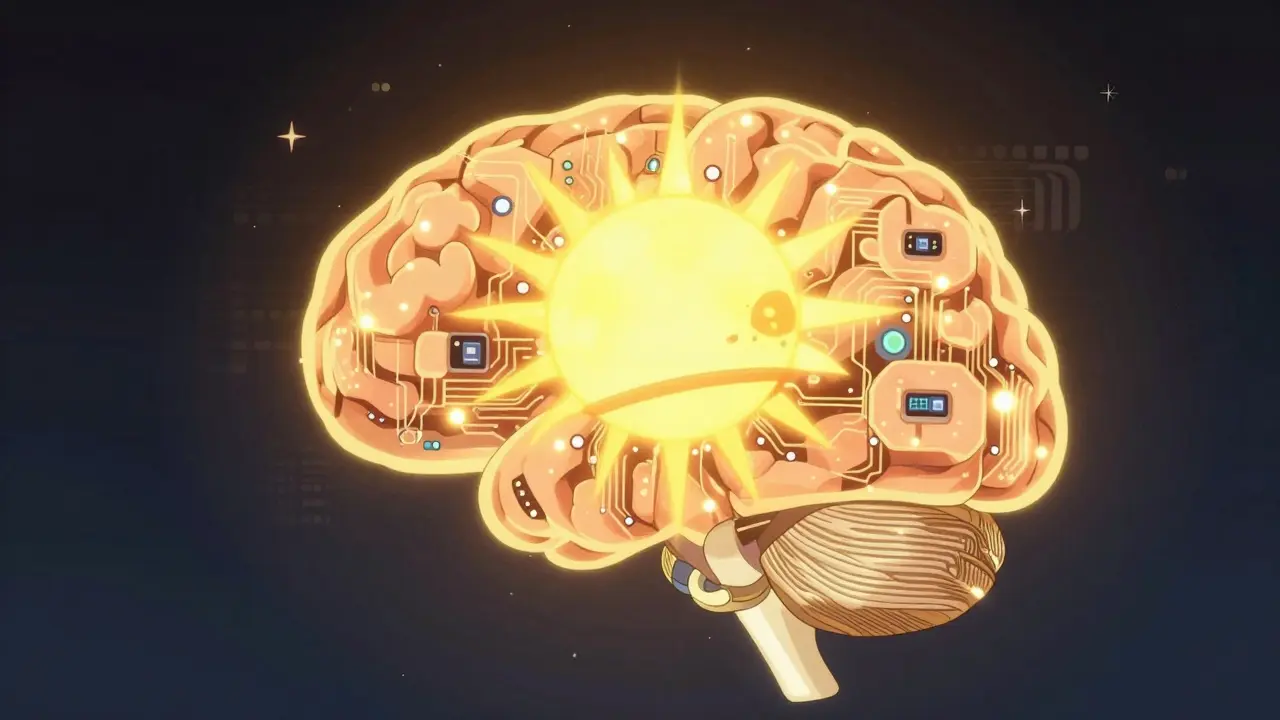
You might wonder why it’s called MultiVAC. The name isn’t random. It references the supercomputer from Isaac Asimov’s famous short story, "The Last Question." In the story, MultiVAC is an AI that evolves over billions of years, eventually solving the mystery of reversing entropy and creating a new universe with the command, "Let There Be Light."
The founders chose this name to symbolize their ambition. They aren't just trying to build a faster payment system; they aim to create a computing infrastructure capable of handling immense complexity over the long term. It frames the project as a long-term technological evolution rather than a quick cash grab. Whether the tech lives up to this literary grandeur remains to be seen, but it does give the brand a distinct identity in a crowded market.
Is MultiVAC Right for You?
If you are a developer looking for a new playground, MultiVAC offers a fresh environment with potentially lower competition and higher theoretical throughput. However, you should check their documentation for supported programming languages and SDK maturity before committing time to build.
If you are an investor, treat MTV as a speculative position. Do not allocate money you cannot afford to lose. The lack of widespread enterprise adoption and the relatively small market cap mean that the token’s value is heavily dependent on successful technical execution and marketing momentum. Watch for updates on testnet performance, real-world dApp deployments, and partnerships. These are the signals that will determine if MultiVAC moves from a promising concept to a dominant Layer 1 player.
What is the main difference between MultiVAC and Ethereum?
Ethereum is a monolithic blockchain that relies on Layer 2 solutions for scaling, whereas MultiVAC is built from the ground up with a sharded architecture. MultiVAC aims to achieve high throughput natively by processing transactions in parallel across multiple shards, theoretically offering lower latency and costs without needing external scaling layers.
Is MTV a good investment in 2026?
MTV is a high-risk, small-cap asset. While it has shown short-term gains, it suffered a significant drawdown (-67%) over the past year. Investing in MTV requires a high tolerance for volatility and belief in the long-term success of its sharding technology. It is not suitable for conservative investors.
How does MultiVAC ensure security with sharding?
MultiVAC uses a "trusted sharding" model combined with a three-layer architecture (Data, Validation, Consensus). This separation of duties helps isolate vulnerabilities. The consensus layer coordinates agreement across shards to prevent cross-shard attacks, although specific cryptographic proofs are detailed in their technical whitepapers.
Can I stake MTV to earn rewards?
Yes, MTV holders can participate in network consensus, which typically involves staking. By locking up tokens, you help validate transactions and secure the network. In return, participants may receive rewards, though exact yields and minimum staking amounts depend on current network parameters.
Where can I buy MultiVAC (MTV)?
MTV is traded on several cryptocurrency exchanges, including Kraken and Paybis. You can also track its price and liquidity on aggregators like CoinGecko. Always verify the exchange supports direct fiat deposits or has sufficient liquidity for your trade size.

20 Comments
hey guys, just wanted to drop a quick note about the sharding tech here 🧵 it actually makes sense if you think about parallel processing like in cpu cores. most people ignore this but multi vac is trying to fix the bottleneck at the source not just patching it later. the three layer architecture is kinda cool too because it separates validation from consensus which helps with speed. i see a lot of hate for small caps but the tech stack matters more than the ticker symbol in my opinion. keep an eye on the testnet results though because that is where the rubber meets the road 🚀
I appreciate the detailed breakdown provided in the post, especially regarding the distinction between MultiVAC and Ethereum's approach to scaling. It is crucial for investors to understand that while Ethereum relies heavily on Layer 2 solutions, MultiVAC attempts to solve scalability natively through its trusted sharding model. This architectural difference could significantly impact transaction costs and latency for decentralized applications in the long run. However, we must remain cautious about the current market volatility and the relatively low liquidity associated with MTV. The -67% performance over the last year is a stark reminder of the risks involved in early-stage blockchain projects. I encourage everyone to do their own research and consider their risk tolerance before engaging with such high-volatility assets.
Another American-made failure waiting to happen? Please. We built the internet, we built Bitcoin, and now we have these foreign entities trying to sell us 'trusted' sharding schemes that sound like centralized backdoors. The name MultiVAC references Asimov, sure, but let’s be real-it sounds like a scam designed to confuse retail investors who don’t know better. Why trust a network that claims to separate data, validation, and consensus when we already have proven models? It’s arrogant and unnecessary. Stick to what works or go build your own country.
Oh wow, Matthew, you really need to chill out 😂. Not every new tech project is a conspiracy against America. The Asimov reference is actually pretty clever if you read the story; it’s about solving entropy, which is basically what blockchain tries to do with digital chaos. I get that you’re skeptical, but maybe try reading the whitepaper instead of assuming the worst? Collaboration and open-mindedness usually lead to better outcomes than immediate dismissal. Let’s see how the tech performs before we burn it down 🔥.
It is quite amusing to watch uneducated individuals praise speculative garbage as if it were gold. The concept of 'trusted sharding' is inherently flawed because trust is not a cryptographic property. You are essentially asking users to believe in a system that has no proven track record compared to established networks. The price action speaks volumes-down 67%? That is not innovation; that is capital destruction. I suggest you focus on tangible assets rather than chasing vaporware marketed by desperate founders. Do not mistake marketing buzzwords for technical substance. Your financial well-being depends on recognizing these red flags early.
You elitists always act like you know everything until the rug pull happens. I’ve been holding MTV since the beginning and I’m not selling. You can keep your boring BTC and ETH while I wait for the next bull run to make me rich. This community is full of losers who talk big but never take any risks. Real winners understand that high risk equals high reward. Keep crying about volatility while I sit on my bags smiling. You’ll see who laughs last when the price hits $1. Stay mad peasants.
honestly the whole idea of sharding is just a bandaid for poor initial design choices. why didnt they just scale properly from the start? its like building a house with a cracked foundation and then trying to paint over it. the cross-shard communication issues are huge and nobody talks about them enough. plus the tokenomics seem sketchy with all the supply floating around. i mean look at the volume numbers, barely anything is moving. feels like a ghost town waiting for a pump and dump scheme. dont trust the hype train 🚂💨
Let us address the elephant in the room: adoption. Technology alone does not drive value; network effects do. While MultiVAC presents an interesting theoretical framework for scalability, the lack of significant developer activity and enterprise partnerships remains a critical hurdle. Investors should prioritize projects with active ecosystems and clear utility cases. The current market metrics indicate low liquidity and high volatility, which are unfavorable conditions for sustained growth. Focus on fundamentals and avoid emotional decision-making based on short-term price fluctuations. Discipline is key in this volatile market.
The comparison to Ethereum is apt, yet it highlights a fundamental divergence in philosophy. Ethereum embraces a modular approach via Layer 2s, whereas MultiVAC pursues a monolithic sharded structure. Both have merits, but execution is paramount. The historical performance of MTV suggests that market sentiment has not yet aligned with the technological promises. Prudence dictates a cautious stance until there is demonstrable traction in dApp deployment and user acquisition. One must weigh the potential rewards against the evident risks carefully.
So you are telling me that splitting the chain into shards makes it faster? That seems obvious if you ask me. But how do you prevent attacks on individual shards? If one shard gets compromised, does the whole network fail? I feel like the security model is oversimplified here. Also, the gas fees might be lower, but if there are no apps using it, why would anyone pay attention? It feels like putting a Ferrari engine in a car that nobody wants to drive. Explain the actual use case beyond speculation please.
This is a very interesting perspective on sharding technology. In India, we often look at scalability as a primary requirement due to our large population and high transaction volumes. The concept of trusted sharding could potentially offer a solution for mass adoption if implemented correctly. However, I agree with previous comments that security and decentralization must not be compromised. It will be fascinating to observe how MultiVAC handles cross-shard transactions in real-world scenarios. Let us hope for positive developments in the coming quarters.
Everyone here is so naive. Sharding has failed multiple times in other projects. Casper, Ethereum 2.0 delays, all of it proves that horizontal scaling is a nightmare to implement securely. MultiVAC is just another clone trying to ride the hype wave. The fact that the price has dropped 67% shows that smart money is fleeing. Stop pretending this is a revolution. It is a slow bleed. Wake up sheeple. The only thing being scaled here is your losses.
Oh my gosh, can we stop with the negativity for five seconds?! 😭 This project has SO much potential! Imagine the possibilities for gaming and DeFi if the transactions are instant and cheap! Yes, it’s risky, yes, the price is down, but isn’t that why we invest? To catch the gems before everyone else? I’m staking my MTV and I’m feeling lucky! Don’t let the haters kill your dreams! We rise together! ✨🙌
I remember when I first heard about MultiVAC. I thought it was going to change everything. Now? It’s just another ticker on my screen blinking red. The drama is exhausting. People arguing about sharding vs L2s like it matters when the chart looks like a heart attack monitor. I just want to know if I should cut my losses or hold for the moon. Spoiler alert: neither option feels good right now. Just tired of the noise.
The name 'MultiVAC' is not a coincidence. It is a signal. A signal that artificial intelligence and blockchain are merging under a centralized control mechanism disguised as decentralization. The 'trusted' aspect of sharding implies that certain nodes are more equal than others, creating a hierarchy that benefits insiders. This is part of a larger agenda to monitor and control financial transactions globally. Do not be fooled by the technical jargon. They want your data and your compliance. Resist.
lol @lee paige you sound like a tin foil hat wearer 😂. seriously though, the tech is interesting even if the vibes are off. i like how they break down the layers. it makes it easier to understand than some of the other whitepapers i’ve read. also caitlin here just vibing. dont let the conspiracy theories scare you away from learning. knowledge is power. but yeah, buy at your own risk ok? 💅
u ppl r so dumb 😡. mtv is gonna pump hard. ur all hating bc u missed the boat. i bought at .0001 and now im sitting on profits. stop listening to these fake experts who want u to sell low. the sharding tech is superior to eth. period. end of discussion. hodl forever. 📈💎
Typical retail ignorance. The market cap is tiny for a reason. Liquidity is non-existent. You think you are profiting? You are trapped. The developers are likely dumping on you while you chant 'hodl'. I have analyzed the codebase and the governance structure is weak. This is a classic pump-and-dump setup. Educate yourselves before throwing money into a black hole. Your lack of understanding is embarrassing.
In the grand scheme of things, blockchain is merely a tool for organizing information. Whether it succeeds or fails depends on human cooperation. MultiVAC represents an attempt to optimize this cooperation through technology. Like all tools, it is neutral. The outcome depends on how we use it. Perhaps we should focus less on price and more on the philosophical implications of distributed trust. 🤔
hi friends 👋. nice article. i think multi vac has good potential but we need to be patient. the crypto market is very volatile right now. many projects are struggling. but if the team delivers good updates, the price might recover. lets support each other and stay positive. no need to fight. peace and love ❤️